What are mpungos? The spiritual forces of Palo Mayombe
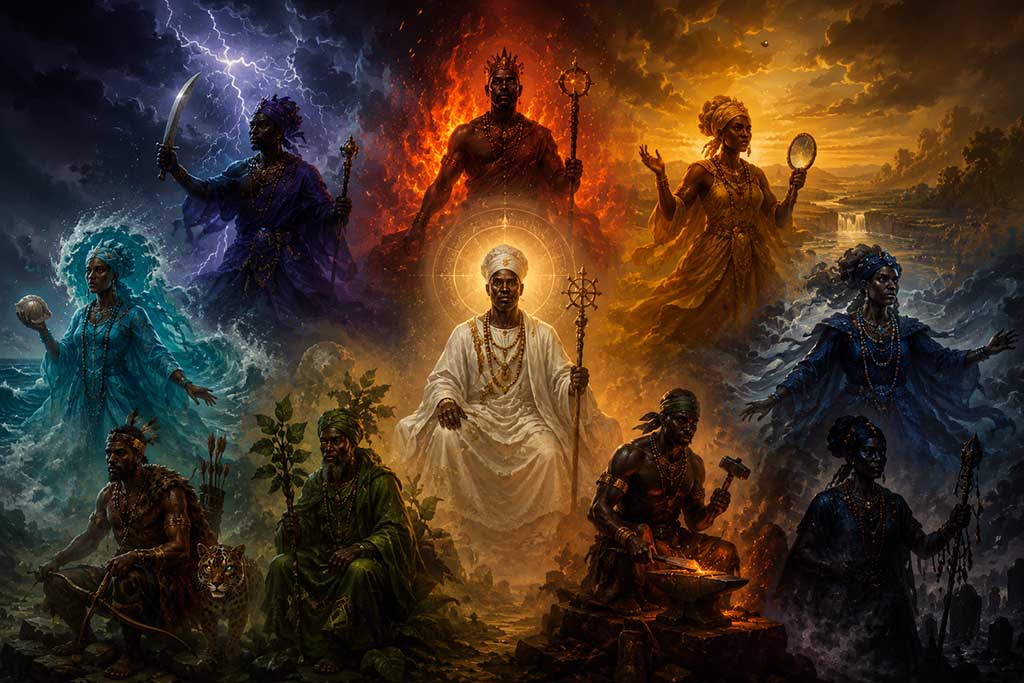
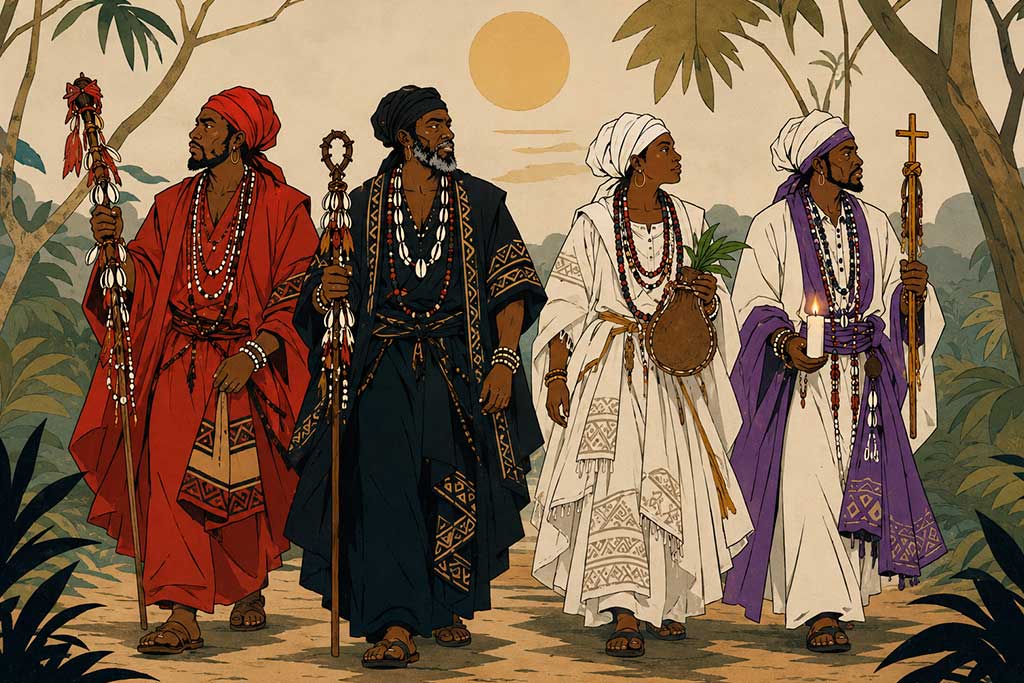
The mpungos are great spiritual forces recognized within Mayombe stickPalo Monte and other expressions of the Congo Rules. They are related to areas such as roads, iron, fire, water, the forest, illness, hunting, and cemeteries.
The form can also be found mpungu and, in some sources or houses, collective terms such as kimpúnguluThe names, attributes, and classifications are not identical across all lineages. Therefore, a list of mpungos should be understood as a general guide, not as a closed and universal pantheon.
What are mpungos in Palo Mayombe?
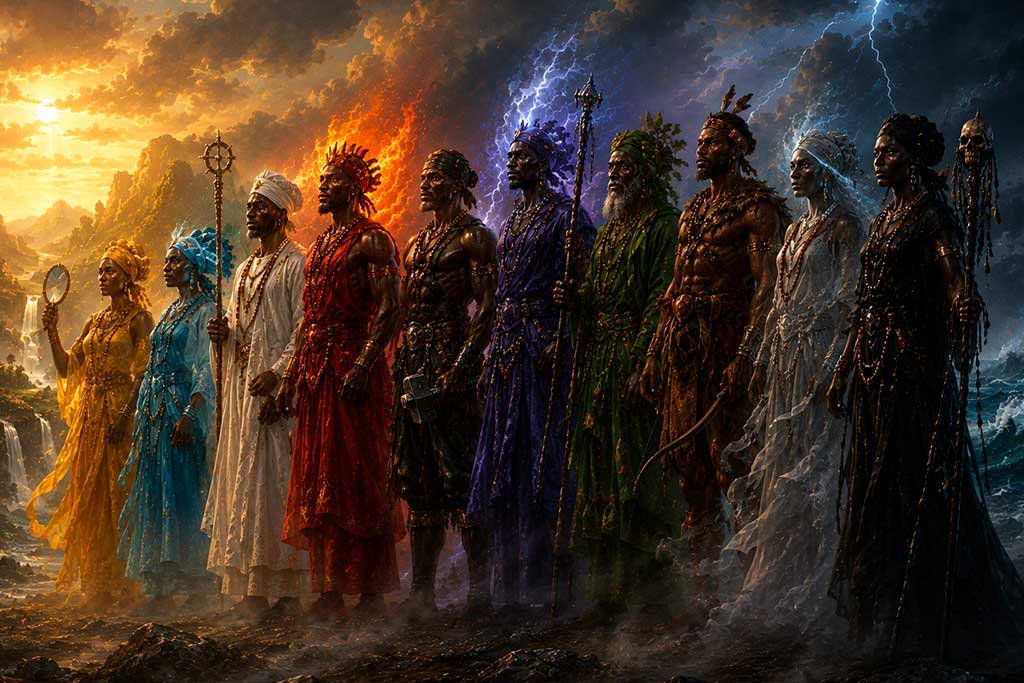
An mpungo is a spiritual power linked to certain forces of the world. It can be associated with lightning, iron, water, roads, the mountains, hunting, or illness, but it should not be understood merely as a decorative personification of those elements.
Within the Congo Rules, nature possesses the capacity for action. Metal cuts, transforms, and builds; the river nourishes and also carries away; the mountain heals, hides, and protects; lightning illuminates and destroys. The mpungos express and concentrate these possibilities within their own religious language.
The word mpungo It is not used in exactly the same way in all houses. Some lineages speak of forces, others of powers or mysteries, and there are also differences in how they explain its presence in the foundations. This diversity is part of a religion transmitted primarily through houses and genealogies, not through a central catechism.
Are mpungos gods or deities?
In popular texts they are often called “gods of Palo Mayombe” or “deities of Regla Conga.” These expressions may help a reader approaching them for the first time, but they are approximations.
The word “god” might conjure up images of a uniform pantheon, with identical characters, hierarchies, and narratives everywhere. Palo doesn't work that way. The mpungos are better understood as great spiritual powers related to natural and religious domains.
Furthermore, in many homes one can recognize Nsambi, Nzambi or Nsambi Mpungu as creator and supreme principle. Nsambi is not usually placed in the same category as Lucero Mundo, Zarabanda, Siete Rayos or Mamá Chola.
Therefore, calling mpungos “deities” is not necessarily incorrect in a comparative sense, provided it is clarified that the tradition has its own vocabulary and that Western categories do not express all its nuances.
Nsambi and the mpungos
Nsambi or Nzambi occupies the highest position within many explanations of Palo cosmology. He is recognized as the creator, the origin of life, and the authority that upholds the order of the world.
Daily religious practice, however, tends to focus on forces and presences closer to human needs. This is why mpungos, the dead, and the sacred objects have a visible role in the consultations, ceremonies, and obligations of the munanso.
It should not be concluded that Nsambi is irrelevant simply because he does not receive the same kind of attention as other deities. In certain houses, his permission is requested and his authority acknowledged before beginning any work, although the specific formulas vary between lineages.
Main mpungos of Palo Mayombe
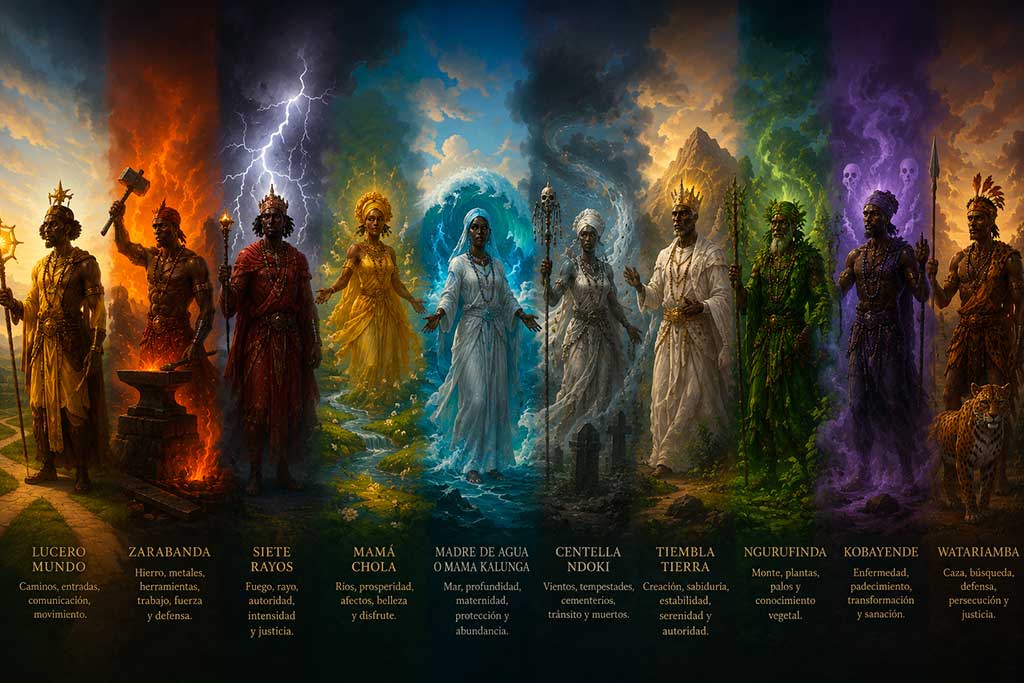
There is no definitive list. The following names are some of the most widespread in Cuba and in the Palo communities of the diaspora. The attributions are presented in a general way and may vary according to the branch or house.
| Mpungo | Associated domains |
|---|---|
| Lucero Mundo. | Paths, entrances, communication, movement and crossroads. |
| Saraband. | Iron, metals, tools, work, strength and defense. |
| Seven Rays. | Fire, lightning, authority, intensity, and justice. |
| Mama Chola. | Rivers, prosperity, affection, beauty and enjoyment. |
| Mother of Water or Mama Kalunga. | Sea, depth, motherhood, protection and abundance. |
| Twinkle Ndoki. | Winds, storms, cemeteries, traffic and the dead. |
| Earth trembles. | Creation, wisdom, stability, serenity, and authority. |
| Ngurufinda. | Mountain, plants, sticks and plant knowledge. |
| Kobayende. | Illness, suffering, transformation, and healing. |
| watariamba. | Hunting, searching, defense, pursuit, and justice. |
Lucero world
Lucero world It is associated with entrances, paths, crossroads, and communication. In many homes, it plays a role in the opening of ceremonies and in the movement of whatever is being consulted or requested.
His name may appear alongside specific paths and designations. It is also common for lineages to distinguish between Lucero as a power and the specific foundations established under his treaties. Therefore, there is no single representation valid for all houses.
Saraband
Saraband It is linked to iron, metals, tools, work, and defense. Its religious language expresses the ability to build, cut, resist, and forge a path through force.
Some foundations include chains, nails, tools, and pieces of ironwork, but their composition should not be generalized or treated as a fixed recipe. The attributes depend on the house and the treaties under which the garment originated.
Seven rays
Seven rays It is associated with lightning, fire, authority, and an intense form of justice. It is one of the best-known powers of Palo Mayombe, although its names, paths, and characteristics vary among lineages.
In certain houses, it maintains a special connection with gunpowder, movement, and the power of lightning. These associations do not mean that all its foundations are prepared or cared for in the same way.
Chola Mom
Chola Mom, also called Chola Wengue in some contexts, is related to rivers, prosperity, affections, beauty and the goods that allow one to enjoy life.
Its association with gentleness should not reduce it to a superficial or exclusively loving force. River waters can nourish, transform, and also impose limits.
Mother of Water or Mama Kalunga
Mother of Water or Mama Kalunga It is linked to the sea, depth, protection, and motherhood. Some houses use both names interchangeably, while others establish nuances between them.
Kalunga also has broad meanings within Kongo cosmologies, where it can be related to water and to the boundary between the living and the dead.
Sparkle Ndoki
Sparkle Ndoki It is associated with winds, storms, cemeteries, and the transition between life and death. It can also be found under names such as Mariwanga, depending on the house and the source.
Their relationship with the dead does not mean it should be explained using categories like demon or evil spirit. It belongs to the cosmology of the Congo Rules and should be interpreted within that framework.
Earth trembles
Earth trembles It is associated with creation, stability, wisdom, and serene authority. In different houses, it can receive attributes related to order, firmness, and balance.
Comparisons with Obatalá arose within the Cuban religious context, but they should not be used to merge both powers into a single entity or to automatically import Ocha ceremonies into Palo.
Ngurufinda
NgurufindaGurunfinda or Ngurunfinda is related to the mountain, the sticks, the plants and the plant knowledge used within the tradition.
Some descriptions mention pedestals placed in sacks or suspended, but this should not be assumed to be the only existing form. The iconography and supports depend on the house and its treatises.
Kobayende
Kobayende It is associated with illness, suffering, transformation, and the possibility of healing. In Cuba, comparisons have been drawn with Babalú Ayé and San Lázaro, but these correspondences do not constitute an exact identity.
Popular images of an old man covered in sores largely stem from these processes of religious association.
watariamba
watariamba It relates to hunting, searching, pursuing, defending, and justice. Its strength expresses the ability to locate, reach, and act with precision in the face of a need.
In some houses, he appears associated with Zarabanda or compared to Ochosi, but these relationships vary between lineages. He should not be described as a simple Congo version of the hunter orisha.
How many mpungos are there?
There is no single number that can be applied to all Conga Rules. Public lists usually include between eight and twelve well-known names, but different treaties include other designations.
In some houses, names like Munalembe, Cabo Rondo, Brazo Fuerte, Cuatro Vientos, or Pungo Dibudi appear. Depending on the genealogy, these can be understood as independent powers, paths, titles, names of foundations, or particular forms of other forces.
Oral transmission also produces variations in pronunciation and spelling. Two different names online can signify the same power, while the same name can acquire different meanings in different households.
Mpungo, nganga and nfumbe: they are not the same
The three concepts appear related, but should not be confused:
| Concept | General sense |
|---|---|
| Mpungo. | Great spiritual power related to a natural or religious domain. |
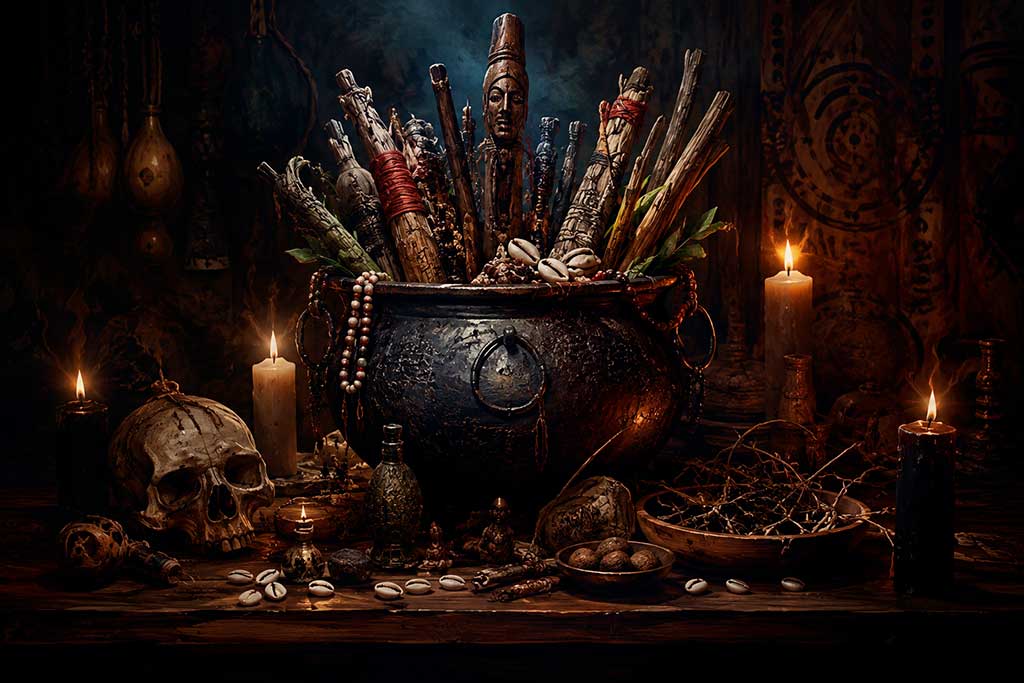
| Nganga or prenda. | Established foundation where matters, presences, knowledge and relationships of the lineage are articulated. |
| Nfumbe or nfumbi. | The dead person and the spiritual or material relationship established with him within the Congo Rules. |
Some houses explain that the mpungo provides the dominion while the nfumbe performs the work. Others do not divide the functions so rigidly and speak of the strength of the prenda as a unit.
Therefore, it is not advisable to turn lineage expressions like "the mpungo commands and the dead man works" into a universal doctrine. They are useful formulas within certain contexts, but they do not describe all ngangas or all munansos.
To learn more about these differences, see our articles on the nganga or prenda and about What is an nfumbe?.
Mpungos and orishas: correspondences without equivalence
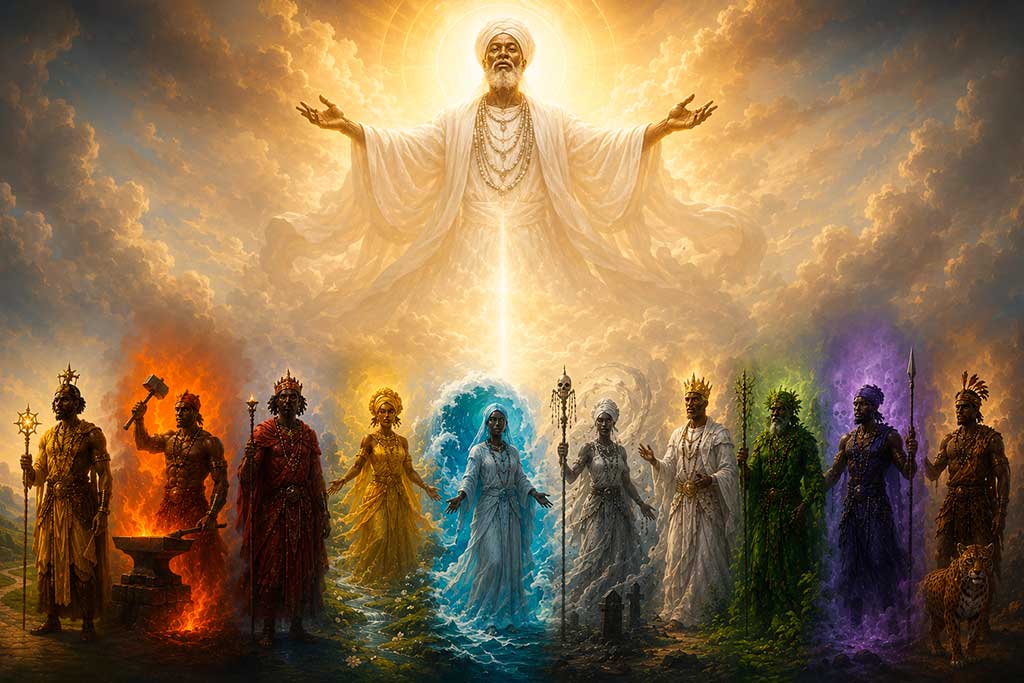
In Cuba, the Reglas Congas coexisted for generations with the Regla de Ocha. Many religious families participated in both traditions, and from this close relationship arose associations between mpungos and orishas.
| Mpungo | Frequent association in Cuba |
|---|---|
| Lucero Mundo. | Elegua. |
| Saraband. | Oggun. |
| Seven Rays. | Shango. |
| Mama Chola. | Oshun. |
| Mother of Water. | Yemaya. |
| Twinkle Ndoki. | Hey. |
| Earth trembles. | Obatala. |
| Kobayende. | Babalu Aye. |
| watariamba. | Ochosi. |
These correspondences are part of Cuban religious history, but they do not prove that both entities are identical. An mpungo is not an orisha translated into Kikongo, and a palero foundation is not equivalent to an Ocha foundation.
The differences include:
- The historical and linguistic origin of each tradition.
- The ceremonies through which their foundations are received and attended to.
- The relationship with the dead and with consecrated matter.
- The songs, prayers, ritual languages, and genealogies.
- The organization of the religious house.
Associations can serve as a comparative reference, but they should not replace the study of each religion on its own terms.
How is a relationship established with the mpungos?
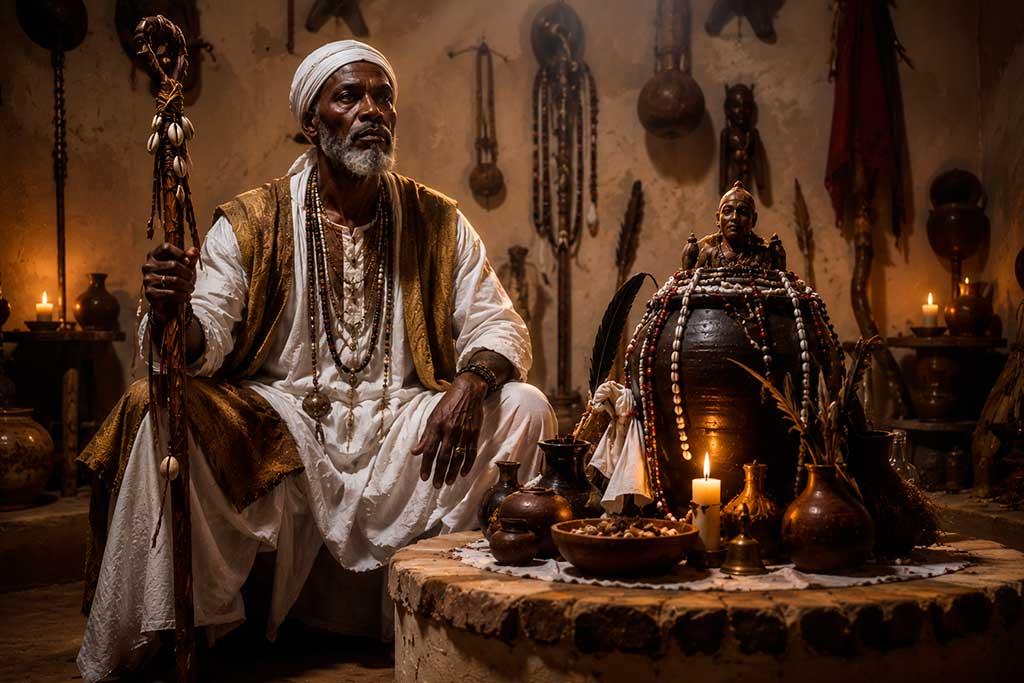
The relationship with the mpungos develops within the munanso and through the foundations, songs, consultations and obligations recognized by each lineage.
There is no single, universal procedure for "receiving an mpungo." The presence of a spirit within a house depends on its ngangas, its religious lineage, and the treaties through which those foundations were established.
The consultation can guide decisions and determine which force intervenes in a situation, but it does not make the consultant the owner of an mpungo nor authorize preparing arguments without training.
The chamalongosThe fula, the vititi mensu, and other forms of communication may be used differently depending on the house. The specific procedures belong to the inner knowledge of the elders.
Frequently Asked Questions about Mpungos
What is an mpungo in Palo Mayombe?
It is a great spiritual power related to certain forces of nature and areas of human experience. Its name, attributes, and form of interaction can vary depending on the house and lineage.
Do Mpungo and mpungu mean the same thing?
These are generally variations in spelling and pronunciation. Oral transmission and the adaptation of words of Kongo origin to Cuban Spanish explain many of these differences.
Are mpungos gods?
They can be described as deities in a comparative sense, but the more accurate expression is great spiritual forces or powers. The word “gods” might suggest a uniform pantheon, which does not exist in all Congo Rules.
Which is the most powerful mpungo?
There is no single answer. Each power has its own domains, and each house maintains a particular relationship with its foundations. Nsambi occupies a superior position in many explanations, but he is not usually considered just another mpungo.
How many mpungos are there?
There is no official list. The most widespread names are around ten, but houses may recognize other paths, titles, powers, or foundations according to their genealogies.
Are mpungos the same as orishas?
No. In Cuba, historical correspondences arose between both traditions, but their ceremonies, foundations, languages, and forms of relationship are different.
What is the difference between an mpungo and an nfumbe?
The mpungo is a great spiritual power; the nfumbe is related to the dead. In some houses, both are clearly distinguished within the nganga, while others explain the foundation as a less divided unity.
Sources and editorial criteria
The public study of mpungos requires combining historical, linguistic, and ethnographic sources. Lists from popular manuals can be useful as a reference, but they often mix attributes from different branches and equivalencies taken from the Rule of Ocha.
Among the works and authors relevant to understanding the Congo Rules are Lydia Cabrera, Todd Ramón Ochoa, Erwan Dianteill, Katerina Kerestetzi, Jesús Fuentes Guerra, Armin Schwegler and various studies on the Kongo religions and their development in Cuba.
The information on this page is historical and for general knowledge. Names, paths, treaties, and ceremonies may vary among munansos and are only learned from authorized elders within their religious lineage.
This content is part of our guide on the Palo Mayombe and the Conga RulesThe individual descriptions are kept brief to guide the reader without replacing the articles dedicated to each mpungo.
Learn about the mpungos and fundamentals of the Regla Conga
The mpungos are best understood by studying their relationships with the nganga, the nfumbe, the forest, and the various houses of Palo. Explore the following guides to learn about the characteristics of each power and its place within the foundations of the tradition.