Centella Ndoki: mpungo of cemeteries, winds, and the dead

Sparkle Ndoki

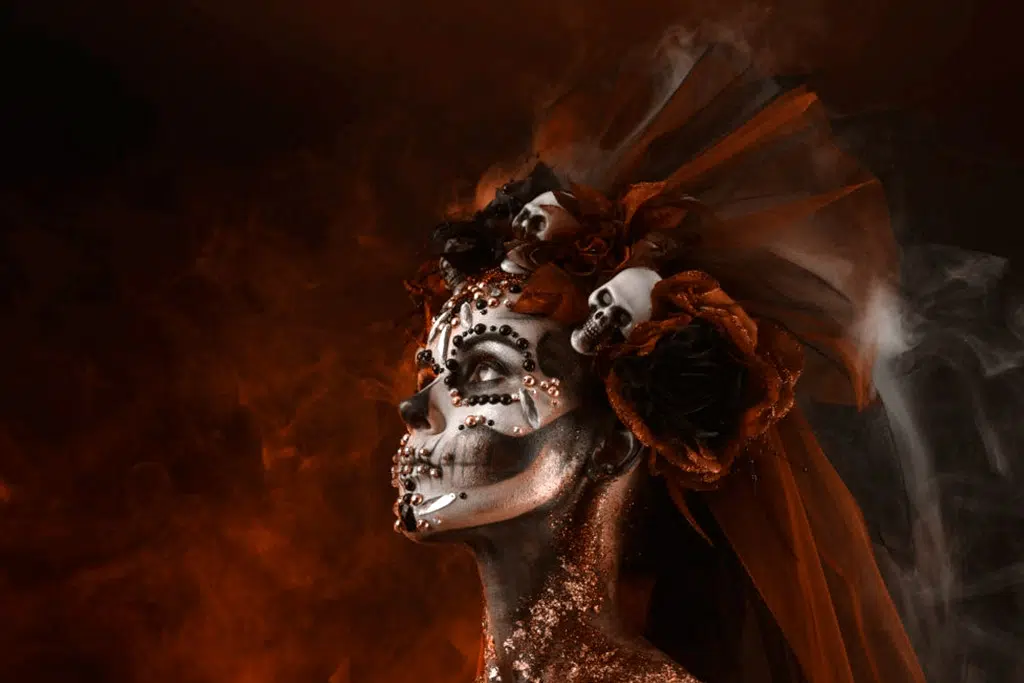
Sparkle Ndoki is an mpungo of the Mayombe stick Associated with the cemetery, winds, storms, whirlpools, and the world of the dead. In many Palo houses, she is recognized as a warrior woman, feared and respected, capable of dominating nfumbes, cutting down spiritual enemies, and clearing paths in situations where strong defense is needed.

It is also known as Mama Wanga, Mariwanga, Pungu Mama Wanga or Yaya KengueIts worship demands respect, discretion, and knowledge, because Centella Ndoki is not a light or decorative force: it belongs to the field of the dead, to the cemetery, and to the abrupt changes that can close one stage and open another.

Centella Ndoki's file in Palo Mayombe

ElementTraditional description
Main nameTwinkle Ndoki.
Other namesMama Wanga, Mariwanga, Pungu Mama Wanga and Yaya Kengue.
Thrilling Tradition That Captivates AllPalo Mayombe, Palo Monte or Regla Conga.
Entity typeMpungo or spiritual power linked to the cemetery and the dead.
Main domainCemeteries, winds, storms, whirlpools, nfumbes, spiritual warfare, and radical changes.
Number9
Main colorBrown; it also works with nine colors, avoiding black in certain traditional combinations.
Associated spacesCemeteries, farmland, fences, boundaries, dark mountains and places of strong wind.
CharacterWarrior, stern, protective, impulsive, just, and feared.
Symbolic relationshipShe is related to Oya because of the winds, the cemetery and the storms, although they belong to different religious systems.
Common offeringsBrandy, beer, red wine, sangria, eggplant, tobacco and amenities as indicated by the religious house.

Who is Centella Ndoki?

Sparkle Ndoki It is one of the most feared and respected forces within the Mayombe stickIt is considered a warrior power linked to the world of the dead, the cemetery, strong winds, storms and whirlpools that announce spiritual movement.

In many homes it is said that Centella reigns over the spirits that inhabit the cemetery and that she has power over the nfumbes, especially those that move in battlefields, borders, dark paths and spaces where death has left a strong mark.

Its presence is not understood as a gentle or domestic energy. Centella Ndoki is a force of cutting, defense, spiritual justice, and transformation. It can protect with great firmness, but it can also act severely when disrespected or when one works with it without permission or knowledge.

Within Mayombe, she is described as a fearless warrior, a powerful witch, and a mother of the cemetery. Her works and ceremonies are related to places of the dead, the earth, and forces that should not be treated lightly.


Centella Ndoki Names: Mama Wanga, Mariwanga and Yaya Kengue

Centella Ndoki is known by different names depending on the branch, the religious house, and the oral tradition of the munanzo. These names should not always be understood as simple synonyms, but rather as ways of indicating different nuances of its power.

NameTraditional use or meaning
Sparkle NdokiMain name by which its warrior, cemetery and wind-related strength is recognized.
Mama WangaName associated with its powerful, protective and feared feminine aspect within Palo.
MariwangaTraditional form used in some houses to refer to their mystery of the dead, wind and cemetery.
Pungu Mama WangaA name that emphasizes its status as a strong and respected authority within the Congo system.
Yaya KengueA name that highlights her aspect as a spiritual mother, elder, and feminine force within Palo.

What does Centella Ndoki represent?

Centella Ndoki represents the edge between life and death. Its power moves in cemeteries, in whirlwinds, in sudden storms, in abrupt changes, and in processes where something must end so that something else can begin.

It is a power of defense and spiritual warfare, but also of transition, closure, and transformation. That is why it is both feared and respected: it is not a force for trivial matters, but for serious situations requiring judgment, protection, justice, or dominion over difficult spirits.

Her relationship with the cemetery shouldn't be understood solely as physical death. In the Palo worldview, the cemetery is also a place of power, memory, pact, transition, and contact with the dead. Centella Ndoki moves within this territory and knows its gates.

Just as the wind can clear a space or destroy it, Centella can pave the way or sweep away what stands in the way. Therefore, its worship demands prudence, keeping one's word, and religious guidance.

Centella Ndoki and the world of the dead

One of the most important aspects of Centella Ndoki is her dominion over the world of the dead. In many homes, she is recognized as the lady of the cemetery and of the spirits that inhabit that spiritual realm.

Her connection to the nfumbes makes her a very powerful force within Palo Mayombe. She is not only a warrior entity, but a power that can move, command, guide, or control spiritual forces linked to the dead, boundaries, and spiritual battlefields.

For this reason, working with Centella Ndoki is generally considered delicate. It is not invoked for play, curiosity, or a simple desire to experiment. Its power belongs to a profound realm of religion and must be handled under the guidance of knowledgeable individuals.


The three facets of Centella Ndoki: Centellita, Centella and Ndoki

In some traditions, Centella Ndoki is described as having three facets or manifestations. These are not necessarily understood as separate entities, but rather as different ways of expressing the same force.

FacetMeaning
twinkleIt represents the youthful, exuberant and rich aspect, attached to its principles and its original strength.
CentellaShe is the mother of rain, wind, and war; defiant, firm, and fearless in the face of any battle.
NdokiIt expresses the aspect of the betrayed woman, wounded by her people, capable of transforming pain into spiritual power.

These three facets help us understand why Centella Ndoki can be seen as young and wealthy, as a warrior mother, or as a dark force born of betrayal and sacrifice. In all her forms, she retains the same essence: power, wind, death, battle, and transformation.


Centella Ndoki Paths

It is said that Centella Ndoki possesses or represents 21 roadsThese paths can be understood as forms, avatars, or manifestations of his power within different branches of Palo Mayombe.

Centella's paths are important because they show how her energy can move in different fields: war, cemetery, dark mountain, borders, bad winds, battles, bells, blood, night, and difficult spiritual paths.

Not all houses interpret these paths in the same way, nor do they all work with them in the same way. Their exact meaning depends on the lineage, the foundation, and the teachings received from the elders.

No.Centella Ndoki Path
1Talumba Point.
2Seven Gates of Vira.
3Ñunga Ñunga Ndoki Malo.
4Sabana Ngombe Devarata Composes.
5Ngombe Suelto War is victorious.
6Ngó Lafinda boundary.
7Talatarde Munanfilo.
8Nsila Mala Vianda.
9Dark Night Breaker.
10Lutete Lumbamba Ndoki Yaya.
11Bad Wind Katilemba.
12Monte Oscuro Sun Sun Vira Vira.
13Vira World Battle.
14Finda Ndoki Field.
15Kunalumbo.
16Mountain Eyebrow.
17Spit Blood.
18Seven Bells.
19Dark Mountain.
20Kiribamba Media.
21Cotafilo Comulemba.

History of Centella Ndoki

History of Centella Ndoki

The story of Centella Ndoki is preserved in traditional tales linked to the Congo, war, the dead, and the power of the whirlpool. As with many Palo narratives, it should not be read solely as a literal story, but as a symbolic tale that explains the origin and nature of this force.

It is said that, in a land divided by two rivers, two ancient tribes clashed in battle. In the midst of that war, a great whirlpool arose and enveloped the warriors of one of the tribes, covering them in a brown color that prevented their enemies from distinguishing them.

Thanks to that whirlwind, the warriors were able to advance and defeat the opposing side. At the end of the battle, a woman with ebony skin appeared, carrying a staff from which several kiumbas hung, adorned with brown and purple ribbons.

The woman was received by the king of the victorious tribe, named Nkulu, who seated her within a circle formed by a bonfire. The king asked her who she was and where she came from. She replied that she was the plea of ​​his men, the strength that was always at their side, the moonless and starless night, the one the army never saw but that always accompanied their battles. She said she was death incarnate.

The king, surprised by her presence, wanted to know what she desired. She replied that she desired him, for she had fallen in love with his fierceness, intelligence, shrewdness, and loyalty to his tribe. She also wished to learn from his people how to live without fear of departure or arrival in her own kingdom: the cemetery.

Nkulu took her as his wife after nine days. At that moment, a great flash of lightning resounded, and nine piles of gold appeared as a dowry for the new queen, the youngest of his wives. From this union, nine children were born: four daughters and five sons. The firstborn, a son, was destined to inherit the kingdom.

The new queen was called Sparkle NdokiIn homage to the lightning bolt that heralded the riches received. From then on, the king wisely used the power of the lightning bolt and the whirlwind of nfumbes to protect his people in battles.

But after King Nkulu's departure, Centella Ndoki began to suffer betrayal and contempt within her own community. Her other wives and some members of the tribe discredited her, forgetting the power she had brought and the protection she had provided.

Then Centella spoke in the field and told them that they had taught her much, but they had also shown her betrayal. Therefore, she decided to leave, though she warned that she would always see them. She would leave to join that from which she would never again be separated, becoming one with the world of the dead.

After uttering those words, she was surrounded by a whirlwind of nfumbes and vanished in a flash of lightning. Since then, Centella Ndoki has been venerated as a force of the cemetery, mistress of the nfumbes, and lady of the founda field.


Colors, number and attributes of Centella Ndoki

The colors, numbers, and elements of Centella Ndoki express its connection to the earth of the cemetery, the dead, the winds, the storms, and the processes of spiritual closure.

AttributeMeaning
NumberThe number 9, related to its mysteries, its children, its history and its connection to the cycles of death and transformation.
Main colorBrown, associated with disturbed earth, the cemetery, the field, and dust devils.
Ritual colorsIt works with nine colors in certain traditional combinations, avoiding black in certain forms of attention.
ElementStrong wind, storm, lightning, whirlwind and air heavy with death.
StudioCemetery, fences, boundaries, dark mountains, roads of the dead and open field.
MineralBronze, noted in some traditions as a favorite mineral.
Associated animalsGuinea fowl or painted chickens, according to certain traditional practices.

Its most mentioned color is brownbecause of its association with earth, dust, cemeteries, and whirlpools. Nine colors are also mentioned to symbolize its connection with other spirits and paths, although black is avoided in certain combinations.

The number 9 It appears constantly in its history and mysteries: nine days, nine piles of gold, nine children, and a force that works with closed cycles, death, and profound transformations.


Offerings and attentions to Centella Ndoki

The practices associated with Centella Ndoki vary depending on the house, the sacred foundation, and the instructions received during a consultation. Improvising with this force is not recommended, as its spiritual realm belongs to the cemetery and the dead.

Traditionally, various types of spirits, beer, red wine, or sangria can be offered to them. Eggplant is also mentioned as one of their favorite foods, prepared in different ways according to household custom.

ElementTraditional care
BeveragesBrandy, beer, red wine and sangria.
Lunch timeEggplant prepared in different ways.
TobaccoIt can be used in care according to the house practice.
MineralBronze.
Herbs and sticksEspanta muerto, caimito, albahaca morada, escoba amarga, salvia, artemisa and other indicated elements.
CommonCemetery, farm field, fences, boundaries and places marked by the foundation.

In some ceremonies, animals are mentioned as part of more elaborate offerings. This type of practice belongs to the internal sphere of the religion and should only be carried out by consecrated individuals, with the knowledge and authorization of their community.


Characteristics of Centella Ndoki's offspring

The children of Centella Ndoki are often described as strong-willed, with a profound gaze and great spiritual sensitivity. In many cases, they are attributed with mediumistic traits, intense dreams, the ability to perceive the dead, or a special connection to the spirit world.

They can be explosive, resolute, intolerant of betrayal, and very difficult to sway when they believe they are right. This intensity can lead others to perceive them as harsh or confrontational, although in reality they often act from a deep need to defend themselves or protect their loved ones.

Those born under the sign of Centella often experience significant life changes: breakups, losses, moves, radical closures, or moments where they must learn to rise again after a fall. Their path is rarely easy, but precisely for that reason, they develop resilience, intuition, and strength to face difficult situations.

On a spiritual level, they may have an aptitude for working with the dead, sensing presences, or perceiving charged atmospheres. However, these characteristics do not replace a religious consultation. No one should conclude that they are a son or daughter of Centella simply because they identify with some of these traits.

FeatureFrequent manifestation
Spiritual sensitivityDreams about dead people, cemeteries, storms, or spiritual presences.
CharacterStrong, impulsive, determined, and intolerant of betrayal.
Emotional lifeIntense relationships, abrupt breakups, and deep closure processes.
Relationship with deathEarly contact with grief, loss, or marked spiritual experiences.
Positive potentialGreat capacity for protection, mediumship, and strength to guide in difficult times.
ChallengesResentment, excessive harshness, prolonged war, and difficulty in letting go of wounds.

Centella Ndoki and Oyá: relationship and differences

Centella Ndoki is often associated with Hey because of their connection to winds, storms, cemeteries, death, and radical changes. However, it is important to distinguish that they belong to different religious systems.

figureThrilling Tradition That Captivates AllMain domain
Sparkle NdokiPalo Mayombe, Palo Monte or Regla Conga.Cemetery, nfumbes, winds, storms, whirlwinds, spiritual warfare and the dead.
HeyRule of Osha or Santeria, of Yoruba origin.Cemetery, winds, lightning, storms, changes and relationship with eggun.

The symbolic closeness between the two stems from their shared domains: the wind, the cemetery, storms, and the transition between life and death. However, they should not be confused as if they were exactly the same entity in all ritual contexts.

Centella Ndoki belongs to the Congo universe of Palo Mayombe, where work is done with mpungos, ngangas, and nfumbes. Oyá belongs to the Yoruba system of the Regla de Osha. Each has her own paths, ceremonies, songs, foundations, and forms of worship.


Prayer to Centella Ndoki

Oh, Centella Ndoki,
mother of all spiritual cauldrons,
mother of all elements of the cemetery,
You who are queen of the winds, lightning and tornadoes,
Bring good winds and protect me from bad ones.

Avoid the presence of the winds of witchcraft,
Keep the evil eye and spells away from me,
Destroy the strength of my enemies
and give me strength to face life.

May your strength, my dear Centella Ndoki,
may it serve as my refuge and inspiration,
and may your protection accompany me
in the name of God.


Centella Ndoki signatures
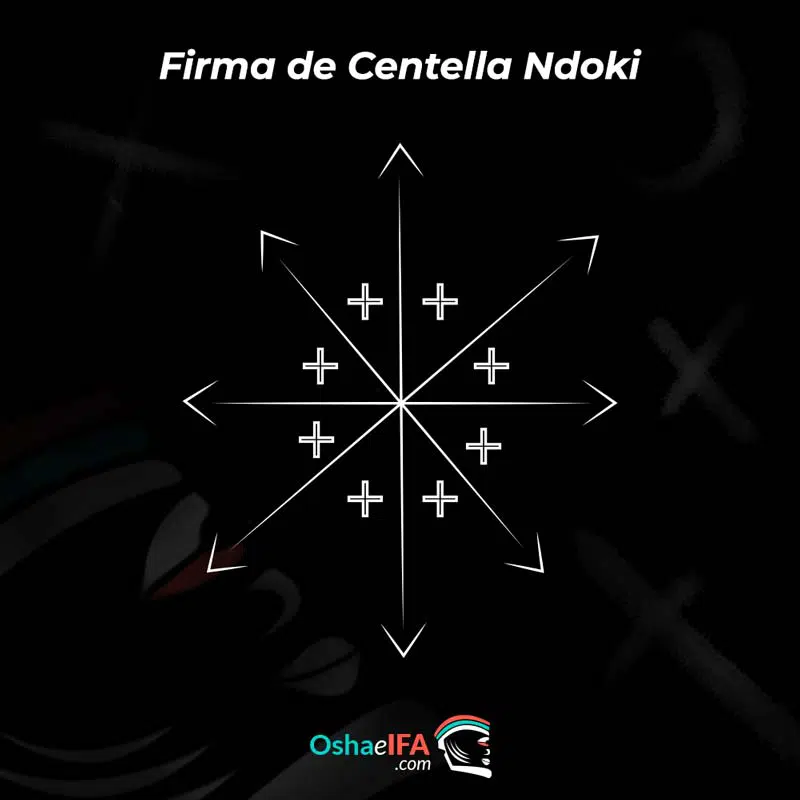
Centella Ndoki signatures

Centella Ndoki's signatures are part of the ritual language of Palo Mayombe. They are not mere drawings or decorative symbols, but spiritual marks used to summon, command, fix, or direct a force within a religious work.

In the case of Centella, his signatures are usually related to cemeteries, the dead, winds, boundaries, battles, whirlpools, and cutting forces. Their interpretation can vary depending on the branch and the teachings received within each munanzo.

It is not advisable to draw or use Centella Ndoki signatures without knowledge. In Palo, a misused signature is not innocent, because it is calling upon or moving a force that belongs to the realm of the dead.

General meaning of its symbols

Crosses can signify a crossroads, a relationship with the dead, a cemetery, or communication between planes.

Arrows can represent direction, attack, defense, wind movement, or spiritual action on a situation.

Circles can indicate closure, protection, a force field, or a concentration of a specific energy.

Broken strokes, swirls, or strong lines can be related to storm, lightning, bad wind, war, or sudden transformation.

The exact interpretation of a signature depends on the religious foundation and the specific religious house. Therefore, not all signatures are read the same way, nor are they all used for the same purpose.


Is Centella Ndoki dangerous?

Centella Ndoki should not be described simply as "evil." It is a severe, intense force of great spiritual power. Its domain belongs to the cemetery, the wind, the dead, and sharp cuts; therefore, it can be dangerous if worked with without permission, without guidance, or out of mere curiosity.

For those who honor her properly, Centella can be a great protector. She can defend, cut down spiritual enemies, clear heavy paths, and give strength in times of need. But she can also be relentless when disrespected or when someone tries to use her irresponsibly.

That's why they say you don't mess with Centella. His worship requires respect, keeping your word, discretion, and religious knowledge. He is not a force to be tested or invoked out of context.


Importance of Centella Ndoki in Palo Mayombe

Centella Ndoki occupies an important place within Palo Mayombe because it represents one of the deepest forces of the religion: contact with the dead, the power of the cemetery, the wind that announces changes, and spiritual warfare when there is no longer room for weakness.

Her figure teaches that death is not only an end, but also a transition, a source of power, memory, and transformation. It also reminds us that all true closure requires strength, respect, and accountability.

Anyone who approaches Centella must understand that they are not dealing with a gentle or mild force. They are in the presence of a power that protects, corrects, cuts, and transforms. That is why her name is spoken with respect within the houses of Palo.


Frequently Asked Questions about Centella Ndoki

Who is Centella Ndoki in Palo Mayombe?

Centella Ndoki is a Palo Mayombe mpungo associated with the cemetery, winds, storms, whirlpools, nfumbes, and the world of the dead. She is recognized as a warrior woman, stern and protective.

Is Centella Ndoki a goddess or an mpungo?

In general language it might be called a deity, but within Palo Mayombe it is better understood as an mpungo or spiritual power. Its strength manifests itself in the cemetery, the wind, the storm, the dead, and radical changes.

What are the names of Centella Ndoki?

She is also known as Mama Wanga, Mariwanga, Pungu Mama Wanga and Yaya Kengue, depending on the religious house, branch and oral tradition of the munanzo.

What is Centella Ndoki's number?

The number associated with Centella Ndoki is 9. This number appears in her history, her mysteries, her paths, and her relationship with cycles of closure, death, and transformation.

What are the colors of Centella Ndoki?

Its primary color is brown, due to its association with cemetery soil and swirling dust. It can also work with nine colors in certain traditional combinations, avoiding black in some contexts.

Is Centella Ndoki the same as Oya?

They are not the same. Centella Ndoki belongs to Palo Mayombe or Regla Conga, while Oyá belongs to Regla de Osha, of Yoruba origin. They are symbolically related through the winds, the cemetery, and storms, but each belongs to a different religious system.

What is asked of Centella Ndoki?

Centella Ndoki is asked for strong protection, spiritual defense, justice, cutting off enemies, dominion over difficult spirits, closing heavy situations and strength to go through profound changes.

Is Centella Ndoki dangerous?

It can be dangerous if used without respect, knowledge, or religious permission. It is not an evil force, but it is severe, intense, and related to delicate spiritual realms. Therefore, it is not recommended to invoke it or work with it outside of a reputable house.


Learn more about the Palo Mayombe:

Leave a comment

Your email address will not be published. Required fields are marked with *

You can not copy content of this page

Scroll to start