Watariamba: meaning, attributes and strength of the hunter

Watariamba is the hunting force of Palo MonteIt relates to tracking, surveillance, defense, and the precision needed to achieve the target. Its full name is Nkuyo WatariambaIt has been interpreted as "spirit of the fire stone," a reference to the flint that symbolically accompanies the hunter in the mountains.
It also appears under names such as Cabo Ronda, Vence Batalla, and Saca Empeño, although these names do not have the same meaning in all houses. In some lineages, they identify Watariamba; in others, they correspond to paths, garments, or treaties related to his power.
Watariamba Basic Fact Sheet
| Appearance | Description |
|---|---|
| Main name. | watariamba. |
| Full documented name. | Nkuyo Watariamba. |
| Meaning of the name. | “Spirit of the fire stone” or “entity of the fire stone”. |
| Nature. | Hunting force of the Conga Rules, recognized as mpungo, nkisi or entity according to the vocabulary of each house. |
| Main domains. | Hunting, tracking, surveillance, defense, search and precision. |
| Symbolic territory. | The mountain, the hunting trails, and the boundaries that must be monitored. |
| Common symbols. | Bow, arrow, footprints, hunting weapons, fire stone and tools linked to the forest. |
| Other names. | Cabo Ronda, Cabo Rondo, Vence Batalla, Saca Empeño and Pajarito, depending on the lineage. |
| Yoruba correspondence. | Ochosi, due to hunting, mobility, precision, and the symbolic relationship with flint. |
Who is Watariamba in Palo Mayombe?

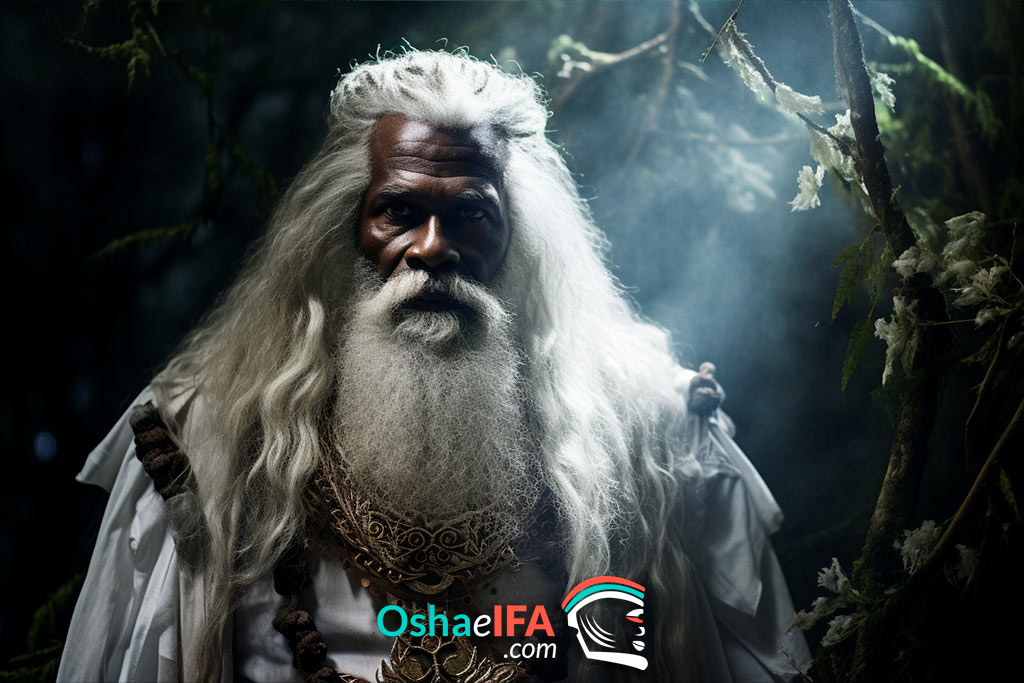
Watariamba is recognized as the hunter within the religious universe of Palo Mayombe or Palo MonteIts strength expresses knowledge of the terrain, patience, vigilance, and the ability to follow a trail until discovering its destination.
Hunting should not be understood solely as the pursuit of an animal. Within the language of Palo, it also represents the search for that which remains hidden: a threat, a cause, an opportunity, a way out, or the person responsible for a conflict.
Therefore, Watariamba is related to:
- The hunt. He knows the mountain and knows how to move around without losing sight of the objective.
- The tracking. Follow the signs and discover what others fail to recognize.
- Surveillance. Observe the territory and detect movements that may represent danger.
- The defense. Protect the house and respond when there is a threat.
- Precision. Focus your strength on a specific objective.
- The search. It helps to find paths, people, answers, or opportunities.
- The resolution. Pursue a situation until it reaches its conclusion.
Many houses call it mpungo. Others prefer to speak of an nkisi, an entity or a force manifested through a ngangaThe difference depends on the terminology retained by each branch and does not modify its main identity as a hunter.
What does Nkuyo Watariamba mean?
The most solid meaning of the name stems from the complete expression Nkuyo Watariambanot only from Watariamba.
Its formation has been explained using several Kikongo voices:
- Nkuyo or Nkuyu. Spirit, entity, or wandering spirit.
- Wa. Particle that expresses belonging: “of”.
- Tari o tadi. Stone, pebble or hard stone.
- A. Another relational particle: “de”.
- Mba. Fuego.
The set can be translated as “spirit of the fire stone”The stone to which the name refers is flint, capable of producing sparks when struck.
This etymology better explains Watariamba's identity than a translation based solely on the word "hunter." The name brings together three ideas: a moving entity, a hard stone, and the fire that allows survival within the forest.
The fire stone and the identity of the hunter

Flint occupies an important place in Watariamba's interpretation. The hunter who moves from one camp to another needs to maintain the ability to produce fire for light, protection, cooking, and survival.
The stone also possesses a religious dimension. Within Palo, the mataris They can concentrate or represent particular qualities of a force. They are not mere ornaments: they express a relationship between natural matter and spiritual presence.
In Watariamba, the fire stone represents:
- Survival. It allows one to stand firm in a difficult territory.
- Preparation. The hunter takes with him what he needs before entering the woods.
- Clarity. The spark illuminates and allows us to discover what was hidden.
- Defending. Fire protects and creates distance from danger.
- Movement. Flint accompanies those who change camps and follow new trails.
- Manifestation. An invisible force reveals itself through concrete matter.
This connection with flint does not make Watariamba a fire entity similar to Nsasi. Fire is part of his identity as a hunter and traveler, but it is not necessarily his primary domain.
Attributes of Watariamba
The hunt
Watariamba has mastered the art of finding, tracking, and catching. Hunting requires understanding the target's behavior, recognizing the terrain, and managing one's strength before acting.
For this reason, his image should not be reduced to the bow and arrow. The weapon serves as a symbol, but the true quality of the hunter lies in his ability to read the forest.
The tracking
A broken branch, a footprint, or an almost imperceptible change can reveal that someone has passed through a place. Watariamba represents the intelligence needed to interpret those signs and reconstruct a route.
In a religious sense, tracing is related to discovering the origin of a problem, identifying a threat, and finding what was lost from sight.
The precision
The hunter wastes no movement. He waits, calculates, and directs his strength toward a specific target. Watariamba represents concentration versus dispersion and correct action versus disordered impulse.
The arrow embodies this quality: once released, it follows a clear direction. Hence the idea that Watariamba achieves what he pursues.
surveillance
Watariamba observes the paths and the boundaries of the house. Vigilance does not mean living dominated by fear, but rather knowing the surroundings, detecting changes, and recognizing dangers before they get too close.
This quality explains the use of the name Cape Ronda in some lineages. Ronda is the one who travels, inspects, and ensures that the territory remains protected.
The defense
The hunter is also a defender when his territory, his family, or his community are threatened. The expression Win the Battle This combative dimension stands out.
A battle is not limited to a physical confrontation. It can represent a chase, an accusation, a dispute, a prolonged threat, or any conflict that requires strategy, endurance, and precision.
The search for justice
In many contemporary households, Watariamba is associated with matters of justice, persecution, and accusations. The association stems from the hunter who follows the trail until he finds the true culprit and does not abandon the search at the first sign of trouble.
It should not be confused with a judge or a guarantee of legal victory. Its intervention is understood through consultation and the authority of the foundation, not through a direct equivalence with the courts.
Other names for Watariamba
Religious sources and lineage records preserve several names related to Watariamba. Some are well documented, while others come primarily from contemporary compilations.
| Name | Context and meaning |
|---|---|
| Nkuyo Watariamba. | The full form used to explain its Kikongo origin. It means “spirit of the fire stone”. |
| watariamba. | Most common name for the hunting force within the Conga Rules. |
| Birdie. | Name taken from an expression of Briyumba or Vriyumba. Not used by all houses of that branch. |
| Cabo Ronda or Cabo Rondo. | Name linked to surveillance, patrolling and protection of a territory. |
| Victory in Battle or Victory in Bataya. | A name that highlights its defensive capabilities and its intervention in conflicts. |
| Make an effort. | A term associated with overcoming a difficult situation or finding a way out. |
| Nkuyo Lufo. | Name grouped with Watariamba in some modern lists, although other genealogies may distinguish it. |
| Nguatariamba Enfumba Bata. | Extensive form preserved in certain compilations and religious notebooks. |
Names should not automatically become paths. Cabo Ronda can be a title, a manifestation, or a specific garment; Vence Batalla can identify a quality or a foundation; and Saca Empeño can acquire a different meaning depending on the house.
Are Watariamba, Cabo Ronda and Vence Batalla the same thing?
In some houses, Watariamba, Cabo Ronda, Vence Batalla, and Saca Empeño are all names for the same hunting force. In others, they are distinguished as related paths, treaties, or foundations.
- watariamba. The hunter and spirit of the fire stone.
- Cape Ronda. The guard who patrols and protects the borders.
- Win Battle. The defender who faces and overcomes conflicts.
- Make an effort. The force that seeks a way out and takes the matter to its resolution.
These differences help to understand the language of names, but the final classification corresponds to the genealogy that preserves them.
Watariamba and Ochosi: Similarities and Differences

Watariamba is often associated with Ochosi Because both represent hunting, precision, and movement within the forest. The similarity was strengthened in Cuba through contact between the Regla Conga and the Regla de Ocha.
The etymology of Nkuyo Watariamba reinforces this relationship. Ochosi is described as a hunter who travels carrying a flint to produce fire, an image that coincides with the meaning of the “fire stone”.
However, Watariamba should not be defined simply as "Ochosi in Palo." They belong to different religious systems.
| Appearance | watariamba | Ochosi |
|---|---|---|
| Tradition. | Conga Rules or Palo Monte. | Yoruba tradition and Rule of Ocha. |
| Identity. | Hunting force manifested within Palo fundamentals. | Orisha of the hunt with its own consecrations and liturgy. |
| Shared attributes. | Hunting, tracking, defense, movement, and precision. | Hunting, justice, the mountains, and the precision of the arrow. |
| Featured subject. | Flint or fire stone within its Congo-Cuban symbolism. | Stones and attributes received according to the Rule of Ocha. |
| Religious authority. | It comes from the nganga, the lineage and the elders of the munanso. | It comes from the consecrations and authorities of Ocha and Ifá. |
Correspondence allows for the comparison of functions, but it does not make their ceremonies, foundations, or forms of care interchangeable.
Watariamba and San Norberto
Within the Kimbisa RuleNkuyo Watariamba appears to be related to St. NorbertThis is a historically documented Catholic correspondence, not a mandatory identification for all branches.
The image of the saint can form part of the visible language of a Kimbisera house, while the religious force of Watariamba continues to depend on the nganga and the genealogy of the foundation.
Outside of Kimbisa, different associations may appear, or no Catholic imagery may be used. Therefore, Saint Norbert should not become the "universal saint" of Watariamba within the entire Palo tradition.
Watariamba and Zarabanda
The relationship between Watariamba and Saraband It appears frequently in the Congo Rules. The hunter needs tools, weapons, and means to make his way, while Zarabanda is associated with iron, labor, and fighting strength.
Ancient sources already show some overlap between the two names. Nkuyo Watariamba was even recorded as a version related to Sarabanda, indicating that some houses did not establish completely rigid boundaries between these forces.
Contemporary treatises also mention pacts, accompaniments, or tokens where both manifestations work together. This may explain the presence of iron tools within the symbolism attributed to the hunter.
However, this relationship does not mean that Watariamba and Zarabanda are always the same entity. There are separate foundations and houses where each force maintains clearly differentiated functions. The union depends on the origin of the prenda and the treaties of the lineage.
Watariamba in Mayombe, Briyumba and Kimbisa
Watariamba does not receive exactly the same name nor is it expressed in the same way in all the branches of the Palo.
In Mayombe
In Mayombero lineages, it appears as a hunting force, a defender, and a connoisseur of the forest. The names Cabo Ronda, Vence Batalla, and Saca Empeño are linked to the foundations and treaties of certain houses.
The focus is on its manifestation within the nganga and on the relationship between the foundation, the dead person, and the materials associated with its hunter identity.
In Briyumba
In a documented expression of Briyumba or Vriyumba, it was called BirdieThe data shows how the same force can adopt a particular Spanish name within another branch.
This doesn't mean that all Briyumberos call it that. Houses may retain Watariamba, use proper names, or interpret Pajarito as a specific manifestation.
In Kimbisa
Kimbisa retains its form Nkuyo Watariamba and its correspondence with Saint Norbert. The presence of Catholic names is consistent with the religious integration characteristic of the Kimbisa Rule of the Holy Christ of the Good Voyage.
Catholic correspondence does not replace the conga nature of the force nor turn its foundation into a saint's altar.
Symbols of Watariamba
- The arc. It represents preparation, tension, and control before acting.
- The arrow. It expresses direction, speed, and accuracy.
- The flint. Summarize the meaning of its name and the ability to produce fire.
- Fingerprints. They point to the trail that allows you to find what is hidden.
- The mountain. It is their space for movement, learning, and hunting.
- Hunting weapons. They represent survival, protection, and reach.
- Iron tools. They reflect their relationship with Zarabanda in certain houses.
- The birds. They can express vigilance and movement, especially in lineages that retain the name Pajarito.
The colors, numbers, animals, and days listed for Watariamba do not coincide among different sources. Some lists repeat associations of Ochosi, while others retain data specific to a particular house. Therefore, there is no single color or numerical chart valid for all the foundations.
The religious care of Watariamba
Watariamba's approach is characterized by order, vigilance, and clarity of purpose. It is not presented as a scattered force: each request must respond to a specific need and be established through consultation.
In general, their care may include:
- A clean and uncluttered space. Order represents territorial control and the ability to recognize any change.
- Elements related to hunting. The bow, the arrow, the footprints, or the flint can express their identity within the house.
- The fire stone. It is one of its most important symbols because of the meaning of Nkuyo Watariamba.
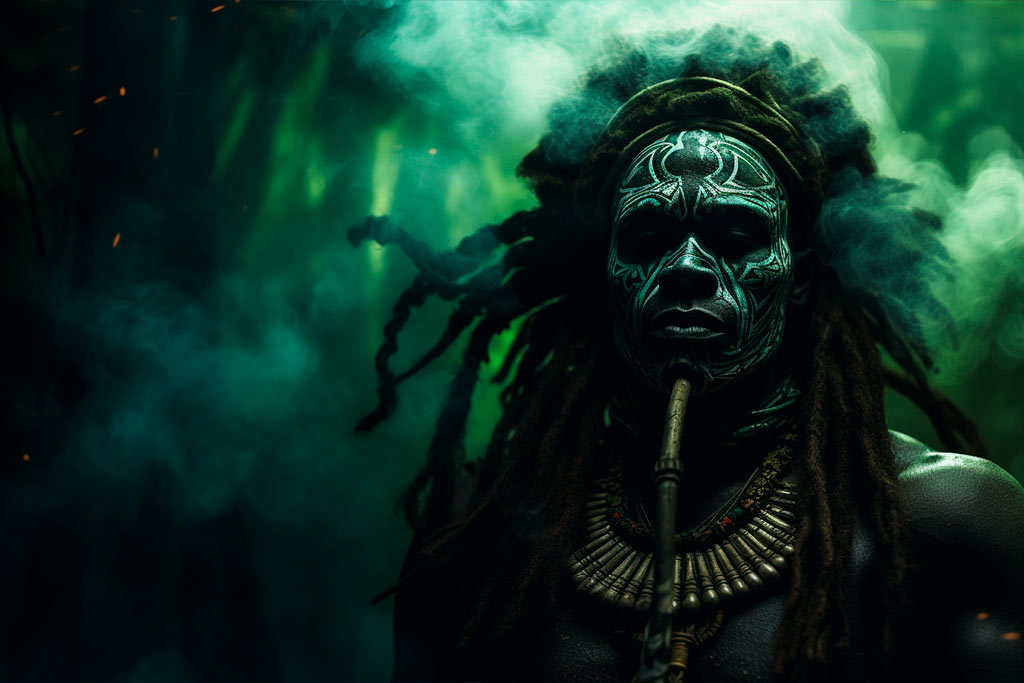
- Smoke and songs. Some houses use tobacco, mambos and greetings according to their religious customs.
- Iron tools. They can appear when the foundation maintains a recognized relationship with Zarabanda.
- Prior consultation. It allows us to determine what the foundation needs and whether it is appropriate to intervene in the matter presented.
- Constancy. Watariamba is not only attended to when there is persecution or conflict; the relationship is maintained through household obligations.
- Respect for lineage. The elements, songs and ways of presenting them depend on the treaties received by the munanso.
The practices of Ochosi should not be automatically transferred to Watariamba. The correspondence between the two explains symbolic similarities, but each tradition maintains different foundations and authorities.
The nganga of Watariamba
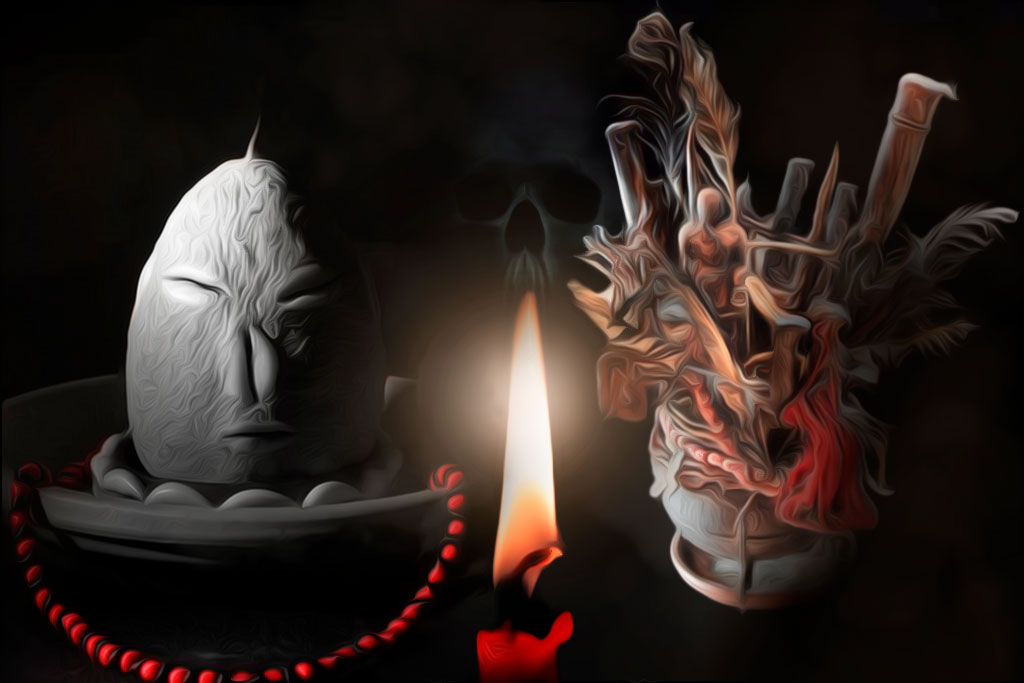
Watariamba is not simply a human image of the hunter nor a collection of weapons. Its religious presence is established through a nganga or prenda born into a genealogy.
The foundation encompasses the relationship with the deceased, the territory, the mountain, and the elements that correspond to its identity. Its authority depends on:
- The garment from which it was born.
- The license for the elderly.
- The relationship established with the nfumbe.
- The ceremonies that gave him recognition.
- The obligations assumed by its owner.
- The treaties kept by the house.
Knowing the hunter's attributes does not allow one to reproduce his essence. The nganga does not acquire power by gathering flint, iron, or hunting symbols, but by its origin and its connection to a religious family.
Why go to Watariamba?
- Protection from persecution.
- Searching for people, opportunities, or paths.
- Defense against a persistent adversary.
- Discovery of the origin of a conflict.
- Surveillance of a house, business or territory.
- Resolving situations that remain stagnant.
- Matters of justice, accusations or disputes.
- Concentration to achieve a defined goal.
- Steadfastness to uphold a decision until its conclusion.
The intervention is not determined solely by what the person wants. First, the situation is assessed, the problem is identified, and the underlying perspective is heard.
What the hunter represents
Watariamba shows that victory does not depend solely on possessing greater strength. The hunter survives because he knows the terrain, manages his movements, and knows how to wait.
- Observe before acting.
- Distinguish the objective from the distractions.
- Do not reveal your position unnecessarily.
- Follow the signs until you understand the problem.
- Prepare yourself before entering unknown territory.
- Concentrate the force in one direction.
- Defend your home without living dominated by fear.
- Do not abandon the trail before reaching its origin.
The hunter's speed is not recklessness. Watariamba can move swiftly because he has first observed, calculated, and recognized the path.
Frequently Asked Questions about Watariamba
Is Watariamba an mpungo?
Many houses recognize him as mpungo the hunter. Others use the terms nkisi, entity, or foundational force. The name depends on the religious vocabulary of each lineage.
What does Watariamba mean?
The full form Nkuyo Watariamba means “spirit of the fire stone.” The name alludes to the flint carried by the hunter during his travels through the forest.
Is Watariamba Ochosi?
No. Watariamba belongs to the Congo Rules and Ochosi to the Yoruba tradition. They are related because they share hunting, precision, movement, and the image of the hunter carrying flint.
Are Watariamba and Cabo Ronda the same thing?
In many homes, Cabo Ronda is a name or manifestation of Watariamba. In others, it may identify a specific garment or function related to surveillance.
What does the fire stone symbolize?
It represents survival, preparedness, clarity, and the ability to move through the forest. It also explains the origin of the name Nkuyo Watariamba.
Watariamba, the spirit that follows the trail

Watariamba represents the hunter who enters the forest without losing his way. His strength lies not only in combat, but also in observing, tracking, and striking his target with precision.
The meaning of Nkuyo Watariamba as “spirit of the fire stone” reveals a deeper identity than the image of the bow and arrow. It encompasses movement, survival, knowledge of the land, and the manifestation of the sacred through matter.
Cabo Ronda, Vence Batalla, Saca Empeño and Pajarito highlight different aspects of the hunter, but their final meaning depends on the branch and genealogy that preserves them.
His comparison with Ochosi allows us to understand the historical dialogue between Palo and the Rule of OchaHowever, it does not transform a Congo foundation into a Yoruba orisha. Watariamba belongs to the Congo Rules and his authority comes from the nganga, the dead, and the house that received him.
Sources and editorial criteria
The explanation of Nkuyo Watariamba and its translation as “spirit of the fire stone” is based on linguistic and ethnographic studies of the Kikongo vocabulary preserved in the Reglas Congas. These investigations also document the name Pajarito in Briyumba, its correspondence with San Norberto in Kimbisa, and its symbolic relationship with Ochosi.
Classic works on Palo Monte that include variants of Watariamba and its proximity to Sarabanda were also consulted, along with later research on the Palo deities and their Afro-Cuban correspondences.
Cabo Ronda, Vence Batalla, Saca Empeño, and other names are presented as names preserved by specific lineages and religious compilations. They do not automatically become universal paths or identical foundations.
The features related to justice, defense, and search reflect widespread religious practices, but their specific application depends on consultation with and the authority of each munanso. Charges, consecration procedures, and reserved compositions are not included.
To expand on these concepts, also consult the content dedicated to the mpungos, the nganga, the nfumbe, Saraband and branches of Palo Monte.
Other mpungos and foundations of Palo Mayombe
Watariamba is part of a religious universe where each force is understood through its foundation, its ancestors, and the genealogy of the house. Explore the following content to learn about other mpungos and the organization of the Congo Rules.