
Ogbe and his omolúos: meaning of the 16 combinations
Ogbe is the first of the 16 principal odu that make up the Ifá corpus. When combined with itself, it forms Baba Ejiogbe or Ogbe Meji; when combined with the other odu, it gives rise to the remaining signs of its family. Here you will find the 16 configurations that begin with Ogbe, with access to their meanings, proverbs, advice, prohibitions, prayers, and patakis.

The 16 signs of the Ogbe family
The Ogbe family comprises Baba Ejiogbe and the fifteen odu that are formed when Ogbe appears combined with each of the other main signs. Each configuration has its own teachings and orientations, so it cannot be interpreted solely from the general meaning of Ogbe.
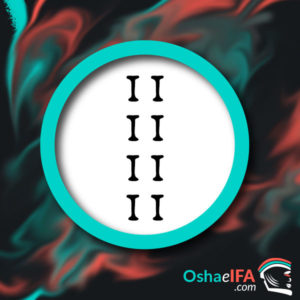
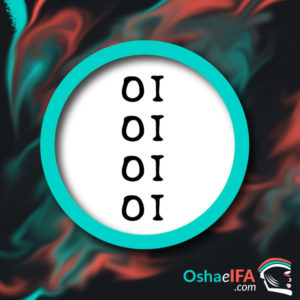


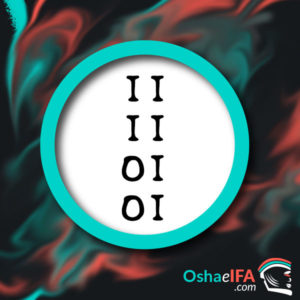
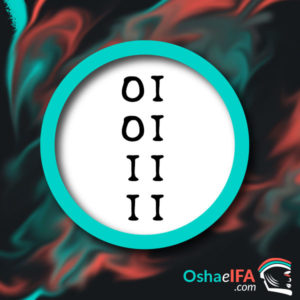


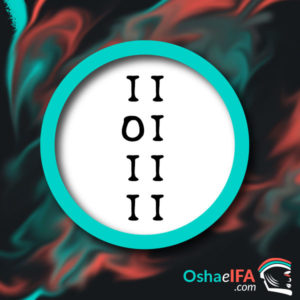


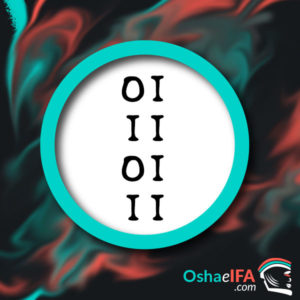
Baba Ejiogbe
Ogbè Méjì · Ojú Odù · n.º 1
It opens the Ifá lineage and is related to creation, light, organization, and the principle of life. Its teachings emphasize responsibility, humility, and the proper use of authority.
Ogbe Yekun
Ogbè Òyèkú · Amúlù Odù · n.º 17
It combines the clarity of Ogbe with the depth of Oyekun. It warns against hasty judgments, compromising words, documents, and situations that demand prudence.
Ogbe Iwori
Ogbè Ìwòrì · Amúlù Odù · n.º 18
It teaches observation before acting and reminds us that the knowledge of Ifá does not allow for presumption. Preparation, conduct, and respect for the consultation allow for the correct recognition of each guidance.
ogbe di
Ogbè Òdí · Amúlù Odù · n.º 19
It relates to the distribution of knowledge, intelligence, and the ability to specialize. It also warns that ambition, deception, and the misuse of position can create rivalries.
Ogbe Roso
Ogbè Ìròsùn · Amúlù Odù · n.º 20
It speaks of transformation, progress, and the use of tools. Ifá highlights in this sign the patience, foresight, and integrity necessary to overcome obstacles and maintain stability.
Ogbe Wale
Ogbè Òwónrín · Amúlù Odù · n.º 21
It is closely related to Egún, the home, and family responsibilities. It teaches that one should not neglect one's own foundations while trying to solve other people's problems.
ogbe bara
Ogbè Òbàrà · Amúlù Odù · n.º 22
Known as an Ifá of hidden things, it speaks of secrets, revelations, and events that can change a situation. It recommends discretion and responsibility regarding the information received.
ogbe kana
Ogbè Òkànràn · Amúlù Odù · n.º 23
It may herald prosperity and a breakthrough capable of surprising those around you. However, it demands maintaining dignity, preserving personal balance, and sustaining good fortune through virtuous conduct.
Ogbe Yono
Ogbè Ògúndá · Amúlù Odù · n.º 24
It explores the relationship between actions and their consequences. It warns against betrayal, disobedience, and impulsive decisions, but it also contains teachings related to healing.
Ogbe Sa
Ogbè Òsá · Amúlù Odù · n.º 25
It teaches that projects must be completed thoroughly. Neglect, half-measures, and abandoning what has been started can cause losses that are avoided through discipline and perseverance.
Ogbe Ka
Ogbè Ìká · Amúlù Odù · n.º 26
It relates to the marks on the hands and to what is destined. It warns against slander, betrayal, and the risk of losing rights or positions due to a lack of caution.
Ogbe Tumako
Ogbè Òtúrúpòn · Amúlù Odù · n.º 27
It warns against pride and the feeling of being invincible. It teaches how to recognize one's own limitations, properly assess adversaries, and not let achieved mastery become a cause for downfall.
ogbe tua
Ogbè Òtúrá · Amúlù Odù · n.º 28
It represents the balance between light and darkness, creation and destruction. It reminds us that every action has a consequence and that decisions should be made with wisdom and awareness.
Ogbe Ate
Ogbè Ìrètè · Amúlù Odù · n.º 29
It speaks of the tension between what is desired and what is destined. It may show a position or recognition that is close, but it teaches that all advancement requires preparation, patience, and the ability to assume responsibilities.
ogbeshe
Ogbè Òsé · Amúlù Odù · n.º 30
It relates to premonition, prophecy, and the ability to recognize signs. It encourages listening to elders and not abandoning the path when difficulties arise.
ogbe fun
Ogbè Òfún · Amúlù Odù · n.º 31
It speaks of the desire to prolong life, of self-care, and of making the ide as protection. It teaches that longevity also depends on fulfilling religious obligations.
Ogbe within the Ojú Odù
The Ojú Odù These are the 16 main configurations upon which the Ifá corpus is organized. Each one has its own pattern and serves as the foundation for forming the remaining signs. Ogbe occupies the first place within this group, and its main configuration is called Ogbè Méjì, Ejiogbe, Eyiogbe, or Baba Ejiogbe.
The Yoruba word méjì It means “two” or “double.” In Ogbè Méjì, the Ogbe pattern appears repeated on both sides of the configuration. For this reason, Baba Ejiogbe belongs to the Ojú Odù and not to the combined signs.
In this family, therefore, only Baba Ejiogbe is an Ojú Odù. The other fifteen signs are combinations formed from Ogbe and another main odù.
The Amúlù Odù or omolúos of Ogbe
The Amulù Odù These are the 240 signs that result from combining two different Ojú Odù. The expression Amulù Odù It can be understood as "combined odù" and allows these configurations to be distinguished from the 16 main signs.
In Afro-Cuban tradition and literature, these combined signs are commonly known as omolúosThus, expressions such as “the omolúos of Ogbe” refer to Ogbe Yekun, Ogbe Iwori, Ogbe Di and the other combinations in which Ogbe heads the sign.
The Ogbe family consists of one Ojú Odù, Baba Ejiogbe, and fifteen Amúlù Odù or omolúos. Together they comprise the 16 signs included in this directory.
Each Amúlù Odù constitutes a complete sign. Its interpretation does not simply consist of adding the meaning of its two components, because each combination possesses its own verses, patakís, proverbs, prohibitions, births, and orientations within the corpus.
What does Ogbe represent in Ifá?
Ogbe is related to light, the manifestation of life, clarity, growth, and the ability to organize that which begins. For this reason, Baba Ejiogbe appears associated with the beginning of processes, breath, the Sun, and the expansion of existence.
However, the presence of Ogbe alone does not automatically guarantee prosperity. The light also reveals what was hidden and compels one to take responsibility for what is known, directed, or created. In its various combinations, Ogbe can herald openness and growth, but it can also warn of pride, disobedience, ambition, loss of authority, or an inability to maintain a position.
The second odu modifies how this foundation is expressed. With Oyekun, matters related to closure, depth, and prudence appear; with Iroso, transformation and trials manifest; with Owonrin, ancestors and household obligations become important. This relationship explains why the signs of the same family share a foundation but offer different orientations.
How to interpret the signs of Ogbe
The treatises compiled in this directory allow one to understand the composition, alternative names, and main teachings of each odu. However, a sign manifested during a consultation must be interpreted according to the context in which it appears, the witnesses who accompany it, and its orientation in iré or osogbo.
The same configuration can indicate different situations depending on the question, the ceremony, or the person being consulted. Therefore, proverbs and recommendations should not be applied in isolation nor taken as universal predictions. The religious interpretation is the responsibility of the babalawo, who determines which part of the corpus corresponds to the situation presented.
To understand how these families are organized within the overall system, you can consult our guide on the 256 Ifá signs and their meaning.
The other families of the odù of Ifá
Ogbe is the first of the 16 families that make up the corpus. The journey continues with Oyekun and follows the order of the Ojú Odù:


