
Elekes: The Necklaces of Santeria
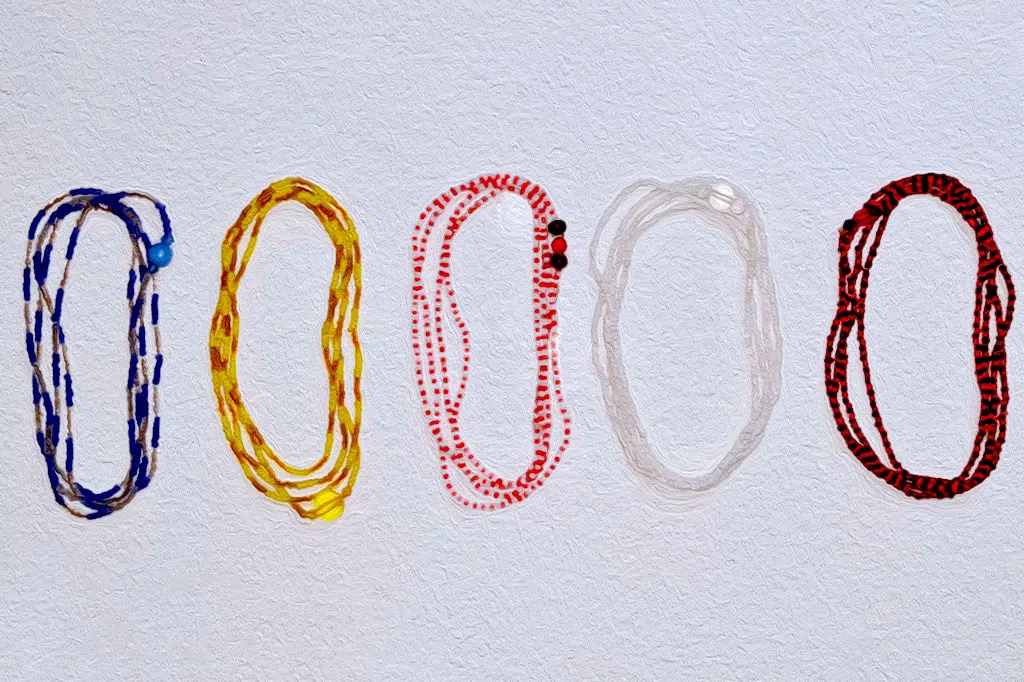
Santeria necklaces are a system of stringing glass beads with different shapes and colors that are associated with the different Orishas of the Yoruba Religion. They are also known as Elekes and are placed on believers as symbols of respect, devotion and faith to worship.
They fulfill different functions, although the main one is to protect those who use them from the different negative energies (Osobo) and provide them with luck and well-being (Ire).
What meaning do necklaces have in Santeria?
All the deities in the Santeria cult have a necklace that represents them, these are made up of beads (matipo) of the colors that identify each Orisha. Regardless of the guardian Angel of the person, the elekes of the 5 fundamental Orishas (Elegua, Obatala, Yemaya, Shango and Oshun) will be placed.
The necklaces have great significance within the Yoruba Religion, as they symbolize the beginning of life within the Osha-Ifa rule. These elekes (Necklaces) are used in order to obtain protection, stability, firmness and evolution in life. They symbolize the attachment and bond between the Orishas and the people, which arises from the moment that the ceremony of imposition of necklaces is carried out, it is performed by a priest or priestess, he is granted the title of godmother or godfather. of who is starting.
Types of necklaces in Santeria:
The Afro-descendant religions that use necklaces as attributes and symbols of devotion to the different deities are different. The rule of the palo mayombe, the Arara and the rule of Osha and Ifa (Santeria) are the ones that place the most emphasis on the use of them.
Specifically in the rule of Osha and Ifa there are different types of saint necklace that are the following:
Simple necklace
They are placed around the neck, their beads do not exceed 1 Millimeter in diameter, which can be shiny, translucent or opaque, sometimes they can use larger beads that serve as guides. The size of this necklace varies, it depends on the height of the person who is going to use it since it must end at the navel.
Double thread
The double necklace is made of two strips of beads that extend in parallel, its most frequent use is given by santeros when making it with the colors of the saint for whom the Kari Osha ceremony was performed, that is, his tutelary Orisha.
Mallet necklace
The mallet or presentation necklace as it is also known, is the one that is used when the person is going to seat Osha, or when a special ceremony is going to be officiated. The Mazo necklace is longer than the necklaces that are usually used in Santeria, it is used crossed between the right shoulder and the left hip or vice versa. It is made with 6 or more threads, colored beads and large glories.
The beads are placed according to the Orisha or Saint or depending on the guardian angel of the person, for their elaboration we must always take into account the multiples and sequences of each color, the glories will be used as separators of each section that is elaborated, These can be made of acrylic or wood according to the corresponding ocha. This mallet or necklace is not used daily, it is customary to place it on top of tureens.
Ceremony
The ceremony of delivery or imposition of necklaces is called "Half saint" or "half Seat", in it only the necklaces are delivered and in some cases the Otan de Elegua.
This ceremony must be carried out in an atmosphere of tranquility and good energy, usually they are carried out in the house of the godfather or godmother with the help of the Oyugbona, who works as an assistant throughout the process of delivering necklaces.
In this beautiful ceremony, 5 necklaces are received that represent the five main deities of the Osha ruler (Eleggua, Oshun, Yemaya, Shango and Obatala). The sequence for the imposition of the same is not specific since this will depend on the protocol or custom that they have in the house of saint.
The necklaces are received after the previous and secret ceremonies for their consecration have been carried out. After this, the godfather or godmother must explain to the aleyo the rules that he must respect, in addition to the commitment of union that must exist between the two and the religion. Generally, the people who receive the necklaces do so for a specific reason, it may be for protection, health, improving their working conditions and way of life.
Who receives them?
The necklaces in Santeria can be received by anyone who wishes to start, although it is recommended that the imposition of them be the next step after Orula's hand. It is very common that the need to receive these fundamentals comes from some consultation or divination through some of the Oracles of Osha or Ifa.
Benefits of receiving necklaces
Once the ceremony of receiving the Osha necklaces has been passed, the aleyo (Initiate) begins a new stage in his life, and he will want to perceive the benefits he seeks to attract after this small but important consecration. Some of the benefits that this ceremony brings are:
- Protection against all evil and danger around you.
- Prosperity.
- Financial stability.
- Evolution on the spiritual plane.
- Health.
- Improvements in your work environment.
Who delivers the elekes?

The necklaces or elekes are delivered in a ceremony performed by the santeros. This ceremony is performed only once in your life, therefore you must be very careful when choosing who will be your guides within the religion. the person receives elekes or necklaces these will bring to his life a great protection against everything bad and a spiritual connection with the orishas.
Colors of the Santeria necklaces (Yoruba Religion)
The saint necklaces that are used today are far from the first attributes that were used by the Yorubas, since in Africa the use of seeds, ceramics, glass, metals, feathers, tusks, precious stones, wood, snails and other natural objects for the manufacture of art articles, which were used in a cosmetic way or could be implemented in different religious cults.
The colored beads that are currently used reach America from Spain around the XXII century, they were blown glass, mostly rounded and brightly colored where blues and pinks predominated. At that time the trade of this type of merchandise was common, it is not known exactly why, but little by little the believers of the different Afro-descendant religions were substituting the materials for making the necklaces for the different beads (matipo) and adapting the range of colors to what we know today.
The colors of the necklaces that are received represent each Orisha, being these of a specific color that allows us to identify them. The colors and orishas are as follows:
Elegua: Red and Black

The colors of the necklace Elegua It is red and black, it means life and death, the beginning and the end. This Orisha is the owner of the roads, opens and closes the doors of people's destiny. You have the privilege of being the first in everything, which is why your eleke is the first one received. It helps us in the development and evolution of our day to day. Her necklace is made in multiples of 3.
The different variants that the Elegua necklace can wear are:
- Red and black beads alteas
- Black and red matipós to which some white is skipped and turned black.
- Black and white pearl beads.
- Three red beads, three black beads, and three white beads to finish the string.
- Alternating black and white beads.
Obatala: White

Necklace Obatala It is white, it is made in multiples of 8. This orisha is the one that governs heads, dreams, thoughts and harmony. represents stability, everything pure and white, allows us to enjoy good health and tranquility. He is the father of all orishas.
The saint necklaces of the Orisha Obatala can be:
- Continuous white beads with a single point of color.
- 16 white, 4 water color, 1 coral, 4 water, which are repeated until the end.
- White pearls in complete sequence and some color inserted, it can be black, red or blue with a single bead.
- 24 white, 1 red and 1 ivory or mother-of-pearl beads
Yemaya: Blue

Yemaya It is represented by the colors blue in all its shades and transparent, the necklace is made in multiples of 7. This orisha is the owner of the seas, the mother of the world, represents motherhood and fertility.
Its most common necklaces are:
- Blue beads run
- White, light blue or transparent pearls.
- Opaque beads and transparent alternating with translucent blue beads.
Oshun: Yellow

Necklace Oshun It is yellow and carmelite is made in the following way five yellow beads and five carmelites successively until it is finished, this orisha symbolizes wealth, femininity and love. She owns the rivers and springs.
- 8 light blue, 8 yellow, 8 white and 8 red beads.
- Beads of 4 colors white, blue, yellow and red that indicate the paths, these are separated from each other by 2 pearl beads that have a coral in the middle.
- 16 white beads, 8 punch, which alternate until the end.
Shango: Red and white

Its necklace is made by alternating red and white beads in multiples of 6. It represents the Orisha king of fire and the bata drums. It symbolizes male strength and virility, Shango it always helps us defeat our enemies and establish our leadership in everything.
- 1 red bead and 1 white bead alternate.
- Alternate red and white pearl beads also one by one.
- 1 white and 6 red count, 6 white and 1 red, followed by 1 white and 12 red until reaching XNUMX until the appropriate size is reached.
Rules that we must follow for the use of necklaces
- They should not be used when attending a party.
- In the case of women, they should avoid using them while it is on the days of menstruation, since it is in a purification period.
- Avoid remaining without clothes or undressing in front of the elekes as it is considered a lack of respect towards the Orishas.
- Try not to swear or curse while wearing the necklaces.
- Remove necklaces before bathing, entering rivers, swimming pools or beaches. Since they cannot get wet, because they lose the energy of the deities present in them. They can only get wet when they are going to be cooled in omiero or coconut water.
- Do not sleep with the necklaces on, you run the risk of suffocation. (Except if you feel any health discomfort, you can sleep with the Obatala necklace).
- Necklaces are for personal use. They should not be loaned or given away for any reason.
- Do not drink alcoholic beverages or consume narcotics while wearing the necklaces.
- Do not drop them on the floor, if this happens accidentally you should lift them immediately and give them a kiss as a sign of respect.
How are Santeria necklaces used?
The elekes or necklaces must be used under a pattern of respect towards the Orishas and Oshas, always maintaining special care towards them.
- They should always be worn on the neck. Except for some exceptions where the use of them is not allowed. This can be in the workplace, studies, or other kinds.
- Use them daily as long as you do not have any restrictions to carry them.
- Wear them whenever you need to do some Ebbo or work for your benefit.
- Always keep them in a white cloth or handkerchief, taking care that they do not get tangled.
It is also important to note regarding the use of necklaces that men should wear them inside their clothing, while women wear them outside. This rule has come from times back, but nowadays the vast majority of religious prefer to wear them inside their clothing, motivated by criticism and prejudice from society.
Learn all about the consecration of Kari Osha
Necklace of the Seven Powers
The seven African powers are one of the most representative and important deities of the Yoruba pantheon, they are invoked in case of extreme urgency or danger, also to ask them to help us have enough strength to face any difficult situation we are going through. These deities are: Obatala, Shango, Elegua, Oshun, Oggún, Orunmila and Yemaya.
The necklace of the seven African powers is used mainly as protection, to overcome difficulties and obstacles that stand in the way of the recipient. Also to obtain stability in all aspects of life. This necklace is an amulet used in order to obtain union, well-being, strength, protection, luck, prosperity and harmony. It symbolizes that wherever the wearer goes, all the deities of the Yoruba Pantheon are present.
This eleke or necklace is made with beads of the colors that represent the 7 Orishas that make up or integrate the Seven African powers.
The colors that this necklace wears are white that symbolizes peace, red that represents passion and love, blue is connected with protection, orange that symbolizes prosperity, green that represents health, yellow that is directly related to wealth. and finally the violet that represents wisdom.


Good afternoon, my question is the following… Is it disrespectful to be without a shirt with the eleque on? I expose this doubt since even having a pledge the eleke is in contact with my torso.
A greeting.
ashee