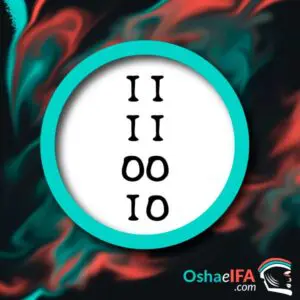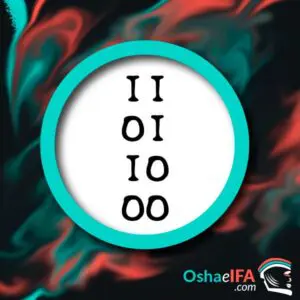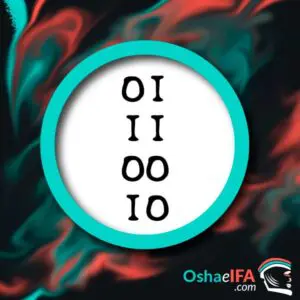
Iroso Ojuani (Ìrosùn Òwónrín)

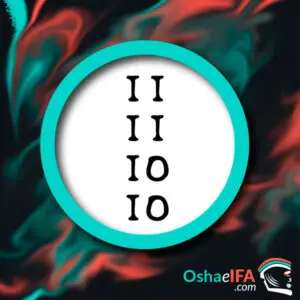
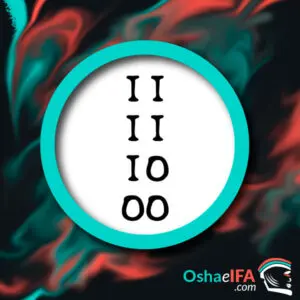
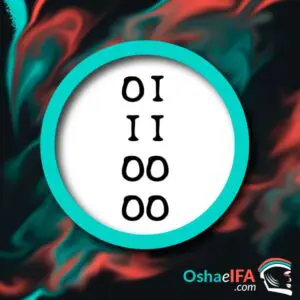
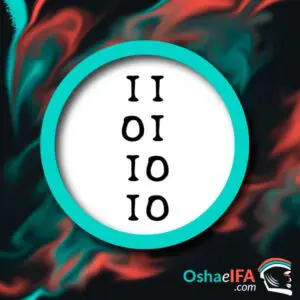
Iroso Ojuani is the combination between the Odu Ìrosùn and Òwónrín, it is number 81 in the Ifá manorial order. This sign reveals the power of fire, light, and money, but also the danger of pride, vices, and impulsive decisions. It presents a stark contrast between great opportunities for growth and extreme risks, where obedience to Ifá determines between downfall and rise.
Analysis and Meaning of the Ifá Odu Iroso Ojuani
Iroso Ojuani is an Odu of violent contrasts: here, life can go from light to fire in an instant. Ifá shows a person with brilliance, talent, and presence—like the light bulb and the candle born in this sign—capable of illuminating the path of others, but who, if led by pride and a bad temper, turns that same light into a blaze that burns everything. The “king who can lose his crown” is not only a literal monarch, but anyone who, through pride or impulsiveness, loses their position, their respect, or their freedom.
This sign reveals paths that seem firm but are ultimately futile: friendships, business ventures, or decisions that feel secure but conceal traps. That's why Ifá says the person may end up with "one foot in jail and the other in the hospital"; it's the image of a life lived on the edge: parties, vices, arguments, unnecessary risks. Iroso Ojuani is also the Ifá of the musician and of social upheavals: when those who should care for the people—or the family—give in to comfort, and vices, hunger, and need erupt in the streets or within the home.

Orunmila, upon leaving Asia because no one could break free from opium addiction, issued a direct warning for this sign: when a person of Iroso Ojuani becomes addicted to drugs or alcohol, their will is hijacked. It is not just a habit, it is a form of slavery. And while they live amidst feasting, parties, and excess, the family suffers, grows cold, and eventually drifts apart. Even so, Ifa promises a powerful blessing: although one may weep for lack of work or money, this Odu is one of abundant blessings and of "buried values" that can come to light… provided one controls their tongue, does not raise a hand against anyone, and performs the ritual with seriousness.
Economic and labor aspects

In economic terms, Iroso Ojuani is an Odu marked by the possibility of ruin and sudden recovery. It is a sign of Iré Owo: the person has the ability to find money where others only see scarcity, discover "buried treasures," rescue seemingly lost businesses, or receive unexpected help when everything seemed lost. The yam (Ishu) appears as a symbol of this wealth: here it is not eaten, but respected as a representation of prosperity that must be nurtured, not devoured.
However, the prosperity of this Odu is highly sensitive to character and ethics. Pride, vices, mismanagement, and impatience can lead to being "on the verge of losing everything" more than once. Therefore, Ifá advises performing ebó to successfully navigate the business dealings that are causing unrest and to never abandon one's profession or Ifá, not even in times of hardship. The economic lesson of Iroso Ojuani is clear: money comes, but it is sustained only through humility, spiritual obedience, and responsibility to family and commitments.
Health and Wellness
In matters of health, this Odu calls for extreme vigilance. When it speaks of "spitting blood" and of pride rising to the head, it indicates risks of strokes, hemorrhages, serious digestive problems, ulcers, vomiting blood, and internal damage caused by accumulated anger, alcohol, or toxic substances. Stomach aches and illnesses are not minor issues here: Ifá insists on being careful with the water one drinks and the quality of what one eats.
The primary taboo is fire: fire, neglected kitchens, improperly placed candles, and mishandled electricity. Iroso Ojuani signifies serious burns and fire-related accidents if this element is not respected. Added to this is the physical and mental exhaustion caused by addictions; what began as an escape ends up overpowering the individual's will. The image of "one foot in the hospital" is a constant reminder: living on the edge, without restraint, in this Odu almost always ends in a hospital bed, in the emergency room, or with an illness that could have been avoided if one had been heeded in time.
Religious and spiritual aspects
Religiously, Iroso Ojuani moves under the fire of Shangó and the whiteness of Obatalá. Here, Shangó kicks the earth, and it bursts into flames: the lightning represents both punishment and sudden enlightenment. Therefore, one must give Shangó whatever he asks for in the doorway of the room, to quell conflicts and channel his power toward protection, not destruction. It is an Odu where receiving Ifá is not a luxury, but a necessity to stabilize destiny and bring order to a life prone to excess.

The ritual of wearing flashy clothes, going to crowded places, and then returning home to dress in white before Obatalá carries profound meaning: first, the glitter, vanity, and noise of the world are displayed; then, the soul is laid bare before purity, seeking humility and forgiveness. It is recommended to wear metal bracelets of Obatalá and always give thanks to the Yam, Osun, and Shangó, maintaining the balance between fire and calm. Furthermore, this Odu emphasizes the role of the godfather: he must teach with patience and integrity; envy and clashes between religious practitioners are dangerous here, because a spiritual war can engulf the entire household.
Personal relationships and love
In matters of love, Iroso Ojuani is a minefield of intense passions and potential tragedies. Ifá warns men about women and relationships that can become a source of great conflict: jealousy, love triangles, rivals, and arguments that end in shame or violence. It's not that the woman herself is the problem, but rather the irresponsible way of loving, promising, and toying with the feelings of others. Here, a single blow, an impulsive reaction, can unleash an irreparable tragedy.
For a woman, the Odu often reveals the presence of an Egun (ancestral spirit) living within her, hindering her marital stability. Even with money, beauty, or social standing, she may not feel secure in love. If that spirit was an Alakuata (a type of spirit) in life, it can incline her toward that same orientation, generating internal or external conflicts if not addressed with truth and spiritual order. Hence the urgency of performing Oparaldo (a divination ritual) and harmonizing her love life. Iroso Ojuani also shows that when partying, drugs, and the streets are preferred to home, the partner and family drift apart; not as a capricious punishment, but because they tire of living in a constant state of conflict. Ifá teaches here that true Iré (good fortune) in love is born from sincerity, emotional responsibility, and a complete rejection of falsehood.
General Description of the Ifá Sign Iroso Ojuani
Iroso Ojuani is an Odu of great economic potential, artistic talent, and leadership, but it treads on potentially barren ground. Those born under or governed by this sign must learn to use Shangó's fire to illuminate, not to ignite; they must abandon vices, fulfill all the required offerings, honor their family, and bring order to their spiritual life.
Names or Aliases:
- Iroso Ojuani.
- Irous Juani.
- Iroso Wani.
- Ìrosùn Òwónrín.
- 4-11.
What originates in the Odu Iroso Ojuani?
- The electric light bulb.
- If it marks death (Ikú), you have to be careful with a bird that the enemy may send.
- There are buried values that you will find.
- Electric light and candle: here Shangó kicked the earth and it caught fire.
- Lightning.
- It indicates that the person is about to lose everything.
What does the Ifá sign Iroso Ojuani speak of?
- Iroso Ojuani speaks of a king who can lose his crown.
- Of pride and of spilling blood from the mouth.
- To be careful in places where there is a candle, because it can burn.
- That men should be careful with women, because they can cause tragedies for them.
- That the godfather needs to teach his godchildren, so that they are happy with him.
- Here Orunmila had to leave Asia because nobody would give up the opium vice.
- That if the person becomes addicted to drugs, they lose, because as long as they live they have no will to get rid of that vice.
- The person cries because they have no job or money, and without doing anything they will find everything, because this is an Ifá of money (ire owo).
- In this Ifá, the woman has an Egun (ancestral spirit) that lives with her, and even with money and position, she lacks marital security. If that Egun was a woman of the opposite sex (alakuata) in life, it will incline her towards that situation. An Oparaldo (divination) must be performed for her quickly.
- That the person has one foot in jail and the other in the hospital.
- To give Shangó, in the middle of the door of the room, whatever he asks for.
- From social uprisings due to the hunger and need suffered by the people, due to the abandonment they suffer at the hands of their rulers.
- That your close relatives will leave you alone, because while you are out partying and eating and even dealing with drugs, your family feels abandoned and lacks your love, your good examples and even the most basic necessities to survive.
- From the sick person in the house who needs to be given an ebó in a hurry.
- Of a person who goes through a lot of stumbling blocks.
Ìrosùn Òwónrín points out:
- Victory of enemies.
- Entanglements, and if you pay attention to them, you will get lost.
- Family opposition to the woman you live with.
- A person who does not have a fixed address.
- Beware of betrayal.
- That you escape your enemies; just as fish cannot be reached with your hands in the river or the sea, so your enemies will not reach you. Two ejá tuto should be given to your lerí.
- That here Orúnmila had short hands and was not enough.
You can read: Oddun of Ifa Ojuani Beautiful
Sayings of the Odu Iroso Ojuani:

- Raise crows and have your eyes gouged out.
- The king who gets drunk on his own brilliance wakes up without a crown.
- The same candle that gives light to the house, reduces it to ashes if it is not watched over.
- Friends of today and enemies of tomorrow.
- He who trades his family for partying ends up toasting only with his misfortune.
- He who treads on empty ground out of pride ends up with one foot in jail and the other in the hospital.
"Friends today, enemies tomorrow" Iroso Ojuani It reminds us how fickle human relationships can be. Someone who applauds you today may turn against you tomorrow out of envy, self-interest, or resentment. It encourages us not to idealize anyone, to cherish trust, and to value proven loyalty more than fleeting companionship.
Ethical code:
- The Awó never argue for women.
"The Awó never argues about women" Ìrosùn Òwónrín Love is not something to be possessed or fought over like an object. The Ifá priest avoids jealousy, arguments, and rivalries because he respects his own dignity and that of others. If there is conflict, he chooses peaceful retreat over humiliation or violence.
You can read: Sign of Ifa Iroso Meji
Ifá says in the odu Iroso Ojuani:
When Iroso Ojuani appears in Igbodun, Ifá sets very clear limits. The person is advised not to practice medicine or Ifá if they wish to live a long life, and is ordered to offer Ifá a ram as a gift. Ogun with a dog. From that moment on, mutton is forbidden to him. In ordinary readings, he will serve Ifá with a hen and Ogún with a rooster, to avoid eating what he shouldn't and to remain protected from his enemies.
This Odu is very strict regarding matters of love. When it appears for a man, Ifá warns him not to get involved with another man's wife or lover; love built on deceit and rivalry ends in bloodshed, shame, or forced separation. If it appears for a single woman, her parents are advised to make a sacrifice with a goat and its headdress to prevent marital tragedies due to infidelity. The message is ethical and unequivocal: one does not play with another's partner, nor provoke jealousy and triangles that no one can control.
Iroso Ojuani insists on obedience and spiritual consistency. Always fulfill what Ifá commands; do not leave sacrifices unfinished or neglect the "final part" of the ritual. Incomplete work returns as illness, debt, or conflict. Respect the prohibitions; do not eat what Ifá has forbidden, nor imitate what you do not understand. Even in poverty, do not abandon your craft or Ifá: help may appear where you least expect it, but the opportunity is to straighten your path, settle debts, and repair what is broken, not to return to disorder. Ifá demands sincerity: acknowledge your mistakes, order your spiritual life, and do not blame only witchcraft for what stems from your own decisions.
Recommendations
- Put on bright, eye-catching clothes, go to a place where there are many people, and when you return home, dress in white so that Obatalá can see your face and give you his blessings.
- In the places you visit, leave on time.
- Avoid pride and try to stay away from all kinds of tragedies.
- Use metal bracelets of Obatalá.
- Be very careful when shaking hands with others.
- Be careful with the water you drink.
- Receive Ifá to stabilize your spiritual path.
- Pay attention to stomach pains and address them promptly.
- Be careful around fire and places where there is flame, as you could get burned.
- Walk with caution; ground that seems firm may be slippery.
- Perform an ebó to successfully navigate a business that is causing you no peace.
- Give thanks to the yam, to Osun and Shangó.
- Beware of birds or other things that your enemies may send your way.
- Watch out for pride and high blood pressure in the head to prevent it from manifesting through the mouth or in health.
- Perform an ebó urgently when there is a sick person in the house.
- A man must be very careful in his relationships with women, because tragedies can arise because of him.
prohibitions
- Do not eat yam (Ishu), because in this sign it represents your wealth.
- Do not raise your hand to anyone; if you hit someone, you could cause death.
- Do not treat anyone with falsehood, because it is not good for them either spiritually or materially.
Works (ebo) by Odu Iroso Ojuani
- The person is given a yam bud to use until it dries; then they must bring it to be used to make an Osanyin. In this ritual, worshipping Shangó is mandatory.
- An ebó is made with a rooster and it is immediately given to Osun.
- In this Ifá, the woman has an Egun (ancestral spirit) living with her. To sever this influence, a white dove is passed from her breasts to her private parts, leaving her with the underwear she was wearing. Everything is then taken to the cemetery and buried.
- The person has one foot in jail and the other in the cemetery or the hospital; that's why they should wear Obatalá bracelets that make noise.
- A fried snapper with gofio and tomato is offered to Yewá in the cemetery.
- Coconut is offered to Orunmila so that the person may be saved. An offering is made with Obatala's bracelets, and a pitted kotobo (kola nut) is given: a pigeon is sacrificed, then wrapped in Iroko leaves and placed before Obatala for 16 days. The pigeon is then offered to the knife.
Prayer of the Odu of Ifá Iroso Ojuani
Iroso Ojuani Anaboro ona odó adifafun Orú read oni okó dundun akukó lebo, ewefá lebo.
You can read: Odu de Ifa Òwónrín Meji
Patakies (stories) of the Ifá sign Iroso Juani (Ojuani)
The Light of Shangó and the Imprudent Disciple

In this pataki, Shangó had a disciple named Alabueli, whom he taught to master fire and light. One day, Alabueli went to visit his son-in-law and brother-in-law in a town called Lese Oyó. There, through recklessness and lack of self-control, he burned down two hundred houses. The people were terrified and, seeing that he was Shangó's disciple, they began to say:
“I don’t give my children to Shangó to teach them, because everything he touches he burns and destroys.”
ShangoShango, known in this path as Oba Leyé, went to consult with Orúnmila. Orúnmila revealed his Odu, instructed him to perform an ebó, and then Shangó departed for the land of Ejiogbe Mokun Inle, beyond Ifé, where other disciples of his lived. There he was received with a grand feast, but Oba Leyé carried in his bag (apó) two hundred eboses, much epó, and ashé of enu. At the end of the banquet, he announced:
“I must go and pick up the boys that their families will hand over to me to teach them and take them to Lese Oyó.”
But when he went to the families' homes, no one wanted to hand over their children. They rejected him because of what his disciple Alabueli had done, blaming Shangó for the town's misfortunes.
Shangó then returned to Orúnmila's house and performed another offering with a ram, two ducks, two roosters, and a considerable amount of money. He was instructed to prepare a grand feast for the entire village. When he organized it, no one wanted to come; some even wished to kill him. However, Shangó began to sing and dance, and suddenly he stamped his foot on the ground. He began to breathe fire, and the entire place was illuminated as if it were daytime. The fire did not destroy, but rather manifested as a powerful light that illuminated the land. The people, astonished, recognized his greatness and made him Oba (king) of Lese Oyó. From then on, that light served to illuminate and guide the people, and not merely to burn.
Explanation: This story shows that true power lies not in destruction, but in transformation. Alabueli embodies the ashé used clumsily: a fire that only leaves ruin and causes the master to be blamed. Shangó, on the other hand, demonstrates that the same flame can become a light that guides and orders. Ìrosùn Òwónrín teaches that Ifá and the orishas should not be judged by the imprudence of those who represent them: the misdirected gift burns, but the purified gift illuminates destinies and restores trust.
The Ram, the Dog and the Farm of Secrets
Irosun Òwónrín prospered greatly in his farming business. His farm was so successful that the Ram and the Dog approached him to learn the secrets of his cultivation. Irosun Òwónrín graciously gave them land to sow, but he made one condition clear: he strictly forbade them from cultivating the two products he used on his own farm, yams and kola nuts. After receiving the land and the warning, each departed for his own farm.
Over time, greed and curiosity prevailed over obedience. One day, the Ram convinced the Dog to eat some kola nuts, confessing that he had already eaten some yams. What they didn't know was that Irosun Òwónrín had guards day and night in those lands. When the guard reported the actions of his "farming guests," Irosun Òwónrín ordered an exemplary punishment: he made the Dog run away like a madman and the Ram lose his voice until he was almost inaudible. Both were speechless for a long time, unable to explain what had happened to them.
Explanation: This story teaches that disobedience driven by greed always comes at a price. The Ram and the Dog gained access to abundance, but they broke the boundary that sustained that grace. Iroso Ojuani reminds us that when we betray the trust of our guide, we lose our voice, our credibility, and our stability: the punishment is not only spiritual, but also the loss of respect and our word.
Iroso Ojuani Traditional Ifá
Verse of Ìrosùn Òwónrín
Ònà gbóóró
Ònà ko
They performed divination for Àpón Àko
When he cried because he didn't have a wife
He was advised to offer a sacrifice to obtain a wife
Àpón Àko I hear talk of sacrifice
And he did
Ònà gbóóró
Ònà ko
They performed divination for Àgàn Ifè
She was advised to offer a sacrifice so that she could find a good husband
She too had heard about the sacrifice
And he did
The first person carried their sacrifice to a crossroads
The second person also brought their own sacrifice to a crossroads
Àpón Àko placed his sacrifice at the crossroads
He began to pray
“My creator”
“Let me find a good wife to marry.”
“Send me a good wife along the way”
“Let me be at peace”
When he was praying
Àgàn Ifè also arrived
She also offered her own sacrifice
And he began to pray
“I beseech you, my creator”
“Let me find a compassionate husband”
“A charismatic and considerate husband”
"So that my life improves"
“Let me find a charismatic husband”
"So that my life is better"
“Someone with whom I can have children”
That's how the two of them got together
They began to praise their priest Ònà góóró
And to the priest Ònà ko
His Babaláwos were praising Ifá
They said it was exactly as their Babaláwos had said
Ònà gbóóró
Ònà ko
He performed divination for Àpón Àko
When he cried because he didn't have a wife
Ònà gbóóró
Ònà ko
They performed divination for Àgàn Ifè
The day I was crying because I didn't have a husband
They both went to the three-way intersection
And coincidentally, they found each other.
Ònà gbóóró
Ònà ko
There is no other Ifá that demonstrates truthfulness like Ìrosùn Elérín does.
Ònà gbóóró
Ònà ko.
This verse teaches that sacrifice and obedience pave the way for destiny to be fulfilled. Neither Àpón Àko nor Àgàn Ifè remained alone, weeping in their loneliness: they consulted, performed ebó, and walked to the crossroads. It is at this point—where human will and the ashé of Ifá meet—that their destinies intersect. Ìrosùn Elérín reminds us that it is not enough to desire a blessing: one must heed the advice, do what is required, and trust that the Creator knows how to unite people at the right time and place.


Excellent knowledge, thank you for sharing it as it enriches our knowledge and in that way, it helps us personally and we are also able to help our religious communities.
Sending you a hug from afar.