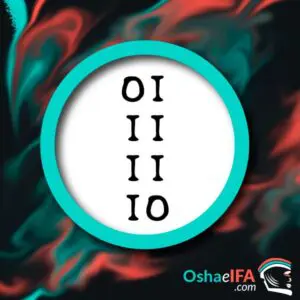
Ojuani Shobe (11-8): Meaning, advice, sayings and more of this sign of Ifa
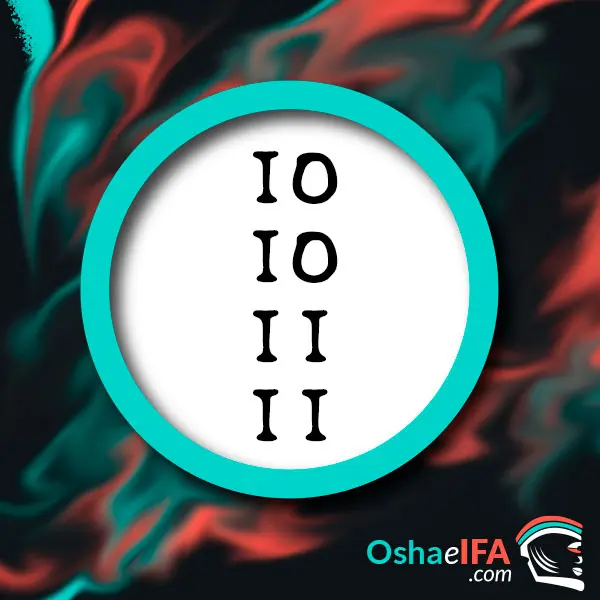
Ojuani Shobe, is the combination between the older Odu Owonrin and Ogbe, is the Sign number 92 of the Genealogical Order of Ifa. This sign tells us about the importance of the sacrifice of a male goat to Eshu to avoid negative situations.
Other names of the Ojuani Shobe:
- Ojuani Ogbe.
- Ojuani Shogbe.
In the odu Ojuani Shobe is born:
- The Iworo de Santero pine forest.
- The glasses of the glasses.
- Here: The good lives with the bad.
- Money is not everything in life.
Ojuani Ogbe speaks:
- You don't eat black beans.
- You have to take care of your throat, blood, eyes and bones.
- To Eshu-Elegba a black and red cap when he is Osobo and white and red when he is Iré.
- The Odu Ojuani-Shobe speaks of witchcraft or negative vibrations that interfere with peace of mind. Here you are often involved in an emotional relationship that obscures your judgment. Here you don't have peace of mind and you suffer from opposition to the people.
The Ojuani Shogbe Sign points out that:
- Eshu-Elegba wanted everyone to do his bidding.
- It is forbidden to store other people's things, lend belongings and claim in bad form.
- It is an Ifá of misers.
Recommendations of the sign Ojuani Shobe - Owonrin Ogbe:
Here Eshu-Elegba is put a chalk knife with the names of the enemies, with black and white thread. When Ebo is done for this Odu, when it is finished, the Awó takes some Iyefá to bathe and what remains on the board blows it on the street door and prays it. He will bathe with Imo de Oshún.
The Awó Ojuani Shobe will always have to be feeding Eshu-Elegba and the corner of his house.
For this Odu Osanyin, Olokun and Oduduwa should be received urgently.
Olokun will be called Aladimú and taken to the sea.
Here, if he is a man: he has a woman who does not leave him alone. She has a son with her, who will be her luck.
For this Odu you should not fight with the woman, because if she leaves, she will fall in love with another man who is stronger than you and later, no matter how much he does, he will not be able to take her away.
You are going to get along with a woman who is very close and they are going to love each other very much. Make Ebo together, so that you have happiness.
Here, brandy is added to his father's Egun.
This is a hard Ifá, mark: tragedy with a knife, because of a woman who has a lover and there is cover on the part of the family. The beloved is stronger than the husband. Be careful when you discover it, do not kill her and go to prison for many years.
In this Ifá the following Orishas speak: ESHU-ELEGBA, ORUNMILA, OYA, OBATALA, OSHUN, AZOJUANO and OSANYIN.
For this Odu, the Awó is Osainist and will practice witchcraft, because Ojuani-Shobe was born for that.
This Ifá speaks of the separation of two great friends.
Here the Awó will have to be careful with money, because it will bring him great tragedies; feed money.
This Odu says that you never demand of another what you cannot do.
Here, through this Odu, the person must do good even if they do not appreciate it.
This Odu predicts that whatever you think, say and do, keep in mind Eshu Eleggua.
It may interest you: Sign of Ifa Ogbe Wale
Sayings of the Odu Ojuani Shobe - Ogbe:
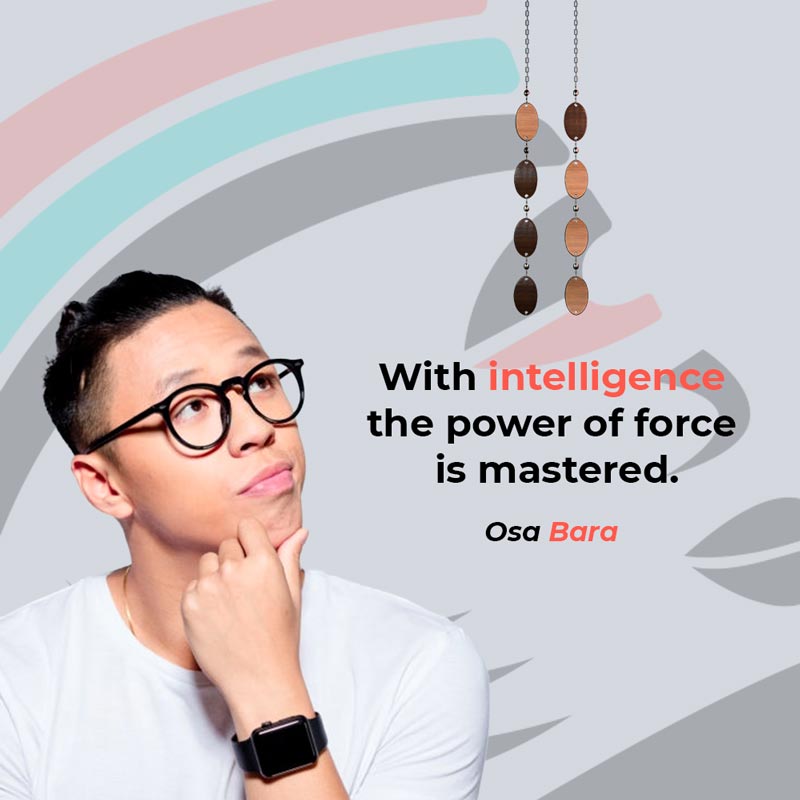
- Draw water with basket.
- The one who eats the egg does not think about the pain it cost the hen.
- The bad without a teacher is learned.
- Evil and good always went together.
- Bad vibrations interfere with peace of mind.
- Money is not everything in life.
Odu Ojuani Shobe Ifa Code of Ethics:
Money is not everything in life.
Ojuani Ogbe bans:
The person with this Odu, when he becomes obfuscated, can even kill people of intimate trust, so he has to avoid violence, pride, so that he does not get lost. You have to be patient and persuasive, legal with others, to intelligently fix problems that may come your way.
For this Ifá, it is forbidden to eat black beans. You have to take care of your throat, blood and eyesight. He must take care of the children, who will not suffer in life, because of his violence.
This Odu speaks of great vision problems, so he will have to constantly check it, in addition to wearing dark glasses. Here you have to respect Oyá a lot, because she punishes by blinding and driving the person crazy.
Meaning of the sign Ojuani Shobe
Here Eshu Elegua wanted everyone to do his will, don't be like him. Here it is forbidden to help anyone lift anything, because you are late and the other rises. If you suffer from arthritis, of the spine, beware that you can be wasted. He suffers from myopia or another visual condition, which if not treated quickly can leave him blind. He suffers from blood and reproductive system problems.
In this Ifá, the pigeons and everything is for Olofin
In this Odu, for I will go to Eshu Elegua a white and red cap is put on him. By Osobo, the hat is red and black.
Azojuano (San Lázaro) is served grilled fish with corojo butter and toasted corn.
For this Ifá, cooking is taken of: marjoram, cumin, gizzard skin (from the Orúnmila hens), oil, dry wine and salt (this is taken on an empty stomach). Afterwards, cooking of rue and onion root for 7 days. Afterwards, take phosphorite omiero (shewerekuekue), with a little oil, and drink for 7 days.
For a while, take romerillo decoction.
For Ojuani Shobe, two reddish chickens are given to Oyá and they throw sea sand and corojo butter on those chickens, and take them to the sea. Here Obatalá and Eshu-Elegba are given salcochado yam.
Ifa says in the odu Ojuani Shobe:
If it appears in the divination for a person who is going to acquire land to build a house, he would be advised to make the same sacrifice.
When this Ifá appears in Igbodun, the person will turn out to be ungrateful to his Ifá godfather. He should go and steal something to complete his Ifá ceremony and make sacrifices with 2 chickens, 2 guinea fowls, kolá nuts and cowries, to the new Ifá, in addition to giving Eshu a goat.
In divination, the person would entertain Eshu with a goat and Ogun with a rooster, to avoid being caught stealing or anticipating the risk of being falsely accused of theft.
When Ojuani Shobe appears in divination, the person will be advised to take care of his friends. Although you will also be told to make sacrifice to avoid being a victim of your own magnanimity. You will also be warned about an imminent dispute over land issues or that affect your work. If he makes the sacrifice, someone will show up at the critical moment to get him out of the inevitable trouble.
When it comes out in divination for a person who intends to take a trip, he will be told to endure and tolerate any damage that is done to him in the place, because he will, in the end, reap a great reward.
Prayer of the Odu Ojuani Ogbe:
OJUANI SHOBE TOBAYAKU BAIN BAIN IKI BAIN BAIN LOBATI ADIFAFUN OUN BABA LAWO
MERINDILOGUN TINLODIFA ILE OLOFIN.
Suggest:
OJUANI SHOBE ESHU GBA OR
OJUANI SHOBE ESHU GBA OR
OJUANI SHOBE ESHU GBA OR
IRUN MOLE ASHETO, ASHEBO.
Ebbo of the Odu Ojuani Ogbe:
Work to Azojuano.
A roasted fish with corojo butter and toasted corn is put on it.
Cooking to drink.
Marjoram herb, cumin and skin of the gizzard of the Orúnmila hens are cooked, with a little oil, dry wine and salt. It will be taken on an empty stomach. Afterwards, cooking rue and onion roots for 7 days. Then take farolito herb (Shewerekuekue) with a little oil, take for 7 days. For a while, take romerillo decoction.
Description of the odu Ojuani Shobe
In this Ifá, the crystal was known in the world. Here the good lived with the bad. It is advised that money is not everything in life.
For this Ifá, you have to receive another Obatala.
When this Odu goes out in divination, Eshu will be given a rooster urgently, so that he does not destroy the house in an instant. Something bad is going to happen.
Whoever has this Odu, whether Awó, Apetebí or Ikofafun, should not baptize anyone.
Here the Pinado de Iworo (Santero) was born. It is also prohibited to keep other people's things, such as lending all kinds of belongings. Prohibits making claims in bad ways, to avoid tragedies. There is also a commitment that you want to end.
This is an Ifá of misers, bad pay. Here the person, the more he has, the more he wants to have. He is usually selfish and does not like to help anyone, but he does want everyone to help him.
The greatest Osobo of this Odu is pride, because it leads him to violence and can cause him irreparable or unforeseeable damage.
When Ojuani Shobe comes out, it is predicted that there may be theft, so action will be taken. The person born under this Odu is not a friend of anyone, as he is capable of making his best friend's wife fall in love.
This Odu predicts that you have to take care of accidents, because the blows will be to the head and of care or severity.
It may interest you: Odu of Ifa Ojuani Meyi
Patakie of the sign Ojuani Shobe:
When Eshu started two friends fighting.
Once, Eshu set out to make two friends fight and get them upset. For this, he dressed in clothes that his right side was clean, ironed and without patches; On the left side were the wrinkled, dirty, patched clothing. He also combed his hair well on the right side and the left part was left uncombed, all shaggy.
He walked to where the two friends were talking in the corner, without addressing either of them, he passed between them. The two friends, seeing the recklessness he had committed, began to speak and make comments, where one said to the other: "how well dressed and groomed," while the other maintained: "how badly groomed and dressed."
This produced a great discussion, such that they went to the hands and they quarreled, being then the friends separated.
Owonrin Ogbe - Ojuani Shobe Ifa Traditional
Divination made for Ogún and Orúnmila when they came down from Heaven.
When this Odu "Ojuani Shobe" appears in divination, the diviner would ask for a small portion of corojo butter to spread on the ground before interpreting it.
Esin oun serun de, Erun rin ogoro mudi.
Awó udi orisha, udi Orisha oni ehu Kangogo.
Ode my lebe morinu.
Odomi lebo kon you gerete. Odami lesu itu mometsu itu.
These were the five Awoses who guessed for orunmila and Ogún when they came down from Heaven. God had warned them both not to kill any divinity or human being, because he had not created divinities, humanity and animals to destroy their own species. God made it clear that anyone who insisted on killing would be doing so solely as an agent of Eshu.
Before leaving Heaven, both went by divination and were advised to entertain Eshu with: a palm oil güiro, a strong goat, and (iso-oparo in Yoruba, Ihuawa in Benin), make sacrifice with a chicken, slug , rat, and fish. Ogun who traditionally looked at Eshu with contempt refused to make the sacrifice. Meanwhile, Orúnmila, whose strength lies in making the sacrifices, did it. The Awoses made the sacrifices to him, they prepared medicine for him to take and to mix part of it with the soap with which he had to bathe. Ogún and Orúnmila, both left for Earth at the same time.
Meanwhile, Eshu who had not been appeased by Ogun was determined to teach the Iron God a lesson. It was where Ogún to incite him to irritability so that he would react violently to some damage that was done. It was Eshu who angered Ogun into the raging deity that he turned out to be. As soon as he was enraged by Eshu, he proceeded to kill 200 human beings. Eshu also tried to stimulate Orúnmila, but he reminded Eshu of the sacrifices he had made to him in Heaven, emphasizing that he had been sent by God to save deities and human beings in the same way and not to destroy them. Although he gave another goat to Eshu. After eating his goat, Eshu promised to avenge all the damage he had done to him. Meanwhile Orúnmila used the medicine prepared for him.
The crime with which Ogún had been associated made people flee in terror from him and began to go to Orúnmila to save him.
Meanwhile, Orúnmila reminded Ogún of God's command forbidding them to kill. Ogún replied by warning Orúnmila that this was not his problem, and that if he was not cautious, he too would be a victim of his penchant for crime. When Ogún raised his hammer to hit Orúnmila, he replied that Ogún was playing because Ihuawa emits smoke but not fire; the slug climbs the tree but has no teeth to bite it; and that when the oil sees the fire, it melts right away.
With this incantation, Ogún jokingly told Orúnmila that for a deity to be feared, from time to time he had to violate himself. Later Ogún and Orúnmila became friends.
Eshu by Ojuani Ogbe
ESHU NI
The Awó with this Odu must have it, to carry out all kinds of works, for poultry, leaving the Eshu of the Awó for other more benign works.