OYEKUN BIKA: Meaning, advice, sayings, patakies and more.

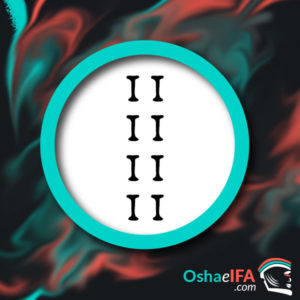
Oyekun Bika is Odu number 41 of the Ifá genealogical order, it is composed of the Ojú Odù Oyeku and Ika. He talks about how important it is to lead an honest life as he explains that people who do wrong will have an unpleasant end.
People with this Odu should not be spiteful and greedy for the successes achieved by other people. It is said that this Odu was born into a family of wizards much talked about in Dahomey and Nigeria, who came to end with Obá himself. Oyekun Ika is the defense lawyer of Ifá.
Other names of the Odu Oyekun Ika:
Oyekun Bika.
In the odu Oyekun Ika is born:
- Born: The Ituto ceremony.
- Why people die in peace and others in violent agony.
- The umbrella.
- The gun duel.
- The development of Orí.
- Why the Iyawó goes to the river to find an Ota (stone)
- The secret of Oyekun Bika is begging your head with Iñiro rabirrubia.
- Here: The Awoses treat each other with falsehood and hypocrisy.
- It was where Ogún took the 16 mejis from jail.
- Olofin is fed.
- You must not bathe in the river, nor can your head come into contact with the water.
- Ifá gave the power to dominate Sorcery to Oyekun Bika, with the nine-headed staff.
It may interest you: Treatise of the Ika Yekun sign
Sayings of Oyekun Bika:
- God's eye looks at you when you do wrong.
- The evil that you do to your neighbor, returns to you by the hand of God.
- Whoever believes that an enemy is weak is like someone who believes that a spark does not fire.
- When the rain falls, the birds of the field do not sing.
- The road does not say anything to anyone about the work they passed through it.
- The tormented man makes his victims invincible.
- The road does not say anything to anyone about the jobs that passed, those that passed on it
- Better many few than few many.
- It is better to do Itá than Ituto.
Oyekun Ika Recommendations:
- Awó Oyeku Bika must receive Azojuano-San Lázaro-.
- Here you have to settle for earning a little money every day, not earning much in one day. And then go months without winning it again.
- When you adjust a job, do not charge it dearly, so they will do it.
- If you plan to ask for money, don't ask for much to get it.
- Women with this Odu cannot go to wakes. For women: Must do
- He was covered with a dirty cloth of his custom so that he would not jeopardize the pact.
- Here Obatala It can be your Guardian Angel, or he can protect you and your things are in your hands, that is why you should always attend to him.
- If you have to go on a trip, do Ebó first so that you don't endanger yourself.
- His brother by blood or religion envies him for his luck.
- Here the children are well cared for, who will be their lot in the future.
- Take care of the Saints and their Spiritual Protections, so that you prosper and do not lose what you have.
- You have to take care of the scares, do not go to die.
- Here you have to be careful with an old person who is with you, who is a friend or relative of religion, who is envious of your luck and will try to harm you with witchcraft or gossip with another friend.
- Awo Oyeku Bika He must have a consecrated gourd (Igba), to put it on when he goes to bathe.
The sign Oyekun Bika speaks:
- Awó Oyeku Bika may never wet his head with rainwater, nor should his head come into contact with any water. This Ifá indicates that the Awoses treat themselves with falsehood and hypocrisy.
- Awó Oyeku Bika must have a measured character, because among his godchildren he will have many handsome, bellicose and rustlers.
- For this Ifá, no corn is eaten. You can't have long nails or eat knight beans.
- This was where Ogún got the 16 Mejis out of jail.
- The Ogún of this Ifá lives in slaughterhouses and underground.
- Here Ebo is made with centipedes, so that the godchildren do not dethrone it.
- A canoe is placed in the Mano Grande de Ifá.
- If this Odu comes Osobo, the person can die before 12 at night.
- Olorun (Sun) is greeted for 12 days in the morning.
- This Ifá indicates that what some leave unfinished, others finish.
- Awó Oyeku-Bika should not do Ifa to anyone. Here Olokun is given a rooster on a rock on the coast.
- In each hand of Ifá a small cedar tablet is placed.
- For this Ifá, Olofin is fed.
- The secret of this Ifá is to receive Bromú and Broncía and beg the head with Ejá-Iñiru (Rabirrubia).
Herbs (Ewe) of Oyekun Ika:
Carbonero ebony, Majagua, Pine, Granadillo ..
Tips from the Oyekun Bika Sign:
- Oyeku Bika Lomi, the one who fought with all his might and that is why Ifá gave him the power to dominate Sorcery with the 9-headed staff, one head for each of the Sorcerous Powers.
- This Odu is an Ifá of envy. One is a victim of the envy and excessive greed of the brothers.
- Diseases: Shortness of breath, suffocation, heart and stomach.
- The Ituto ceremony was born, because this Odu is the assistant of his mother Oyeku Meji in the mortuary rites.
- This Ifá marks pride and is an Odu of a lot of work. Here the Awó has to work a lot for Ifá. It is an Odu of Obá -leading ceremony.
- Here two friends try to live with his wife.
- The reason why some people die in peace and others in violent agony is born.
- For this Ifá, Osanyin and Oduduwa must be received with precision.
- Ifá Kaferefun: Osanyin and The Mother (Iyare).
- For this Ifá, you have half a spiritual unit. The dead man speaks in his ear.
It may interest you: All about the Oddun Oyekun Meyi
Says Ifa odu Oyekun Bika
That he is satisfied with earning a little every day, not much in a single day and then spending many days without earning anything. When you do a job, don't ask for a lot of money because they won't come home. If you plan to ask for some money, do not ask for much so that they can solve it for you. If your wife is pregnant or has just given birth, that she does not go to wakes, she has to do Ebo with the cloth of her customs so that she does not have problems in the delivery.
You are the daughter of Obatala and all your things are in his hands; You have to take a trip, you must first do Ebó so that you are not in danger, be careful with falsehoods; He has a son in the field and the older brother has him
envy for the luck that he enjoys. You are having work; If you have a daughter, she is the daughter of Obatalá, take good care of her, she is going to be presented with a man of money. You were talking to a person who died suddenly shortly after.
Had or will have tragedy with another person, thank the Jimaguas. You do not know about Santo and you are poor but soon you will be well, if you take care of the Saints and their dead. A Lightning stone was found or will be found; beware of treason; You cannot bathe in the sea and less in the river; be careful with the dead do not go to die suddenly; They envy him a lot even his own brothers by blood and religion; thank the monkeys; his eldest son is having work because he is very ambitious, the youngest is more satisfied. Say hello to the sun for 12 days in the morning. What another leaves unfinished, has to
finish it. Beware of an old person who walks with you who is a friend or relative of religion, who is envious of your luck
Prayer of the Odu Oyekun Bika:
OYEKU BIKA LERY MESAN OBAN LODO AWO ILE
GUNGUN ELEMERE EGUN AWO KORO IWA EGO KAFEREFUN
ASHEDA KAFEREFUN OPA IGUI LERI MESAN.
Suyere of the Odu Oyekun Ika:
BABA LERY IKU MESAN LERY IKU OPOLOPO
LERY IKU ASHEDA LERISO
LERY YEKU BIKA OYEKU AGONA
Oyekun Bika's Ebbo:
Work for the defense of Oyekun Bika:
When it rains, the first water in May is collected, given 2 pigeons and left to dry in front of Obatalá or Orúnmila; the crust of the container is collected and it becomes dust -Iyé-, it is prayed on the board and it is for defense.
Iyefá of the Odu Oyekun Bika:
It is prepared with many Romerillo petals, it is given two doves and it is left to dry in the sun. It is made into powder and bound with yam powder (Inshu).
Oyekun Bika for women:
Receive Ikofafun Urgently.
Pataki of the sign Oyekun Bika:
The agony of death.
History.
On this path, there was an old Babalawo named Oyeku-Bika. That old man had a sick little sparrow (abukenko) in his garden. He cared for him with care and dedication until he was cured. Once healed, the bird flew away happily.
One fine day, the old man needed a bighorn güiro to prepare a secret for his Odu, but he had none and began to complain, and immediately he felt a great noise over the house and immediately he saw 100 birds that brought him the ingredients of its secret and a cimarrón güiro seed.
The old man planted the bush and soon after a beautiful bush of güiro grew.
He took a güiro and filled it with ashé and every time he needed ashé, he took it from the güiro, and this had the virtue of replenishing the ashé that he was drawing, so that it was always full.
In this way, he became the most famous Babalawo in that region.
An old sorcerer, seeing his fortune, wanted to imitate him and get a similar güiro, so he watched over him and seeing that no one saw him, he stole the güiro from the Awó.
He locked himself in his house very happy and with a lot of work began to open the güiro and when he managed to do it, many ferocious, poisonous animals, scorpions, toads, snakes, etc., came out of it, which attacked him and caused his death. very long-suffering and painful.
As for Oyekun Bika, he died old and a natural death. To.Iban.Eshu.
Note: This explains why those who religiously act badly die a painful death, and those who carry their things as they should be, die peacefully.
Eshu of the Odu Oyekun Ika:
ESHU PRAISES:
The stone is from Rio. It is two-sided.
Cargo: Garro grass, fine grass, doll grass, 13 guinea peppers, silver coin, ero, obi, kolá, osun naború, obi motiwao, aira, river sand, land of four corners, hutía and smoked fish, butter of corojo, roasted corn and other secret Eshu ingredients.
The cement is mixed with river water and on each side there is a blade with its corresponding feathers and Orúnmila beads.
Oyekun Bika Ifa Traditional
ÒYÈKÚ ÌKÁ
Gúnnúgún bà lórùlé
Ojúu re a tolé
Ojúu re a móo túko
A day fún Sànìyàn
Sànìyàn tíí will be ìpín lórun
Wón ní ó rbo
Oníkálúkú ló ti yan ìpín tí òún ó jèé nnú ìyá è
Ngbà tí n bò látòde òrun
Ngbà or give ilé ayé
N wá n bèèrè pé bóo lòun or ti se
Wón 'ní o ó pé bóo ni'?
Ebo lÒrúnmìlà mò
Gbogbo nnkan téé bá yàn tí ò bá dáa
Òun ní or móo báa tin fi ebo gbé e sójú ònà
Wón ní kó lòó bo Orì è
Wón lórí móoó bá won jà
Wón or móo pé Ifá ni
Ló bá rbo
Ayé ye won
Wón bójú ònà
Wón ní béè làwon Babaláwo tàwón wí
Gúnnúgún bà lórùlé
Ojúu re a tolé
Ojúu re a móo túko
A day fún Sànìyàn
Sànìyàn tíí will be ìpín lórun
Wón ní ó saca kàalè ó jàre
Ebo did not know
Won nifá ni
Saniyan
BÒrí bá n bá woón jà
Won a nÍfá ni
Saniyan
Àsé Orí ní n bá woón jà làyé?
Oyekun Ika: Ifá wants this person to be well. Good fortunes will touch his hand but he must offer sacrifice. Ifá advises him to offer sacrifice to his Orí; and also ask what your Orí accepts. It is that thing desired by his Orí that he must offer. Your things won't go bad.
The Vulture perches on a high wall
His gaze would cover the city
His gaze would cover the forest
They made divination for Sànìyàn
Sànìyàn the slave of fate in heaven
They asked him to offer sacrifice
We had all chosen that he or she would return during their subliminal phase
Coming from the city of heaven
When it came to earth
When i was asking what to do
They said What do you know?
Òrúnmìlà is the one who does not know anything else except sacrifice
All those things that man chooses as a destination that is bad
Is that what I would have to use to recommend it as a sacrifice
They told Sànìyàn to go and offer sacrifice to his Orí
'It is their Orí that will be against them'
'They would say it is Ifá'
He performed the sacrifice
And life pleased him
They retraced their steps to the right path
They said it was exactly what their Babaláwo predicted
The Vulture perches on a high wall
His gaze would cover the city
His gaze would cover the forest
They made divination for Sànìyàn
Sànìyàn the slave of fate in heaven
They advised him to take care of the earth
And offer sacrifice
They would say it is Ifá
Saniyan
If their Orí is against them
They would say it is Ifá
Saniyan
So their Orí is the one against them on earth ?!