
Treaty of Iroso and its Omoluos
We bring you all the information of Iroso (Irosun) as that of its 16 Omoluos combinations, this treatise covers from Baba Iroso Meji to Iroso Fun.
Sayings, Patakies, Ebo, what is born, recommendations and variants of each Odu or Sign of Ifa. Oshaeifa.com brings you the treatise you are looking for to expand your knowledge of literature and the Ifa Corpus.
Encyclopedic treatise on the signs of Ifa Book of «Iroso»






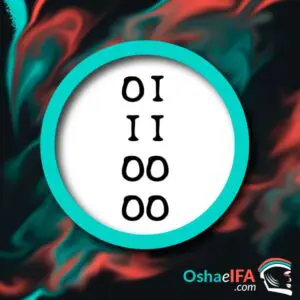

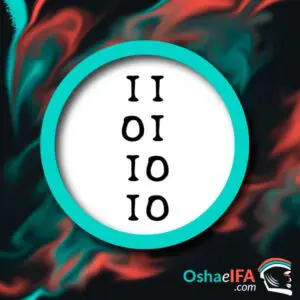
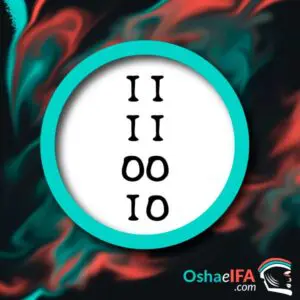
The birth of the Odu Baba Irosun Meji.
The Ifá Priests who made divination to Irosun Meji before leaving Heaven were called: Airoro sowo gini moko, Irawo bese leyin era, Oju imo kirawo matu eron se.
They advised him to make a sacrifice to the Divinity of misfortune or misfortune (Elenini in Yorubá or Idogo in Benin) with a rooster and a tortoise and a male goat for Eshu. He was also told to offer a banana to his Guardian Angel.
He refused to make any of the sacrifices. Then he came to the world where he was practicing the art of Ifá.
When he grew up he was so poor that he could not afford to marry, much less have a child. The difficulties were so severe for him that out of frustration, he decided to vote for his Ifa seeds.
Meanwhile, he had a dream in which his Guardian Angel appeared before him telling him that he was responsible for his problems, for having capriciously refused to make the prescribed sacrifice. When he woke up in the morning he decided to call his Ifá and it was then that he realized that it had been his Angel of the
Save the one that had appeared to him during the night.
Very quickly he made the preparations to carry out the sacrifice to his Ifá and gave a goat to Eshu. His Ifá advised him to return to Heaven and to present himself before OLODUMARE, from whom he had not obtained permission to come to Earth. for his trip to Heaven he was told to go with a rooster, a turtle, a package of yams, a squash of water, a squash of oil, pepper, okra, and powdered tobacco. He obtained all these things and packed them in his divination bag.
After a long journey, he reached the border between Heaven and Earth and had to cross seven hills before reaching his destination. Upon his arrival he went directly to the Divine Palace where he met the caretaker of the divine room, the divinity of Misfortune or Yeye Muwo, the mother of obstacles. He knelt in the room and proclaimed that he had come in all humility to renew his earthly desires.
Yeye Muwo said it was too early in the morning to make wishes, as there was no food in the house. From his divination bag he immediately extracted his firewood, water, oil, pepper, salt, okra, tobacco powder, and finally the rooster, all of which the mother of Obstacles had demanded.
at the time, as part of his procrastination tactics, but Iroso Meji was absolutely ready.
After this, Yeye Muwo authorized him to make his wishes. As it was forbidden to kneel on the bare ground, he did so on the turtle he had brought from Earth. After asking for all your wishes.
OLODUMARE blessed him with his divine mace. Hearing Yeye Muwo the sound of the mace, he quickly finished cooking, but before he could
leave. Eshu motioned for Iroso to leave immediately for Earth.
When the mother of obstacles finally emerged from the kitchen, she asked OLODUMARE about the man who had been making wishes and the Almighty Father replied that he was already gone. She asked him why he had not asked the man to request good and bad wishes and OLODUMARE replied that he was not in the habit of intervening when his children were asking for his wishes.
Despite all the gifts Irosun Meji gave Yeye Muwo, she nonetheless immediately set out in search of him.
While singing:
Ariro bland gini gini moko
Irawo be sese le eyin eron
Oju ima ki irawo ma tu eron ise
Olo orire omomi hard demi buwo ooo.
He responded with a saying from the same song saying that he had already made sacrifice and asked for his wishes, so there was nothing left. As he sang, he ran in fear.
Seeing Yeye Muwo that she couldn't reach him, she stood still, stretched out her thumb and lacerated his back with it.
That is the cleft line that runs the length of the spine to this day and is present to constantly remind us that the only way we can escape the long arm of misfortune is by making sacrifice.
With that mark Yeye Muwo proclaimed before Irosun Meji and, ipso facto, before the rest of humanity, that they will never remember their heavenly wishes when they reach Earth, because the eyes cannot see the back of the body, and that before to see their wishes come true they will have to grope in the dark
for a long time and to spend a lot of work before seeing the results.
The pain from the wound caused Irosun meji to lose consciousness and fall into a trance of total darkness.
When he woke up he found himself in his bed, on Earth he had forgotten everything that had happened before. After this, he went about his business and eventually prospered.
The state of darkness symbolizes the length of time that Ifá is kept in palm oil before it is brought to life. It also symbolizes the gestation period that we live in the womb, during which we lose all memories of what we planned to do on Earth.
CELESTIAL WORKS OF THE ODU BABA IROSUN (IROSO).
Very little is known of the heavenly works of Irosun Meji, who is associated with two major and one minor jobs in Heaven.
He made divination to all the divinities before they left Heaven for Earth.
In Heaven he was called Akpejo Uku, that is, the man who can alter the course of death. He advised the two hundred divinities before they left Heaven, that upon reaching Earth, they should refrain from dictating inflexible laws and regulations because rigid laws breed evasion. He guided them to seek the support of ESHU, offering them a male goat, but they refused to do so because traditionally everyone looked down on the divinity of the scam (scammer, liar, con artist). ORUNMILA was the only one who offered a goat to ESHU.
Later, all the divinities left for Earth. As soon as they settled in it, the first mandate they decreed was: "when any of them had gray hair, they should return to Heaven."
As a result of the decree, anyone with gray hair died (each in turn). Over time, ORUNMILA had its time to comb gray hair.
As soon as these were predominant in his head, the other divinities reminded him that it was his turn to die. He agreed with them that it was indeed time to go home to Heaven.
Meanwhile, he probed his IFA, who advised him to sacrifice to ESHU with a goat. He also had to grind yam of dry water mixed with ashes, put that powder in a bag or sack made of palm raffia and tie it to the main entrance of his house, then, he had to serve with a pig and entertain all the other divinities with it. same. He made the sacrifices and preparations as advised.
Then came the day of the meal that was supposed to be his farewell party before leaving for Heaven. Traditionally it was forbidden to enter the house of any of the divinities wearing a cap on the head. Nothing more than any of them arrived at the entrance of ORUNMILA's house should
take off the hat. At that moment ESHU brushed the visitor's hair with the powder contained in the bag located at the entrance and the latter instantly turned gray (gray). The guest put the hat back on his head after passing through the entrance. This ritual was carried out with each of the visiting deities,
but without them knowing.
As soon as the entertainment was over, everyone asked ORUNMILA when he was going to die. He replied that he had finished all the preparations for the night, because he was very satisfied to participate in the massive death that was about to take place. They asked him what he meant by mass death,
if he was the only known divinity designated to die.
Then, he explained to them that since he was not the only one with gray or gray hair, he concluded that all of them must die simultaneously. He told them to remove the caps from their heads and they all noticed to their amazement that they were completely gray.
Faced with such a situation, everyone was perplexed and very quickly issued a unanimous resolution that read: "from that moment on, only those old enough to die must die." The resolution emphasized that the appearance of gray hair on the heads should no longer constitute the
rod to measure the time of death. This is how ORÚNMILA changed the morbid decree of the divinities, because if that law had persisted, no one would be living on Earth for more than forty or fifty years.
IROSO IFA ALAAYE TAKES THE CROWN OF ODERE.
At that stage in his life Irosun Meji had become very prosperous and his popularity had spread everywhere. Meanwhile, he had other Ifá priests serving under his tutelage. One of them was called Ojikutu kutu gbede.
One morning Ifá Alaaye came for a divination, the priest who made it told her to make sacrifice quickly as a consequence of a coming event; He advised him to do it with seven clubs, so that he would win a crown that was rolling close to him. He also had to make a sacrifice with seven goats, a goat, a pig, a ram, and his own clothing in order to survive an impending battle. He made the sacrifice but with only three goats for Eshu.
Meanwhile, it was time to choose a new king for the town of Odere, where Iroso Meji lived, the favorite was Ifá Alaaye, but all views turned to a man named Ogunlana. Ifá Alaaye returned to ask Irosun Meji why his name was not mentioned in connection with the candidacy.
He probed Ifá and it revealed that Eshu was still waiting for four more goats for him, and that he would add a drum to the sacrifice. He completed it very quickly. The next night Eshu got up and beat the drum throughout the town singing:
Ogun dee, ayaa jamaguere giri giri.
This was a song announcing the approach of war, and the entire Odere people hid in their homes. That night Ogunlana, the favorite candidate for the throne, lost his oldest wife and youngest son. Pain and melancholy caused him to lose interest in the candidacy for the throne.
There was also so much confusion and devastation in the town, that all those who favored him in the candidacy were dead, lost or in mourning.
When the royal candidacy collapsed, only Ifa Alaaye remained and he took the crown and rejoiced excessively. He went to thank Irosun Meji with many gifts in appreciation for the divination and the sacrifice made by him.
TREATY OF IFA - ODU IROSO
GUESSED FOR INÁ (fire), EYIN (the fruit of the palm), IKO (the branches of the palm).
Oliyebe guessed for Iná (the fire), Eyin (for the palm fruit and for Iko (the palm branches). Each of them was advised to sacrifice: a mat and yellow cloth, only Iko performed the sacrifice. When her father a chief died Iná was installed as chief The rain came and destroyed Iná.
Eyin was installed as boss too, the rain came and destroyed him. Iko was installed as chief, when the rain came, he covered himself with the sacrificial mat. When it finished raining, Iko took off the mat and did not die. He obtained the title from his father for a long time.
IT WAS GUESSED TO IROSUN WHEN HE WAS GOING TO HAVE A CHILD
Okakaraka-afowotiku, Idasegberegberew ako guessed for Irosun when she was going to have a child.
They told him that the life of the child would be very hard and that it would be difficult to make money to support the child, but if he wanted to turn the situation around, he had to sacrifice: 2 slugs. He did not perform the sacrifice. The children of Iroso Meji found life difficult because their father did not sacrifice.