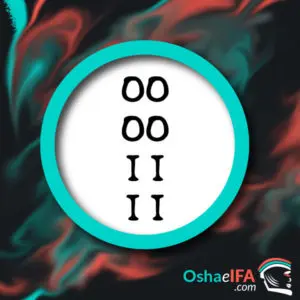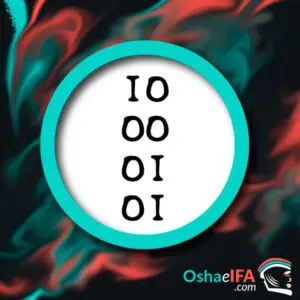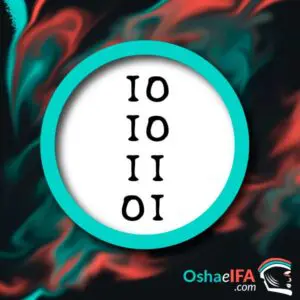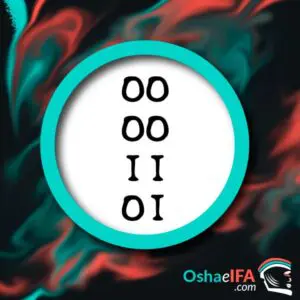
Ojuani Hermoso: Meaning, Sayings, Tips and More
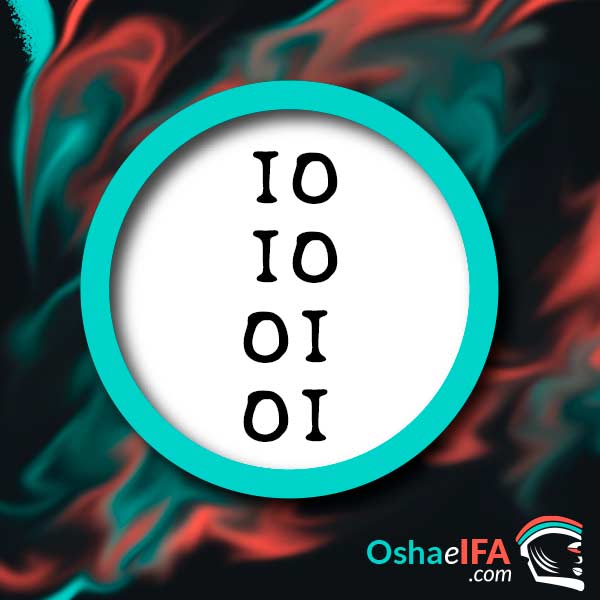
Beautiful Ojuani is the combination between the main Odu Owonrin and Irosun, this sign teaches us the importance of the Itanas in the Yoruba religion. Orunmila recommends that we make a sacrifice to avoid premature death.
What is born in the odu of Ifa Ojuani Hermoso?
- Lighting the candles to the Oshas, Orishas, ORUNMILA and EGUN.
- THE ORIATE or ERI ARATE.
- Here: It was where Yemaya surprised her husband Orunmila with Oshun.
- EGUN must be given a ram.
- OBEFU KAKUANARDO saved the world.
- Orunmila took from Elegua the right to kill any animal.
What does the Ojuani Hermoso sign talk about?
- ORUNMILA is refreshed with 2 black chickens.
- OYA is served with fresh fish cooked with tomato and gofio.
- SHANGO said that it is the same on Earth as it does in Heaven.
- A beautiful child is born and his paternity is doubted.
- The Awó must receive KAKUANARDO quickly.
- You know what it is today but not what it will be tomorrow.
- This Ifá marks mooring and sorcery.
- In this Ifá you have to do everything completely to be able to win, because the enemies are strong and stubborn, and you are very carefree.
- This Ifá indicates that the Awó is separated from the elders.
- OJUANI HERMOSO is more influenced by the dead (EGUNS) than by the Oshas.
The sign Ojuani Iroso points out:
- Witchcraft brand and moorings.
- It signals separation from their elders.
- Make consultation with the spirits.
- AGBA EGUN protects the Awó of this sign with its influence.
- The Odu Ojuani Hermoso is the one that marks the consultation of the spirits and, whoever is seen, is told that the dead person has to sit down to work and consult with him.
- Here the spiritual guide is given a glass of water and perfume.
- Here AGBA EGUN protects the mind of the Awó with its influence.
You may also like: Odu of Ifa Ojuani Shobe
Recommendations of the Ojuani Hermoso sign:
This was where SHANGO shouted that it is the same fire on Earth as it is in Heaven.
In this Ifá, good is brought by a white person.
In this Ifá, ORUNMILA was called APEDINIMU ARARA IGUI GUIGUNO.
When this Odu comes out to an Awó, he has to refresh his Ifá and give him two black hens.
Here ORUNMILA took from ELEGUA the right to kill any animal.
For this Odu, it is recommended, in order not to lose your position and what you have in your hands, be patient, because if you are poor today, your luck is walking.
When this Odu is seen to a person, he is told that both he and his partner have to fulfill the promise of eternal love that they made before an image, because OLODUMARE heard it and approved it.
Here the person wants to know the safety of something that he is investigating.
For this Ifá, you have to feed Eshu Elegua.
Because of this Ifá sign «Ojuani Hermoso», you have to be careful with the candle, as it can burn your house.
The person with this Odu must attend to dreams, since they will save him in bad times.
Here what gets dirty, washing is cleaned.
Here the person is scared because he thinks he is going to die.
When the Awó OJUANI HERMOSO gives 2 hens to ORUNMILA, he will grind guinea pepper and throw it on his Ifá before killing her.
The Idefá and the Awó necklace have a parrot or parrot feather attached to them. In addition, his Ifá carries within the tureen a parrot or parrot feather in each hand.
When the candles are lit, this Odu is prayed and the hands are crossed on the chest with the lit candles and the blessing is asked to Awó ITANA and Awó IKUKU, so that their things go well.
This Odu cannot be absent from the Athena de los Paraldos.
Here to Hey It is given a fresh fish (EJA TUTO) and then it is cooked with gofio and tomato, and it is placed next to a spout or drain.
Here EGUN is given ram, along with SHANGO.
Diseases: problem in the brain, anemia, laxity in the body, stomach disorders.
In this Odu they speak: OSUN, ORUNMILA, SHANGO, OYA, ESHU, ELEGBA, EGUN, OBE, OBATALA and OGUN.
Prohibitions of this Oddun:
Avoid fights at home, because if they continue there will be family separation and the two of you will be very bad.
In this Odu, the person cannot be arrogant, because the blood can rise to the head.
When this Odu leaves AWAFAKAN in Itá, Ifa should not be done to that person, because ORUNMILA is already saying that his land belongs to Osha and EGUN, with the possibility that at any moment an EGUN takes over his head.
The Awó OJUANI IROSO, when Paraldo marks the aleyos, he has to ask ORUNMILA if he can do it. Otherwise, he has to find another Awó to do it, so that he is not in danger.
Sayings of the Odu of Ifa Ojuani Hermoso:
- Greater embarrassment.
- If you don't love yourself, you can't love others.
- A Babalawo full of power is less powerful than an Orisha.
- A very beautiful child is born and his paternity is doubted.
- I give fire, the same up and down.
- Good dreams, great advice.
Ifa Code of Ethics of odu Ojuani Iroso:
The Awó knows what it has been until today, but not what it will be tomorrow.
Ifa Ojuani Hermoso says:
When this Ojuani Iroso appears in the Igbodun, the person will be told that he is a Priest of Ogún and that he must proceed with haste with the requirements for initiation into the Ogún priesthood. You will be told not to despise any item you receive under mysterious circumstances.
Ojuani Hermoso in an ordinary divination, the person will serve Eshu with a goat to avoid having difficulties because of a woman. You will be advised to move cautiously with a woman with whom you have a current relationship.
In the beautiful Ojuani divination, the person should be advised to be careful with making fun of an older person who could curse them with ashé, since the curse would be fulfilled.
That where you think to go, you will find good, but the way out is bad. What gets dirty, washing is removed. For a long time you have wanted to have something for sure that you have seen. Do not be arrogant, because your blood can run to your head and you commit a fault. You have to feed Eshu Elegba. SHANGO says that he gives the same fire above and below.
Prayer of the Odu Ojuani Hermoso:
OJUANI BEAUTIFUL OJUANI IROSO OGUN ATI ELEGBA AWO NIFA LESE OLOFIN ORUNMILA ATI
SHANGO UMBO MARIYO ODARA NIGDARA OMO OLOFIN OFO LAITESHU ARAEY LODAFUN ORUNMILA
KAFEREFUN KUANARDO.
Suyere Oddun Ojuani Iroso:
AGADA MOSAREO AGADA MOSAREO
ORUNMILA OBE AGADA MOSAREO.
You may also like: Sign of Ifa Iroso Ojuani
Ebbo from Odu Ojuani Iroso:
For OYA.
You will be given a fresh fish and then it will be cooked with gofio and tomato, and it will be placed next to a spout or drain.
For ORUNMILA.
It will cool off and you are given two black chickens. Before killing them, they will crush guinea peppers and they will be thrown to their Ifá.
For EGUN.
You will be given a ram, which you can eat together with SHANGO.
For your spirit guide.
A glass of scented water will be put on it.
For OGUN.
You are given 2 puppies, for marital stability.
Meaning of the oddun of Ifa Ojuani Hermoso:
Ojuani beautiful speaks of the importance of dreams, here the person needs to close their contacts with their ancestral energies, both feminine and masculine, to put their temporary difficulties in order.
This Ifá oddun explains that if you do not love yourself, you cannot love others, you must show off and take care of yourself, while taking care of yourself in all planes of life.
Here a very beautiful child is born and his paternity is doubted.
When this sign of Ifá is seen, the Awó embraces himself and thanks OBATALA, SHANGO and ORUNMILA.
This is where YEMAYA surprised her husband ORUNMILA OFIKALE TRUPON (sexual act) with OSHUN, inside a hole covered with pumpkin bushes.
This Odu, for Osobo, marks despair and death.
The person who has this Odu will have to be careful with a bird that will be thrown into his house or that goes every day to sing near his house. Try to welcome it, to clean itself with it, to get rid of the bad that you have on top of you.
Here you have to be careful with homosexuals, because they can get you into gossip and ruin your house.
For this Odu, ram or ram is given to EGUN.
When the Awó sees the Beautiful Odu Ojuani in a sick person, it is dangerous, because it is an Ifá of natural weakness.
Here you receive Osun extension.
Here is the struggle for existence, which is why the OBE came into the world that represented the passage of humanity from the stage of farmers to that of meat eaters.
The OBE was practiced by OGUN, by order of OSHAGRIÑAN, since this is the true owner, so that man could defend himself in the world and win his livelihood in the hard struggle of the struggle for life. Among the Babalawos, receiving OBE is called by the KAKUANARDO, a word composed of three words: KAKUA (break) INA (candle) ADO (behind), with the meaning: "Candela that breaks behind."
The KAKUANARDO is the reaffirmation of Ifá.
The Awó governed by the Odu OJUANI BEAUTIFUL, must receive KAKUANARDO as soon as possible.
The lighting of the candles (ITANA) to the Oshas, Orishas, ORUNMILA and the EGUNS was born, with the following prayer and suyere:
PRAYER TO LIGHT THE CANDLES:
AWO IKUKU Fortune teller from the dark.
AWO ITANA Fortune teller of clarity.
MA FUN ASHE They constantly give faculty.
SUYERE: “ORISHA AWO IKUKU Holy diviner of the dark.
ORISHA AWO IKUKU
(Holy) ITANA (Holy) with the candle
LOBI MI KA ORI INA Above I around the head shines.
ORISHA AWO IKUKU ”Holy soothsayer of the dark.
Pataki of the sign of Ifa Ojuani Hermoso:
He sacrificed for the people of Olukoro against the war.
The people of Olukoro always lived in fear and anxiety as they were heavily attacked by enemy forces and husbands and wives were captured as a consequence of this. When they heard about Owonrin Irosun, they sent for him to come and help them.
Upon reaching the village he made divination for them, advising them to sacrifice to avoid the risk of another devastating attack. They made the sacrifice with the meat of wild animals, a goat, and a casserole.
After making the sacrifice, he used the casserole to make a Drum covered with the skin of the goat. He advised them to play the Drum from time to time and Eshu would ward off any potential harm to the people.
They did what Orúnmila advised him. After three years of unprecedented peace and quiet, all the men and women came out in droves and began to sing and dance to the rhythm of the drums as follows:
Ojojumo neither ominu ma nko nor bi-ogun-bi-ogun.
Ojojumo mi eru ma mba eniyan bi ote-bi-ote,
Enia ni or gbe ikoko by igbo-irumole
ti ikoko sinda eru ba eni
Babalawo Olukoro difafun Olukoro,
Awon, won gbo riru ebo ti won ru
Awon, won gbo eru atukesu, you won you
Koipe, ko i jina won wa bami
nor laru according to ebo.
Meaning:
Every day used to bring fear and the threat of war.
Every day we torment ourselves with fear of war Until someone came to our aid with a sacrificial casserole.
The Ifá Priest Olukoro divined for the people of Olukoro
They listened to the advice and made the indicated sacrifice.
The sacrifices were fulfilled for those who did.
Long ago our troubles were behind us
And now we are winning by dining in relative peace and joy.
When this Odu appears in divination, the person will be advised to make sacrifice and if possible to choose a musical profession, since that is where their prosperity lies.
You can read: Who are the Orishas?
Ojuani Hermoso (Ojuani Iroso) Traditional Nigerian Ifa
ÒWÓNRÍN ÌROÙN
Salaámó, Awo ègbé Igi
A dífá fun Àkókó
Èyí tíí we are won ní Ìramòrí
Èyí tí ń lo rèé lóko nÍresà o pé oko
Wón ní kó rbo
Gbogbo àwon tí ón féràn Àkókó
Wón bá bèrè sií sunkún
Wón ń pé or mó lo
Àkókó náà ba bèrè sií sunkún
Ó ní bí ón se òun náà ni
N ní ó jèé kí òún ó lo
Ijó ní ń jó ayò ní ń yò
Níń yin àwon Babaláwo
Àwon Babaláwo ń yin Ifá
Ó ní béè làwon Babaláwo tòún wí
Salaámó, Awo ègbé Igi
A dífá fun Àkókó
Èyí tíí we are won ní Ìramòrí
Èyí tí ń lo rèé lóko nÍresà o pé oko
Àkókó
Mo lo
Or lóun or lo
Gbogbo yin le or gbèé sówó
Gbogbo yin le or pòn séyìn
Ebo kan ò lè dà bí ebo Àkókó mó o.
Ifá wants this person to be well. Ifá says that his good fortune will not be lost. Life will be complacent with you. Ifá orders him not to have a grudge so that a lot of good things do not get away from him.
The red ant is the priest of the tree trunk
He prophesied Ifá for Àkókó
The descendant of the city Ìramòrí
When he was going to get married in the city Ìresà or pé oko
She was advised to offer sacrifice
Everyone who loves Àkókó
Everyone will start to cry
Those who wanted her could not get away from her
Àkókó was crying too
She said it was because of the way they treated her
What made her go find a suitor in another city
She was dancing and she was very happy
She was praising her Babaláwos
Their Babaláwos praised Ifá
She said it was exactly what her Babaláwos had said
The red ant is the priest of the tree trunk
He prophesied Ifá for Àkókó
The descendant of the city Ìramòrí
When he was going to get married in the city Ìresà or pé oko
Àkókó
Do not go
She said she would have to go
You all will hug the babies with your hands
You all would find straps for your backs
There is no other sacrifice that can prove efficacy like Àkókó's sacrifice.