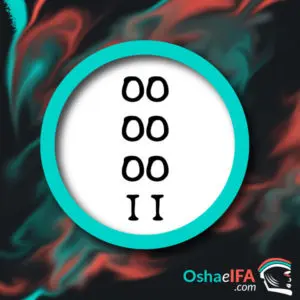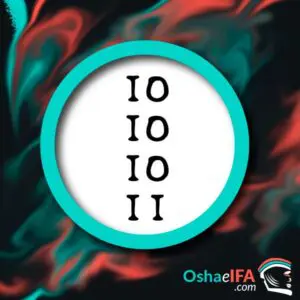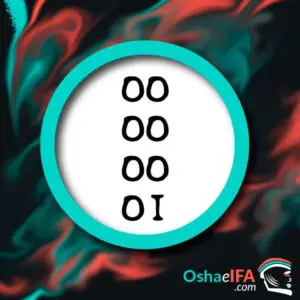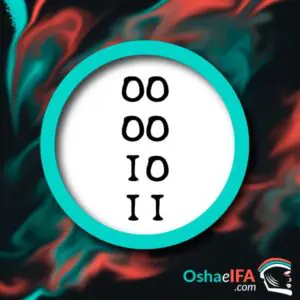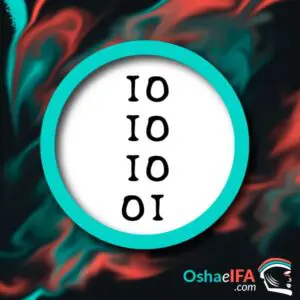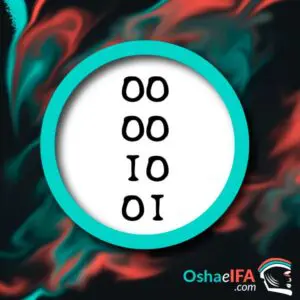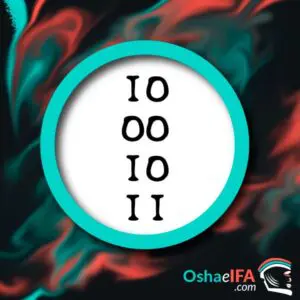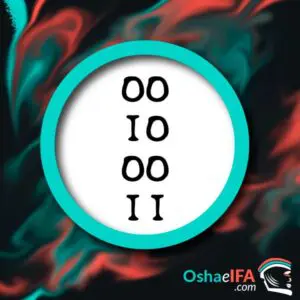
Okana Rosa
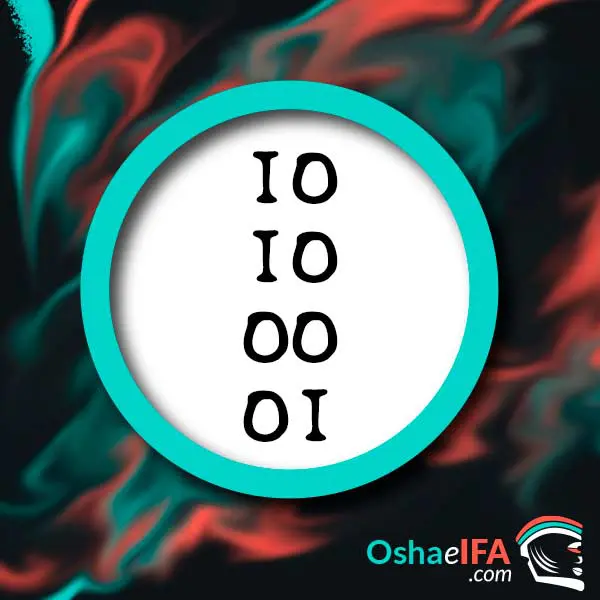
Okana Roso (Iroso) says that Ifá wants this person to be well, that he will receive good reception from kings, chiefs and personalities. Orunmila assures that he will get gifts. This is the Odu 126 the lordly order of Ifa.
What is born in the odu of Ifa Okana Roso?
- To the land that is, do what you see.
- Live separated the Atiponlá and the Bitter Broom by Olofin mandate.
- The fetus formation.
- Breast cancer in women.
- Olofin's curse misery.
- Identify Orúnmila in syncretism as "San Francisco de Asís"
- The announcement of misfortunes for the red flowers of the Framboyán.
- May people always forgive the ignorant and never the evil one.
- Ask Orúnmila or the Guardian Angel everything.
- Give an eye to see him blind.
- Eshu did not want to forgive his evil son.
- One-eyed rooster is always given to Osanyin, Shango and Olokun. To remove the curse.
- Make Ebo with gunpowder to avoid explosion.
- The Ebó must always go to the Loma.
- The Odu signals rise and rise by the government.
What is the Okana Roso sign talking about?
- The war of Shangó and Azojuano (San Lázaro) speaks.
- They speak the volcanic eruptions.
- Assets are usurped and traps arise.
- Shango used the atiponlá and Azojuano the bitter broom.
- Undercover and silent witchcraft emerged.
- Olofin and Obatalá are the ones who sentence.
- Orúnmila dressed as a Monk.
- Okana Roso speaks: Orúnmila became a bear with a rosary.
- An okpele is made with the rosary of a Church.
- Osun helped Shango in the war with Ogún.
- Osun had everyone sick.
- To solve illness or problems give a white rooster from his head to Osun.
- By stealing the Ogu of Osanyin was found.
- The Rooster and the Owl embarrassed each other.
- Orúnmila had two jobs: Priest and hunter.
- The parrot saves, you have to have it.
- Women are transformed, but they have accidents.
- Osanyin speaks divinity of medicine. (Swear in Osanyin)
The Okana Iroso sign points out:
- The woman not wanted by Orúnmila wanted to kill her.
- The secret must never be revealed.
- Ikosu brought prosperity to the World.
- Health and prosperity made Ebó.
The hen and her chickens made sacrifice to roam and remove death. - Eshu blocks good fortune.
- Olofin came down to Earth because of the epidemic.
- The Pharisees were thrown out of the Temple by Olofin.
- The herbs are: rooster egg, lettuce stick, peony and marigold, atiponlá and bitter broom.
You may also like: Ifa Iroso Kalu sign
Recommendations of the Okana Iroso sign:
Here things are spoken the other way around so that luck does not throw away.
He speaks: That goods are usurped and traps arise, of goods or of Egun's functions. Of Volcanic Eruptions. From the war between the Atiponlá and the Bitter Broom. These two herbs cannot be united in any work.
For this Odu, Shango is given a ram to get rid of enemies.
Here by Olofin's sentence is that Azojuano lives in the corners, that is, in the angle formed by two walls or partitions.
Here Shango lives wandering.
This ifa sign says: That when the Framboyán is in bloom it portends misfortune. Epidemic and especially the death of children.
Okana Roso speaks: From cover to house of the family of his spouse. Of querindangos and querindangas.
Here you have to make Ebo with gunpowder so that there is not going to be an explosion in the house.
By witchcraft a great epidemic is uncovered. You must throw the enemy out of your house.
Do not go back to the place where you left something forgotten. He says that you have to look for a buried garment that is harming him.
This Oddun of ifa »Okaka Iroso» predicts from vision care, you can go blind. And avoid alcoholic beverages.
In this Odu Oshún she is disenchanted because they gave her little value.
It is necessary to avoid accidents with candle. Do not try to rescue or attract the partner by force. Don't use weapons.
Here for an impression you can perish. It can have a sudden death by poisonous animal and lethal microorganism.
Sayings of the Odu of Ifa Okana Roso:
- Jack of all trades, master of none.
- In the land of the blind, the one-eyed is king.
- There are those who remain one-eyed, to see another blind man.
- Whatever the land, do what you see.
- The world there is no one to fix it.
- The secret must never be revealed.
- A willful malicious person is not good.
- Everything happens as it has to.
Says Ifa Okana Roso:
When Okana Iroso appears in Igbodun, the person must marry a priestess, so that fame and fortune may come to him.
When this Odu appears in Igbodun, the person must serve Ifá and his head together with a goat, prepare Ogún for Ifá with a rooster, and serve Eshu with a goat. Venison is prohibited and must raise a parrot. In an ordinary registry, the person must serve Ogún with a rooster, Eshu with a goat, and Ifá with four slugs.
When Okana Roso appears in an ordinary record, the person will be told that his enemies are trying to destroy the good head with which he came to the World. The person must sacrifice with a mother goat, and the Ifá priest must look for leaves of these two plants, ipin and iyan, marinate them together and cook them in a soup with salt, palm oil and the heart of the goat so that the person eat it, adding Iyerosun of this Odu. He will definitely be prosperous from that year on.
Prayer of the Odu Baba Okana Roso:
OKANA ROSO ASAYE DARICO EYE AKUKO ADIFAFUN BOLELE ADIE LEBO
MORURO HARD ARASE KOMI BORE MOBERE EÑI INDIMU MOYO KOYOKO IDI AMITI
MIRETI RETI ATI NIDE ADIFAFUN ORUNMILA UMBATINLO SHAWO MIBO AGUTAN
LEBO BA A MOENITAN.
You may also like: Oddun of Ifa Okana Sode (1-8)
Meaning of the Sign of Ifa Okana Roso
The Odu Okana Iroso warns of the danger of irresponsible actions and establishes that sincere repentance is always forgiven. The person frequently has problems with his partner or his children.
Here was born: Asking the Guardian Angel or Orúnmila about the things they want to do or receive. Breast cancer; a woman cannot allow her breasts to be bitten during sexual intercourse. The formation of the fetus. Misery on earth by Olofin's curse.
Here if the person wishes to receive something from Osha or as a garment, he must consult with the Guardian Angel.
Here parents influence the character and happiness or unhappiness of their future children. When the woman is in a state of pregnancy and the parents live in complete harmony and without any worries, the fetus develops normally balanced, on the contrary, when the parents live with problems and arguments during the woman's gestation period, The fetus develops emotionally unbalanced due to the nervous tension experienced by the mother and when the child is born it is weak and nervous and when it grows up, it will be a person of bad character throughout its life.
It is an Ifá of curse. The Ebó is always sent to a hill.
Awó Okana Roso has to receive Olokun and Yewá.
This Odu signals rise or rise to the side of the government.
Here they speak: Shango, Osanyin, Olokun, Yewá, Ogún and Olofin.
Shango and Olokun are given one-eyed rooster.
Olokun is given a one-eyed rooster and it is taken to the sea wrapped in cloth of all colors with: hutía and smoked fish, corojo butter, toasted corn, honey, brandy, and seven bells.
Okana Roso talks about an enemy who gives one of his eyes to see you wrong. A one-eyed rooster is given to Osanyin and then a normal rooster from the person's head over Ogún.
The main herbs are: Atiponlá and Escoba Amarga.
This Ifá gives license to the Awó to make many women fall in love.
Odu Okana Roso Ifa Code of Ethics:
The Awó has no other Awó on land.
Pataki of the sign of Ifa Okana Iroso:
The peasant who robbed Osanyin.
There was a farmer who went to steal fruit from Osanyin's house every day. One day his wife told him not to go out that day because she sensed that something bad was going to happen to him.
Tired of so many robberies, that day Osanyin had buried a witch's pot, so that when the thief entered, he would harm him.
The peasant, not listening to his wife's advice, went in as usual to steal fruit, but when he left, he began to feel bad about the witchcraft of the pot buried by Osanyin. He felt so bad that he went to the house of Orúnmila, who made him Osode and saw this Odu Okana-Iroso, and Ifá told him that to heal he had to make Ebó, and go to the place where he picked the fruits and take out the casserole of witcher who was buried.
The peasant did what Orúnmila told him to do and then he agreed with his wife, since if he had listened to him nothing would have happened to him.
You may also like: Treaty of the Odu of Ifa Iroso Meji
Okana Iroso Ifa Traditional
ÒKÀNRÀN ÌROÙN
Òkànràn roro jèjèèjè
A day fún Bàtá
Èyí ti n lo rèé gba Koko Obìnrin Sàngó
Bàtá ní n lòó gba Koko
Sàngó yes nìí
Èèyàn Líle ni
Obínrin sì wo mó Bàtá
Ó ní dandan, òún or fé e
Òun or you wáá?
Sàngó ló sì jé ení or le yìí
Bàtá n pé òun ò fé
Obìnrin bá kó to Bàtá lo
Bátá bá gba Koko
Inú bá n bí Sàngó bò
Sàngó n bò wáá bá Bàtá jà
Bátá bá nàró
Ní n pé Olúbámbí
Fi jìn me
Olúbámbí, fi jìn me
Fòràan Koko jìn me
Gégé bí Sàngó tí n gbésè
Neither Bàtá n se
Ni Bàtá bá tún ke
Mo gba Koko na
Mo gba Koko na
Fi koko jín me
Sàngó niwo Bàtá
lo n soro
Ní yes n bá esè òun mu
ó ló daa
Òun good or ní Koko náà
Òkànràn roro jèjèèjè
A day fún Bàtá
Èyí ti n lo rèé gba Koko Obìnrin Sàngó
Ebo n won ni or se
Bàtá gbébo nbè or rubo
Rírú ebo, èèrù àtùkèsù
E wáá bá ni ni Jèbútú aya
Jèbútú aya làá bá ni lésè Oba Òrìsà.
Life will please this person; your things cannot be spoiled. About the woman of this person, (his girlfriend or wife), Ifá says that she is a bit difficult. Ifá orders him to know how to speak so that the woman is permanently his wife.
Òkànràn roro jèjèèjè
He made divination for Bàtá
That he was going to marry Koko, Sàngó's wife,
It was Bàtá who grabbed Koko
But here is Sàngó
Being a very difficult person
Despite this, the woman energetically adhered to Bàtá
Saying that she would marry him by all means
Bàtá wondered 'What will I do now?'
'Sàngó is very difficult and this woman is attached to me'
He refused the proposal
But the woman without notifying her packed her things and went home
Left without a choice, he accepted Koko
Sàngó got very angry and was furious
Sàngó was coming to fight with Bàtá
Bàtá stood up
Saying 'Olúbámbí'
'Forgive her for me'
'Olúbámbí, leave her for me'
'Forgive what Koko did'
And rhythmically, the steps of Sàngó
Marching to the beat of the drum that Bàtá produced
Bàtá's drum sounded again in a high pitch
'I have taken Koko'
'I have taken Koko'
'But forgive her for me'
Sàngó then reasoned by saying 'You Bàtá'
'You were playing your drum'
'And I'm dancing'
Sàngó said 'Okay'
'I give Koko permanently'
Òkànràn roro jèjèèjè
He made divination for Bàtá
Who was going to marry Koko, Sàngó's wife,
Sacrifice was the antidote that was prescribed for him
Bàtá heard about the sacrifice and performed it
Offering sacrifices and giving his part to ùsù
Come and find us surrounded by handcuffs
One finds oneself surrounded by handcuffs at the feet of the king of all the Òrìsàs.
You can read: