
Treaty of Obara and its Omoluos
Do you want to learn about the ifa odu ?. Here you will find all the information about Obara Meji and all the Obara Omulos. Here you will see, Sayings, Patakies, Eboses, Birth and recommendations of each Ifa Sign.

Treaty of the signs of Ifa «Obara»
Treatise of Obara Meji and all its variants from Obara Meyi to Obara Ofun. Learn what all these odu speak and learn more about your sign so that you can better carry the recommendations given by Orunmila.
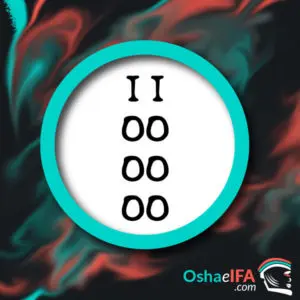

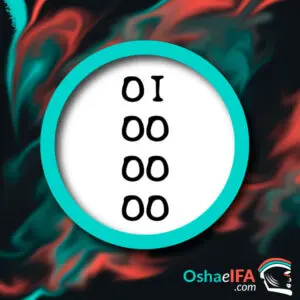

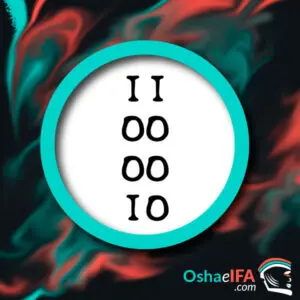
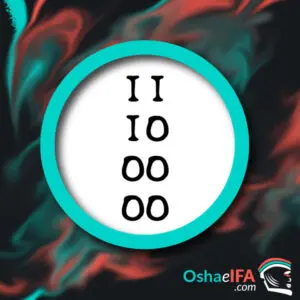

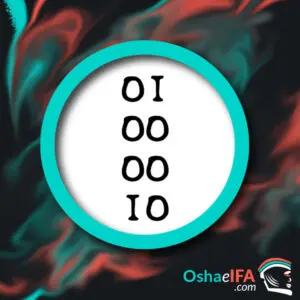
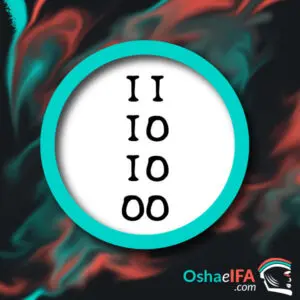


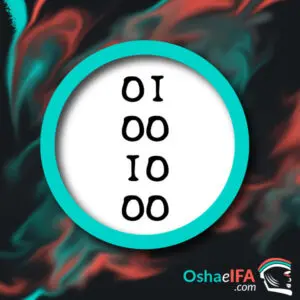
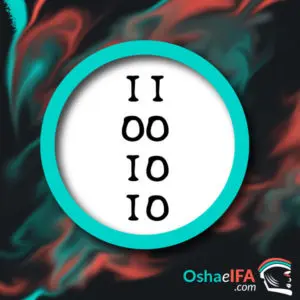
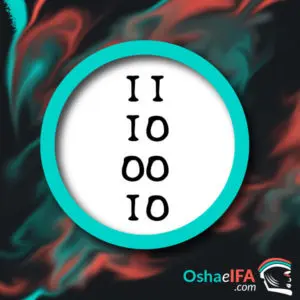


Birth of OBARA.
Before leaving Heaven, OBARA MEJI sent for his Ifá Priests to do divination for him. The Priests of Ifá were called:
WOSEMI KPELEMBE KPELEMBE
CHROME MIMI MIMI
LAKE ORI UDI KOKO NI KPA ERON
LEMBE LEMBE AABE BE
OUNI MO JU OLOJA TITU RIN RIN RIN.
They told him that in order to bring prosperity to the world, he had to sacrifice with a goat to his Ifá, add a bag of kolá seeds and sacrifice ESHU.
He made the sacrifice and left for Earth.
He was born to a father who only had his left hand, and to a mother who was blind in one eye. Despite their physical deficiencies, they had many enemies. It was OBARA MEJI who induced dreams in the world, since when he was in the womb he was always revealing imminent dangers to his parents. Therefore, when the ELDERS OF THE NIGHT saw that a child was going to be born, which would bring prosperity to the Earth, they made the determination that it would not be born alive.
One night, he told his father in a dream to prepare a medicine in a soap that had a price of thirty-five cowries to bathe with and thus protect himself from the attack of the Witches. In the dream he told the father that when he collected the leaves, he should leave them overnight in the sacred place of ESHU. The next morning, he had to grind them and mix them with soap to bathe them both.
OBARA MEJI was born without difficulty and they had no more problems with the Witches. When he was born, the parents went to an Ifá Priest in search of divination for the day of his birth. The Priest of Ifá was called:
AFENJU OMO
OMO ARE KII KON FENE FENE
KPOBI GBITE GBITE YA ALUMEN
ITE ONAYE MAGBA
NIO NI GBITE ORUN.
OBARA MEJI was an only child. He quickly grew up to be a rogue. He was always telling the fortune of others, which annoyed the older Ifá Priests of Ife who were not happy with him. At a very young age he would attend senior meetings where he often became the center of attention.
Every seventeen days a meeting of Ifá Priests was held in the palace of the king of Ife. The game of Ayo (the western equivalent of the game of chess) was often played after the meeting, although this often ended with the death of one of the king's sons.
At the first meeting OBARA MEJI attended, he drank heavily and after getting drunk he boasted that at the next meeting he would reveal the names of those responsible for the periodic deaths of the king's sons. There was a high chief named Oshin, who was carrying out all the atrocities in a clandestine way. After the proclamation of the young OBARA MEJI, the meeting broke up with the tacit agreement that if he did not keep his promise, he would be executed.
Convinced that OBARA MEJI could not reveal their names, the conspirators hatched a plan to kill him. They sat in the path of the bushes to conspire, while OBARA MEJI's mother, whom they did not know, returned from the farm and heard the men organizing the nefarious plan against her son. After hearing the details, he ran home to consult his Ifa Priests (previously mentioned) about how to save the life of his only son.
The mother was advised to prepare three thick mashed yams and three bowls of soup, and take it all to the bank of the river. She had to wear a beaded necklace on her chest and go to the river to bathe. While he was bathing he would discover what he would have to do to save the life of
your son.
He went home and did as he was told. When he reached the river, he deposited the mashed yam and the soup on the bank and went into the water to bathe. While he was bathing, a man named Okpolo came to the scene and waved. The man very quickly bathed and left in a hurry. When the woman asked him why he was in a hurry, the man replied that he was preparing to attend the day's meeting at the king's palace. She invited him to eat some of the food she had left on the shore before
to go away. Since the long meetings held in the king's palace did not generally serve food, Okpolo was delighted to be able to eat something before leaving for the meeting.
As he ate, the man pointed out that an important event was going to take place that day in the king's conference, as they were going to kill the talkative and insolent OBARA MEJI, as he was not going to know which section of Ayo's players was responsible for the deaths of the king's sons, just as he had proclaimed. He ended by revealing to the woman that he, Okpolo, was in fact one of the conspirators, and that the king was so petty that he never served any snacks or food at all.
long meetings.
The other man who passed by was Obuko (the goat), who behaved in much the same way. After eating the mashed yam, he told the woman the details of his mission for that day and added that he was one of those who was killing the king's children, due to his meanness.
He also revealed that because he was one of the conspirators, he was among those who were going to kill the talkative and boastful OBARA MEJI at the conference, since he would never know their names.
Then the woman was introduced as (Obuko-Omo lubebere tube and said that the others were: Agbo-Omo jojoguole (the father ram) and Okpolo-Ami sosu run (the frog). He ended up confirming that they were the three conspirators that they were killing the king's sons after playing Ayo's game. Furthermore, he revealed that OBARA MEJI had boastfully promised to reveal Oshin's name as the sole conspirator when Oshin was, in fact, not going to take his seat at the conference.
that day. He further said that Oshin's eldest son, named Aremo, was going to take his father's place at the meeting, and that he would sit next to him. Finally he reported that a special seat was going to be prepared for OBARA MEJI, under which there was a hole covered with a mat. The indiscreet Obuko even went on to say that the only way that OBARA MEJI could avoid the fate that awaited him was to come with a dog and a bundle of cold corn bread and bean shaving that he had to place on the mat under the chair they had reserved for his dog to come and look for them.
The woman emphasized that it would be a good escape if OBARA MEJI died, since the town would become a more peaceful place if he was not there. With this, Obuko left for the palace.
Agbo (the ram) was the last to reach the river. He also performed the revelation ritual after eating the mashed yam and confirmed what Okpolo and Obuko had revealed before him. He also confessed why and how they intended to kill OBARA MEJI. After eating her share of the mashed yam, Agbo left for the conference.
Soon after, OBARA MEJI's mother returned home to inform her husband and son about what had happened on the river. He quickly detailed the sequence of events telling OBARA MEJI what to do. He was to go with his dog named Boghoye Aje-ejobi. He advised him to throw cold cornbread and bean shaver under the seat prepared for him and to call the dog to catch it. If the dog fell into the hole, he had to stand up and ask for this person called Obuko. As soon as it was identified, OBARA MEJI had to order that it be offered as a sacrifice to ESHU.
Then he should ask for that person called Agbo and if he identified himself, he should order that it be offered as a sacrifice to the public sacred place of the ancestors of the people.
Finally he had to ask for the person called Okpolo, and as soon as he identified himself, he had to order that an arrow be buried through his mouth and anus, and then offer it as a sacrifice to the divinity of the ground (Otá Olé or Oriolé).
When asked the reason why the three men should be executed, he was to reveal that they had been the conspirators responsible for the death of the king's children, after having played Ayo's game with him. After that episode, he had to order the man from the throne to come down, since he was an impostor and had to give way to his father Oshin, who at that moment would be smoking a long pipe called ekitibe by the side of the room.
When OBARA MEJI left for the conference he was wearing his father's suit called gbariyee and his hat called labagaden. It was his dog named Boghoye atoju ma oko. Upon reaching the main entrance outside the village meeting hall, the spectators began to sing their
praise with shouts of OBARA afenju-Omo.
Upon entering the room, he was led to take the chair that was reserved for him. At this point, he stood still, pulled out his bundles of cold cornbread and bean shaving and tossed them under the seat marked for him, and instructed his dog to pick it up. The dog went straight to look for them, but fell through the mat into the deep hole whose bottom was covered with hooks and spikes.
Reversing the order in which he had to carry out the tasks that day, he began by ordering that the man who was sitting on the throne should leave it immediately, to make way for Chief Oshin, his father. The man on the throne quickly got up and his father moved to
take your seat.
So, he called the man named Obuko (the goat) and ordered him to get up and identify himself.
He also called Okpolo (the frog) and Agbo (the father ram) to get up and identify himself. They all did what they were told. OBARA MEJI instructed that Obuko be sacrificed to ESHU, Agbo to the public shrine of the ancestors, and Okpolo to mother earth (Otá Olé u
Orioles).
When Oshin asked OBARA MEJI about the crime he had committed, he reminded him of the promise he had made at the previous meeting to uncover the conspirators responsible for the deaths of the king's children after they played Ayo's game with him. He confirmed that the three men were
guilty. After this, all three were used for sacrifice. The culprits were actually
the goat, the father ram and the frog.
Everyone present then stood up and clapped deafeningly, cheering OBARA. He was carried on his shoulders and carried outside in an open procession. OBARA MEJI's parents, before he left the house, had sworn to commit suicide if their only son lost his life in the encounter.
As soon as the father heard the screams, he concluded that his son was dead and took his own life.
When the mother saw that her son was being carried on her shoulders in a triumphant procession, she pulled her head out of the noose she had hung ready to commit suicide. Then he used the rope to thank his own mother. This is the rope that the person uses to tie in the sacred place of their deceased mothers in places of the Yorubá and Beni land until today.
This is why it is said that OBARA MEJI's mother was the one who saved him from the cold hands of death.
Knee supplication arose before the Deity.
OBARA MEJI was the one who arranged that before a sacrifice was offered to any Deity, the offeror had to beg him to accept it. If what you offer is a goat, goat, chicken, hen, you have to beg the divinity on your knees beforehand, to accept the food that is being offered to you; For this reason, it is said that it is not difficult to beg for a favor from the divinity who is our patron.
It was guessed for the Coconut Tree, the Palm and the Frog.
When the coconut tree and his older sister the royal palm decided to leave Heaven for Earth, they went by divination to OBARA MEJI, who was called JEEMFIDIHEE in Heaven (which means: "let me sit quietly and harmlessly"), and he recommended the usual sacrifices to them. . Upon entering the world, both sisters married ODE (with the outsider outside). The coconut tree produced all kinds of fruits that made it the favorite of the people; but the royal palm, although it was more beautiful, remained a decorative object for her husband and unimportant for others.
It was also he who guessed for the frog when it entered the world; He recommended that she make the same kind of offering that he had previously recommended to the two palms, and he did so and began to multiply as soon as he stepped on Earth. After having helped many others in Heaven and seeing the prosperity that they brought to Earth, he decided to also come to the world to continue helping them.
The difficult transfer of prosperity to the world.
When the King of Death learned that an Ifá priest had left for Earth in the company of wealth and prosperity, he decided to stop him in any way and since he did not know exactly who it had been, he decided to severely punish all the priests of Ifá in Heaven with death penalty. He was accompanied by fourteen councilors.
Meanwhile, the King of Death dressed sick to cover up, since his wife is sick (Arun). He became so ill that his body even began to emit a very unpleasant odor.
He also prepared for the heavenly Ifá priests one by one, a certain amount of kolá drink, which were actually eggs and wine barrels for them to see and see.
will heal. He gave each of them seven days to heal him, and after that time if they did not, they could not return to their homes.
As soon as the Ifá priest on duty arrived, Death gave him the kolá drink and they had to guess what it was about to test their clairvoyance, many did not pass this test and they put chains on them. The few who succeeded, by saying what it actually contained: an egg, not it, succeeded in practice, because the more they tried to give the king the medicine, the sicker he became. When they already had several heavenly Ifa priests in their cell, it was OBARA MEJI's turn.
When he received the invitation from the King of Death, he decided to consult with his Ifá, who advised him to offer a goat to ESHU and another to his guardian angel. He quickly carried out the sacrifices.
When he left for the House of Death, he wore his magic necklace (udé) which was his main instrument of authority, they had also recommended that he put a ladder on his guardian angel and ESHU, and he did.
When he reached the house of Death, he knocked on the door, but before entering he was told that he had to guess how many people were inside and what they were doing at the time. He quickly looked through the crystal ball on her necklace and revealed that there were fourteen people in the room who were drinking with a glass in hand. Thus he was allowed to enter it with his back to the door, which he opened and entered.
The King of Death appeared looking seriously ill. When Death entered, he ordered that they give him kolá drink and wine. When the kolá was served, OBARA MEJI told the others that the kolá had arrived and to guess what it was.
Using a special incantation invoking her by her true heavenly names, she conjured the kola drink and wine. If they were true, as they were created by OLORDUMARE, he had to stay that way, or else his true identities would first be restored to his eyes. Instantly, the poisonous substances in the wine rose to the surface and the sheep's urine remained at the bottom. At the same time, the kolá seeds hatched into eggs. He then protested to the King of Death for his lack of hospitality.
Death apologized and appeased him by giving him real kola seed and wine. However, he told him that despite his initial bad behavior, no one had managed to cure him. He replied by saying that he had to eat and drink first, as he was hungry due to the long journey he had made to get there.
When OBARA MEJI was being served food, ESHU transformed into a child affected by a skin rash and presented himself standing at the entrance. Before starting to eat, he took out his okpele divination instrument and his own Ifá appeared. This made him wonder if the food
they were serving it was in good condition and was innocuous. He invited the boy to eat. The boy gulped down everything including the container. In return, the boy told OBARA MEJI to prepare the container where he actually treated the pustules on his skin. When another left to prepare the container, the boy advised him to agree to cure the King of Death. When he returned to Death's room, he voluntarily proposed to do his best to heal him.
The King of Death had a habit of taking off the robe of disease when he went to bed and putting it back on first thing in the morning. That same night, as soon as he went to bed, ESHU used the ladder with which OBARA made the sacrifice to go up to the room of Death.
While doing this, he conjured Death to sleep soundly. When he fell asleep, ESHU, as a child of the pustules, invited OBARA MEJI to see how healthy the old man looked and how flexible his body was without the sick dress.
The next day, Death invited OBARA MEJI to begin his healing works, for which he collected all the available leaves and indicated his divination powder, prepared them for a bath for seven days. Death, however, did not bathe with the preparations. Meanwhile, OBARA MEJI continued to share whatever food was offered to the injured child.
On the sixth day the King of Death told OBARA MEJI that he was not getting better and that he could not sleep. That night, ESHU again conjured Death to take a high dose of honey and doze; He also catapulted OBARA MEJI and the boy with the wounds down the invisible stairs to the room of Death. When they reached the room, the boy told OBARA MEJI to bring the pot with the Death's disease dress.
Once outside, ESHU conjured the path to the river so that it would be free of living beings, because he could not see them carrying that vessel. Then they threw him into the river and on the way back they lay down to sleep.
Shortly after dawned and the appointed day arrived. As soon as it cleared up, the guests who came to witness OBARA MEJI's fate began to arrive. Death bathed and began to look for the vessel where his sick clothes should have been, but he could not find it.
He decided to lock himself in the room. After waiting in vain for the King of Death to leave the room, OBARA MEJI sent for him because he was anxious to know what his fate would be.
After incessantly knocking on the door, the old man came out dressed, took a seat on the throne with his bright, radiant, transparent and healthy-looking body.
OBARA MEJI asked him to announce the result of his efforts and he confirmed that his treatment had worked.
Death entered again to divide his treasure in two and deliver them to OBARA MEJI. The boy with the wounds advised him that he should protest because the King of Death was retracting his promise. OBARA MEJI screamed and his scream was amplified and repeated by ESHU, so that the sound made the foundations of Heaven shake. The incident made the King of Death tremble, who entered the room to place half of all his belongings in a kola nut sack, which he later put outside. Before he left, the boy had advised OBARA MEJI to accept from the King of Death only a sack of kola nut.
Death came out with two containers, a bronze box containing rubbish and a barrel of kola nuts, and asked OBARA MEJI to choose one of the two. In accordance with the boy's advice, OBARA chose the kolá nut sack and left for home. Meanwhile, ESHU had transformed into an old man and was on his way waiting for OBARA MEJI, who, for his part, looked for the boy and when he could not find him, he left him some of the gifts with his
own guardian angel and continued his journey.
Before reaching his home, he met the old man from the hut who had met there when he was on his way to fulfill his mission. The old man told OBARA MEJI to show him the award he had obtained as a result of his trip. At that moment he began to wonder if it was not ESHU who was playing again. To clear up any doubts, he drew his rod of authority and conjured the old man to transform himself into his true self. The old man instantly transformed, first into the boy
wound and then in ESHU, in all its splendor. Then OBARA MEJI thanked him for all the help he had given him during his impossible mission. He took out the sack of kola nuts and told him to take whatever he wanted. In response, ESHU asked him to take him wherever he went and to share with him what he ate, just as he had done during the trip.
Upon arriving home, OBARA MEJI gave a goat to ESHU and a goat to his guardian angel.
Then, he invited his friends to a meal of gratitude, since he had been the only Priest of Ifá who could thwart the evil machinations of the King of Death.
For that reason, when OBARA MEJI goes out in divination for a person whose death is knocking at the door, he should be advised to make the same sacrifice that OBARA MEJI did before the test that death put him.
At that moment, OBARA MEJI decided that the time had come to leave for Earth.