Spiritism: origin, beliefs, types and spiritual practices

Spiritualism

El spiritualism It is a spiritual doctrine and practice based on the belief that the soul survives death and that spirits can communicate with the living. Strictly speaking, it refers to the doctrine codified by Allan Kardec in the 19th century; in the Americas, the name is also applied to movements that incorporate elements of popular Catholicism, African traditions, and the beliefs of each region.

Main guides on spiritualism

Spiritist doctrine, mediumship, the spiritual vault, and the spiritual mass allow for an understanding of different aspects of the relationship with spirits. These are complemented by manifestations developed in the Caribbean and Latin America, among which Cuban Spiritism and the Venezuelan cult of María Lionza stand out.


What is Spiritism?

Strictly speaking, Spiritism is the doctrine systematized by Allan Kardec based on the study of manifestations attributed to spirits. Its teachings address the origin and destiny of the soul, reincarnation, mediumship, spiritual progress, and the moral consequences of the relationship between the visible and invisible worlds.

What is Spiritism

In Latin America, the word also acquired a broader meaning. It is used to identify practices of communication, assistance, and spiritual development that were influenced by Kardec but transformed upon contact with other traditions. For this reason, Kardecian Spiritism, the table Spiritism, the cord Spiritism, the Cuban Crusader Spiritism, and the Venezuelan Spiritism share some beliefs without constituting an identical practice.

Communication is facilitated through individuals with mediumistic abilities. Through prayer, concentration, transmission, or trance, the medium perceives the presence of spirits and communicates their guidance. The traditional purpose of this work is to offer charity, assist the departed, receive counsel, and foster spiritual development.

Difference between spiritism and spiritualism

Spiritualism is a broader concept. It encompasses philosophical doctrines and beliefs that recognize the existence of the spirit or a reality distinct from matter. It is also used to refer to movements of communication with the dead that developed outside of the Kardecian framework.

Spiritism, in its doctrinal sense, specifically identifies the system organized by Allan Kardec, with defined principles regarding reincarnation, the evolution of the soul, mediumship, and moral law. In popular usage, both terms may appear to be equivalent, but they do not possess exactly the same historical or philosophical scope.


Origin of modern spiritualism

Ancestor veneration and the belief in communicating with the dead are far older than spiritualism. Many cultures preserved ceremonies intended to remember, attend to, or consult those who had passed on. However, modern spiritualism arose in a different context, related to the interest generated by séances and so-called talking tables during the 19th century.

Origin of modern spiritualism

The French pedagogue Hippolyte Léon Denizard Rivail, known as Allan KardecHe studied these manifestations, compared communications obtained by different mediums, and organized his conclusions into a body of doctrine. In 1857 he published The Spirits' Book, a work that established the foundations of Kardecian spiritualism.

This first volume was followed by The Book of Mediums, The Gospel according to Spiritism, Heaven and Hell y GenesisThese five works form the basis of the Spiritist codification and develop its philosophical, mediumistic, and moral principles.

The foundations of this school of thought and its main books are developed in our study on the Spiritist Doctrine of Allan Kardec.

Beliefs and principles of the Spiritist Doctrine

Within the Kardecist system, Spiritism is presented as a philosophical and moral doctrine that studies the nature of spirits and their relationship with the physical world. Its central principles are as follows:

  • The existence of God. A supreme intelligence is recognized as the first cause of all that exists.
  • The immortality of the soul. Death puts an end to the physical body, but the spirit retains its individuality and continues its existence.
  • Spiritual communication. The disembodied can manifest themselves through mediumistic faculties, in different forms and degrees of clarity.
  • The reencarnation. The spirit goes through different existences as part of its learning and refinement.
  • Spiritual progress. No spirit remains condemned forever; through its experiences, decisions, and reparations, it can advance morally and intellectually.
  • The law of cause and effect. The actions performed by each person produce consequences and responsibilities that accompany their development.
  • Charity. Helping the living and the spirits in need of light occupies an essential place within the practice.

These teachings belong primarily to Kardecian Spiritism. Popular American traditions retained some of its fundamental principles, but developed ceremonies, altars, chants, and forms of worship that do not derive directly from Kardec's codification.


The medium and mediumship

Spiritism - Medium

A medium is a person capable of perceiving or transmitting the influence of spirits. This ability can manifest through intuitions, visions, spirit hearing, dreams, writing, bodily sensations, the transmission of messages, or trance. Not all mediums develop the same abilities or receive communications in the same way.

Sensitivity alone is no substitute for development. Traditional practice requires discipline, study, prayer, and guidance from experienced individuals. Learning to recognize one's own impressions, maintain balance, and work with a higher intention are all part of mediumistic training.

The faculties, their manifestations, and the forms of development are explained more fully in Mediumship: what it is, types of mediums, and spiritual signs.


Main types of spiritualism

Main types of spiritualism

Spiritism does not have a single authority governing all its manifestations. Names and procedures vary by country, center, and spiritual house. Even so, several main currents can be identified.

Kardecian or scientific spiritualism

This movement strives to most faithfully preserve the principles set forth in the works of Allan Kardec. Its centers are dedicated to doctrinal study, mediumistic training, prayer, and spiritual guidance meetings. It does not rely on priestly initiations or the mandatory use of altars, images, or offerings.

Table spiritualism or white table

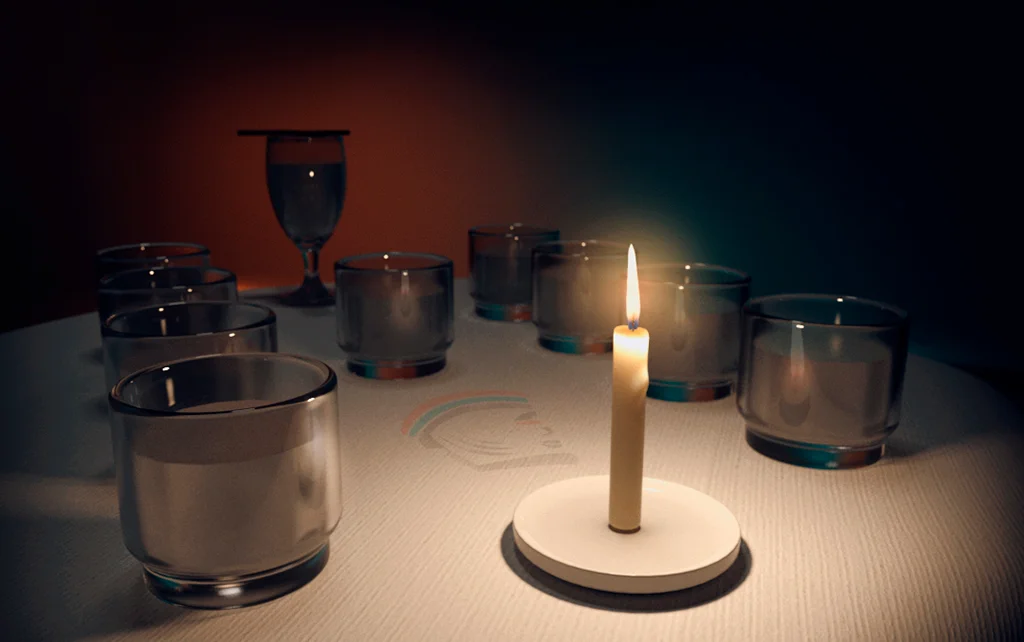
It developed strongly in Cuba, Puerto Rico, and other parts of the Caribbean. The gatherings are usually held around a table covered with a white cloth, accompanied by water, flowers, light, and prayers. The color white represents clarity, elevation, and the purpose of working with spirits of light.

This movement retains a marked Kardecian influence, although in many houses it incorporated Catholic prayers, healing practices and elements of popular Caribbean religiosity.

Cord Spiritism

Cord spiritism is a tradition characteristic of eastern Cuba. During their rituals, participants form a circle holding hands and accompany prayers with chants, body movements, and rhythmic foot tapping. The collective energy of the cord facilitates the transmission and trance of the mediums.

Their ceremonies are aimed at giving to charity, assisting the sick, guiding those seeking help, and contributing to the upliftment of spirits. The style of their chants and movements is one of their most recognizable features.

Cuban Crossed Spiritism

El crossed spiritualismAlso called cross-spiritism, it was formed in Cuba through the union of Kardecist elements with popular Catholicism and Afro-Cuban religions. Its practices may show influences from the Regla de Osha, Palo Monte, beliefs transmitted by immigrants, and various forms of popular religiosity.

The spiritual vault, prayers, chants, ritual offerings, and the spiritual mass occupy an important place. The spirits that accompany a person can be recognized as part of their spiritual entourage or group and are organized into committees according to their origin, profession, or way of working.

Although it has historical ties to Santería and Palo Monte, Espiritismo Cruzado is not a branch of either of these religions. It has its own procedures and can be practiced independently or coexist with them within a religious house.

Venezuelan Spiritism or the cult of Maria Lionza

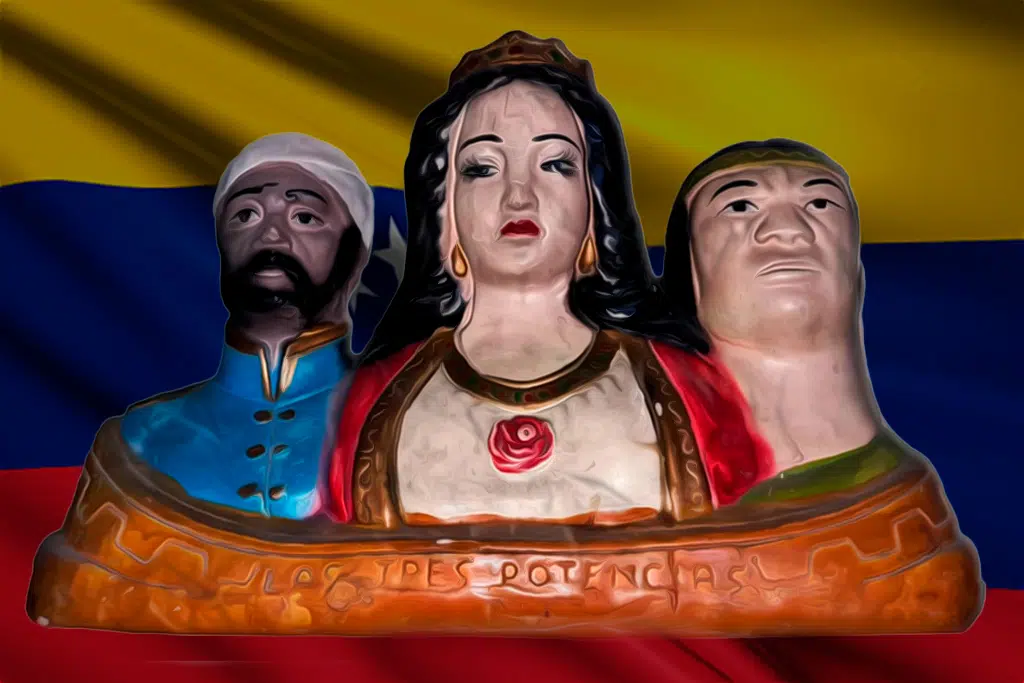
In Venezuela, a unique spiritual expression developed around the worship of Maria LionzaIts roots bring together indigenous, African, Catholic and spiritualist elements, within a tradition transmitted mainly through its mediums, banks and spiritual centers.

María Lionza occupies the central position alongside Chief Guaicaipuro and Black Felipe, known as the Three Venezuelan Powers. The spirits are organized into courts, among them the Indigenous, the Black, the African, the Healer, the Shaman, the Liberator, the Ruined Woman, and the Viking. Sorte Mountain, in the state of Yaracuy, is the main sacred site and pilgrimage destination for the cult.

Their beliefs, ceremonies, and hierarchies are studied in Venezuelan Spiritism: María Lionza, the Three Powers and the Courts.

Other spiritualist expressions in America

In Puerto Rico, Kardecist Spiritism and the White Table (mesa blanca) came into contact with popular Catholicism, African heritage, and indigenous memory. In Brazil, Kardecism achieved widespread organization through centers for study, assistance, and mediumistic practice.

There are also American religions that maintain historical ties with the spirit world without being branches of Spiritism. Haitian Vodou, the Dominican 21 Divisions, and the umbanda They possess their own origins, deities, liturgies, and foundations. Spiritualist influence may be part of their history or some of their expressions, but it does not completely define these traditions.


The spiritual vault

A spiritual shrine is a space dedicated to a person's guides, protectors, and ancestors. It typically consists of a table covered in white, glasses or cups of water, a central vase, light, flowers, and religious symbols appropriate to the spiritual home.

Prayers are offered before the altar, seeking clarity and protection, tending to the deceased, and strengthening the connection with the spiritual presence. The number of vessels, their arrangement, and the rituals performed can vary, so not all altars are prepared in the same way.

The assembly, positions, meaning of the vessels and their care are explained in Spiritual vault: what it is, what it's for, and how to set it upThe prayers of attention are gathered in Prayers for the spiritual vault.

The spiritual mass

A spiritual mass is a gathering for prayer, communication, and assistance to spirits. Mediums and others participate, supporting the work through prayer, song, and contemplation. During the ceremony, transmissions can be received, guardian spirits recognized, the deceased raised, and guidance offered to those seeking help.

There are Masses for investigation, elevation, repose, coronation, and other variations determined by the purpose of the work and the customs of each house. Spiritual investigation is used especially to recognize a person's spiritual path or ethos and to direct the attention required by their guides.

The preparation, the participants, the prayers, the songs, and the various purposes are explained in Spiritual Mass: what it is, what it's for, and how to do it.


Spiritual framework, commissions and courts

The spiritual entourage is the group of guides, protectors, ancestors, and other entities that accompany a person. Its composition is not chosen arbitrarily nor determined solely by images, isolated dreams, or personal affinities. Within spiritual practices, it is often explored through masses and confirmed throughout one's spiritual development.

In crossed spiritualism, they speak of spiritual commissions to identify groups of spirits related by their origin, occupation, or way of working. Among the best known are the African or Congo, Indian, Gypsy, medical, Arab, and Madama commissions.

In Venezuelan spiritualism, the term is mainly used spiritual courtsThese courts are part of the Maria Lionza pantheon and have their own hierarchies, members, and ways of manifesting themselves. Commissions and courts respond to different traditions; both organize spiritual groups, but they should not be considered completely identical structures.


Protection, cleansing, and spiritual charity

Spiritualist practice is not limited to receiving messages. It also includes practices of spiritual elevation, protection, and cleansing through prayers, lights, water, flowers, incense, ritual cleansings, and prepared baths. These resources are used to alleviate burdens, harmonize spaces, and promote personal growth.

The procedures depend on the current and the guidance received. A ritual used in cross-spiritism is not necessarily performed in the same way within the Maria Lionza cult or a Kardecist center. The intention, the experience of the officiant, and respect for tradition determine the meaning of each ritual.

Among the popular beliefs related to protection is the the evil eye, understood as a harmful influence capable of affecting a person's balance, especially when they are considered spiritually vulnerable.


Spirits and popular devotions

American spiritualist traditions also recognize spirits that have gained widespread devotion due to the help and miracles attributed to them. Some originate from historical memory, while others come from stories passed down within a community.

In Venezuela, prominent figures include María Lionza, Guaicaipuro, Negro Felipe, and Dr. José Gregorio Hernández, popularly associated with the Medical Court. On the northern border of Mexico, devotion developed to Juan Soldado, to whom believers turn for protection and intercession.

These figures do not occupy the same place in all traditions. Kardecist Spiritism focuses primarily on spiritual development and moral teaching, while popular practices organize their devotions according to the history and needs of each community.

Relationship between Spiritism and Santería

Spiritism and Santeria or Rule of Osha They are different systems. The first works with the spirits of deceased people and spiritual guides; the second is based on the worship of the orishas, ​​divination, consecrations, and ceremonies transmitted within religious houses.

In Cuba and other parts of the diaspora, both practices came to coexist closely. Many Osha houses cater to the eggun or spirits of the deadThey celebrate masses and use spiritual vaults. This coexistence reflects the religious history of each house and does not mean that the vault is a foundation of Yoruba origin, nor that every initiated person is obligated to practice spiritism.

A similar relationship can be found with the Palo MonteThis tradition, in which the connection with the dead has its own foundations and hierarchies, has received influences from these religions but retains its identity and its particular forms of spiritual communication.


The meaning of spiritualist practice

Spiritism understands communication with the disembodied as a responsibility, not a mere curiosity. Prayer, charity, and study aim to help spirits in need of light, strengthen the living, and gain a clearer understanding of the bonds that continue after death.

Each tradition expresses this purpose through its own methods: moral study in Kardecist centers, the collective strength of the spiritual cord, the altar, and the mass within Crusader Spiritism, or the materials, courts, and vigils of the Venezuelan cult. Their differences are part of the history that Spiritism developed as it spread through different peoples of the Americas.


Sources and editorial criteria

This content distinguishes the Spiritist Doctrine codified by Allan Kardec from popular currents developed in America. Practices may vary between centers, spiritual houses, and regions; therefore, ritual elements are described as expressions of their respective traditions and not as universal rules.

  • Allan Kardec, The Spirits' Book y The Book of Mediums.
  • Spanish Spiritist Federation, principles of the Spiritist Doctrine.
  • Luis Carlos Castro Ramírez, Spiritual cords, cords of identity: the research mass in Cruzao Spiritism.
  • Emanuele Amodio, The historical courts in the cult of Maria Lionza in Venezuela.
  • Carlos Antonio Lloga Domínguez and Yilena García Sánchez, The aesthetics of cord-bound spiritualism: a case study in Monte Oscuro.

You can not copy content of this page

Scroll to start