
The hand of Orula: The initiation into Santeria, Osha and Ifa
The hand of Orula is a ceremony or initiation rite within the Yoruba Religion, specifically in the Santeria rule Osha and Ifa. Through this ceremony the people receive the warrior Orishas and it is determined which is the guardian angel of each person.
What is Orula's hand?
The hand of Orunmila is the ceremony of the Orisha and Ifa Cult in which the neophytes know the secrets of the Ifa and Orisha cult, this consecration in the case of women is called Ikofafun and in the ceremony performed by men it is given Awofakan's name.
This is the first step that is taken within Afro-Cuban Santeria, in it it is revealed which is the Odu (Sign of Ifa) that governs the destiny of each person. The initiates receive the Orisha warriors and a hand of Ifa, this would be the seeds or Ikines that make up the foundation of Orunmila.
In this ceremony, the identification process of the Aleyo tutelary Orisha is also carried out, this is what is popularly known as lowering the Guardian angel. In this cult, that saint that Orunmila determines is seen as a father or mother on a spiritual level, hence the fact that the santeros identify themselves as children of the Orishas or Saints, that is why we hear "I am the son of Elegua" or "I am daughter of Oshun ”.

The ceremony initiation of the cult of Ifa
The hand ceremony of Orula or Plante de Orula as it is also known, lasts three days which is executed by the Babalawos, during these days different rituals and sacrifices are performed in order to purify, improve the astral and create foundations of protection for the people who receive.
Although we cannot specify exactly each step or sacrifice that is performed, we will try to summarize the meaning and each day of the ceremony.
Day of consecration or lavatory:
On the first day of the consecration of Ikofa and Awofakan, the eggun (dead) are given knowledge and the blessing is requested, the Orishas that are going to be delivered are made and consecrated to which the corresponding sacrifices are made.
Middle Day:
It is called the middle day because it separates the day of consecration or Lavatorio and the day of Ita. The people who are receiving Mano de Orula, go to the house of the Babalawo who is consecrating them so that he can make them a head praying, in order to feed your Ori and align their destiny taking into account that the next day their Ita will be performed.
Ita's Day
It could be said that the last day of the ceremony is the most important, since it is when the people who are receiving go in front of Orunmila for Divination, they will reveal their Orula's Hand Sign and they will also teach you the corresponding secrets with the Orishas that you are receiving. During the Ita they will also determine the Guardian Angel to the person, which is the Orisha that in the future they must Consecrate.
At the end of the Babalawos they proceed to deliver the saints (Orishas) to the new aleyos and explain their meaning and way of attending to them. They also put on the necklace and the Ilde de Orula.
The ilde of Orula
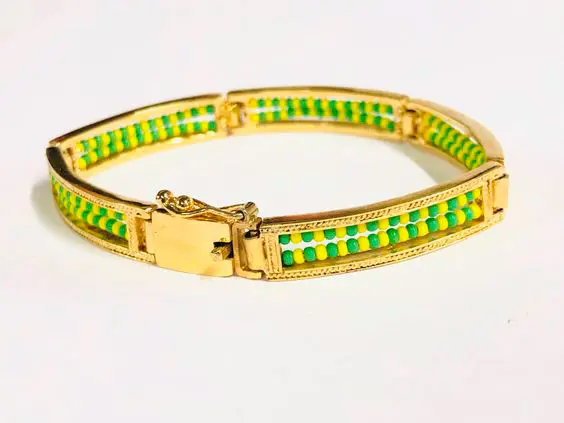
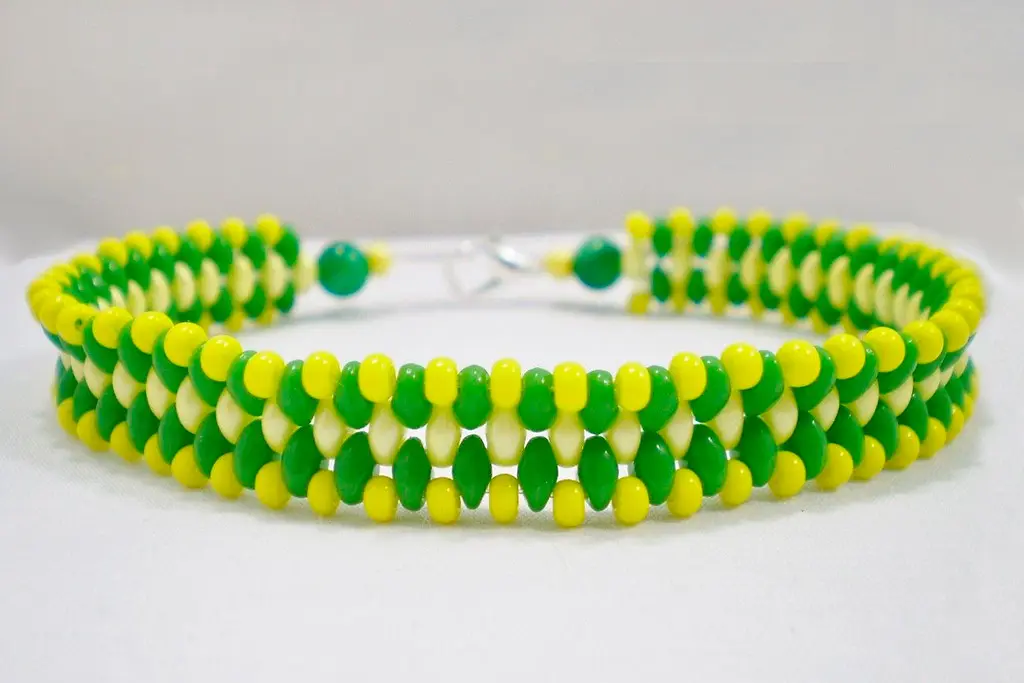
The Idefa or Ilde, is a bracelet worn by believers in the Ifa cult that represents the pact between Orunmila and Iku (Death), this pact consists in that death cannot take a son of Orunmila before time. In the Afro-Cuban tradition (Santeria), this bracelet is green and yellow, while in the Nigerian Ifa the colors that are used are green and brown or brown.
What happens when Orula's hand breaks?
The term hand of Orula refers to the initiation ceremony, although it is often used to refer to the Ilde or Idefa. When the bracelet breaks it is a warning of bad luck or that some negative situation related to death may happen to us, it is advisable to go quickly with a babalawo asking him to make divination and thus detect exactly what is the warning that Orula is giving us and thus perform the works and sacrifices necessary to avoid them.
History: Orunmila uses the Ilde to mark her children and protect them from death.

Iku was determined to take Orula away, constantly watching over him and waiting for him to gain weight and thus not be able to defend himself. This being in his house made divination and the sign that was revealed was Oshe Fun, Ifa recommended spreading okra slime on the door of the House, he listened and did the ebbo.
When Iku entered the house he slipped with the okra slime that Orunmila had thrown on the door as recommended by Ifa, when he fell to the ground he made a lot of noise for which Elegua, Oggun and Shango They entered the house, when they saw death, they arrested her.
To obtain his freedom, Iku had to promise that he would not look for Orunmila or any of his children anymore, they stressed that all Orula's children wear a green and yellow bracelet (Idefa) on their left hand.
Differences between the hand of Orula woman and that of man
In general terms, the Orula hand ceremony is the same for men and women, but they have some variations that differentiate Ikofa from Awofaka.
Ikofa Fun: Orula's Hand of Women
The ceremony of the woman's hand of Orula (Ikofa Fun), represents the marriage between Orunmila and Obini, this would happen to have the religious position of Apetebi. In the Afro-Cuban tradition this is the highest position that women will have within the Ifa cult.
Your Ikofa will have 1, 2 or 16 Ikines depending on the house or branch of fa where it starts. The number of seeds may vary depending on the Hand of Orula sign that is revealed.
Awo Ifa Kan: Ceremony of Man
The Orula hand of man is called Awo Ifa Kan, this means the first step on the way to IfaIn general, this ceremony is a prior to the consecration of Ifa, here Orunmila determines if the person has the path or power to consecrate himself in the secrets of Ifa.
The awofakan has 19 Ikines (16 are those used for divination and 3 that are the witnesses of it).
Benefits of receiving Orula's hand
Receive the Orula's Hand brings many benefits to people both on a spiritual and personal level, religious, social and economic aspects are influenced by the astral change that initiation in the Yoruba Religion brings.
- The initiate is carried out different works and cleaning that will help to improve his spiritual stability.
- Upon receiving Orunmila, people will know who is the Guardian Angel or Tutelary Orisha that governs their life.
- They know which is the sign that governs them and the Babalawos will interpret the signs to give the corresponding advice to Ita from the hand of Orula.
- They will know which is the correct path to safety in the spiritual as well as in the material.
- They will give you the fundamentals of the Orishas: Elegua, Oggun, Ochosi, Ozun and of course Orunmila. In this way you will be able to give attention and prayers directly to the deities.
- They will place the Ilde and Orula necklace, these are one of the most powerful protections in Santeria.
What saints or Orishas are received in this ceremony.
One of the fundamental aspects of initiation is to receive is to receive the warrior Orishas, these fulfill the function of protecting the person from wars, witchcraft and conflictive situations. They also generate well-being for the people who receive and care for them.
Esu:
This is the representation of Elegua in Ifa, it is the first deity that we must attend, it is customary to attend to it on Mondays in order to ask that it be a prosperous and evolutionary week. Corojo butter and honey are spread on it (depending on the traditions of each Santo house), brandy and tobacco smoke are blown on it. Offerings of sweets, roasted fish, fruits, roasted corn, fish and smoked jutia (Eku eja Awado) are also placed on it.
Learn the Elegua story
Oggun and Ochosi (The Cauldron):
Oggun and Ochosi live together in the cauldron, they are received in order to protect us from any negative situation, they are asked to take care of us from any injustice. In the case of Oggun it is asked when the person is going to undergo a surgical operation, it is customary that the Aleyus cleans the part of the affected body with a piece of beef (Eran Malu) and then this deity is placed .
Candles are lit for them, brandy and aniseed drinks are blown on them, corojo is smeared on both the Otanes (Stones) and the tools.
Elegua Ogun and Ochosi live behind the door.
Ozun (The Cock):
This Orisha represents stability, perseverance and overcoming problems, it is said that he is Orunmila's watchman, who alerts people when a negative situation is about to happen.
Ozun is seen once a month, to serve him first we must anoint our hands with cocoa butter and husk, then we rub the attribute while we ask for our well-being. Uncooked rice is also sprinkled around it and a bunch of grapes can be placed on top.
(Women are not to attend to any Orisha while they are menstruating.)
How is Orula treated?
Orunmila is very important in our lives for which we must greet him daily, we kneel in front of his foundation and say: Orunmila Iboru, Iboya, Ibo SheShe. The blessing is asked and thanks are given for a new day of life.
To treat it, cycles of 16 or 25 days are used, it is regularly attended in the mornings, but we must be clean, that is, freshly bathed, not have ingested alcoholic beverages or have had sexual intercourse for at least the last 24 hours.
It is recommended to be dressed in white, women with a skirt or a dress.
Steps to attend Orunmila:
- A mat is placed on the floor (it must be clean).
- Two white candles are lit and placed on the right and left of the mat.
- We place Orula in the center of the mat, we salute him, kneel down and kiss the mat.
- We sit down and proceed to open Orunmila's receptacle.
- We spread corojo butter (Epo) and honey (Oñi) on our hands and proceed to remove the ikines and the stone.
- We begin to rub Orunmila on our hands and we blow our breath on him while we ask him for our well-being.
- When finished we will put the ikines back in the receptacle and wait for the candles to burn out and put Orula back in place.
Prayer to attend Orula
While they are rubbing the ikines and blowing their breath, the following Prayer can be said:
My father, here I am (Full name and hand sign of Orula), I pay tribute to your majesty and wisdom, I approach you asking you to keep any bear from me and my family, I ask that death, disease, loss, curse, witchcraft, sorcery and any negative energy never reach us .
Orunmila I pray to you to help me, open my paths, bring the Ire of prosperity, health and all well-being in life can take root here, in me, in my house and in my family. Asheo! Orunmila Iboru, Iboya, Ibo SheShe.
Patakie: The first time Orula's hand (Ikofafun) was handed over
This story of the Sign of Ifa Odi Meji, tells that Iku (Death) was in love with Oshun and was always courting her and inviting her to go for a walk, he tried in any way to win her love. He was so obsessed with Oshun that little by little he revealed some secrets to him and gave him a hand of Ikines that Odduduwa jealously guarded in his house.
Despite all his efforts, all the gifts and secrets he gave Oshun, nothing worked, since Oshun was in love with Orula. This upset death so much that out of jealousy he began to do Ogu (witchcraft) to harm the Yalode.
Oshun being pregnant with Orula, she was very worried because she thought that Iku could take her son so she decides to go see Yewa.
She was pregnant with ORUNMILA and was afraid that IKU would end up with the child that was going to be born. Then, since she was a good friend of YEWA, she brought her a fresh fish as a gift and started calling her. When Yewa arrived she brought with her a very nice basket that was adorned with different fabrics and beads with the representative colors of Orunmila (Green and yellow), both of them decided to go to the house of the great fortune teller.
Oshun is the first woman to receive Ikofa Fun
At Orunmila's house, he decides to make Ifa divination to Oshun and the revealed sign was Odi Meji and Ifa recommended that Oshun should have Ikofafun (Orula's hand) so that the child was born in perfect condition, the Ikines of Oduwa would be used. Iku had given him.
Orunmila grabbed the ikines and placed them on the floor behind the door of the ceremony room, asked Oshun to kneel down and place his hands on top of the Ikofa and began to sing:
BITI BITI BITERE
EYI MEJI ALANOLE IKOFAFUN
MARA LORI OMAFA
After this Orunmila called some godchildren to finish consecrating Orula's hand to Oshun, they did all the corresponding rites and sacrifices, on the third day they did the Ita. They did this with the basket that Yewa had, while they did it they sang:
ABONI OSHE YAKATA
ADELENIFA ABITI
ALA IKIFAFUN IYAMI IFAREO
The hand sign of Orula (Ikofafun) of Oshun was Odi Meji with which through this ceremony Oshun and his son could be saved.
What a good explanation, thank you, I look forward to reading and learning more
Iboru Iboya Ibosheshe,
This is a great reference site for Ifa and Osha information
Thank you,
Very nice explanation, excellent Ashee
I loved the explanation
.🙏🏼🙏🏼🙏🏼🙏🏼🙏🏼🙏🏼🙏🏼🙏🏼
I hope they continue like this 😊… thank you 🙏🏼😘
I would like to know something, my 2 daughters no longer want Orula's hand because things are going badly for them. They told me to throw it into the river. I would like you to guide me. Thank you
Thank you Orula for all the good and powerful that you are, take care of and guide my son on a good path ashe, blessings, health, luck and much, much tranquility, prosperity for my home, development, and all the best in the world for us and the whole world (family).
What beautiful stories, I like it a lot
Strong and clear explanation, very light my dear Ashe.
I loved the explanation, very useful.