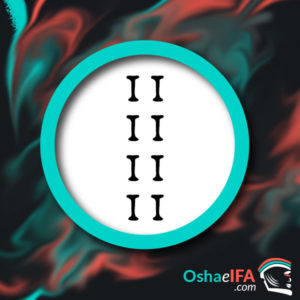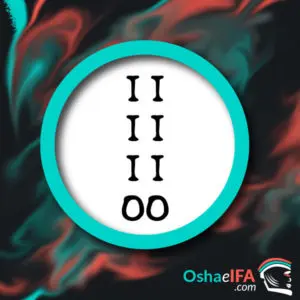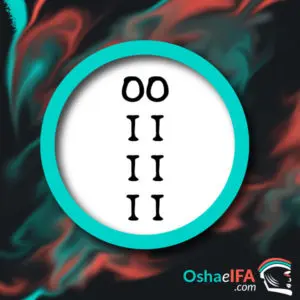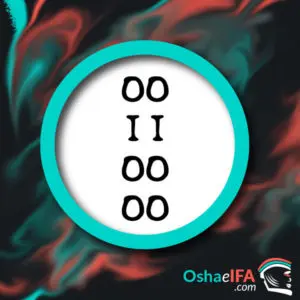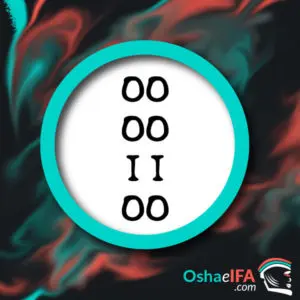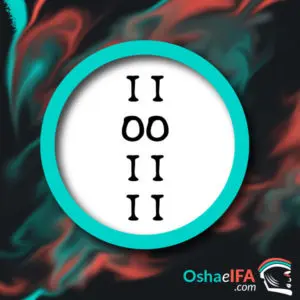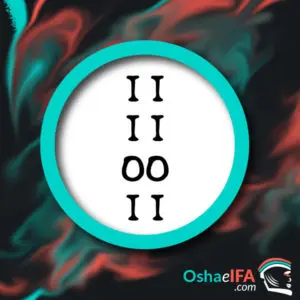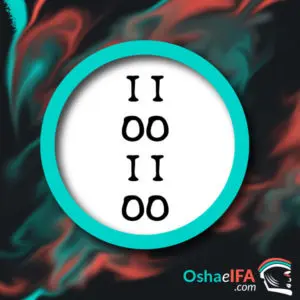
Odi Meyi: Meaning, Tips, Sayings, Patakies and More
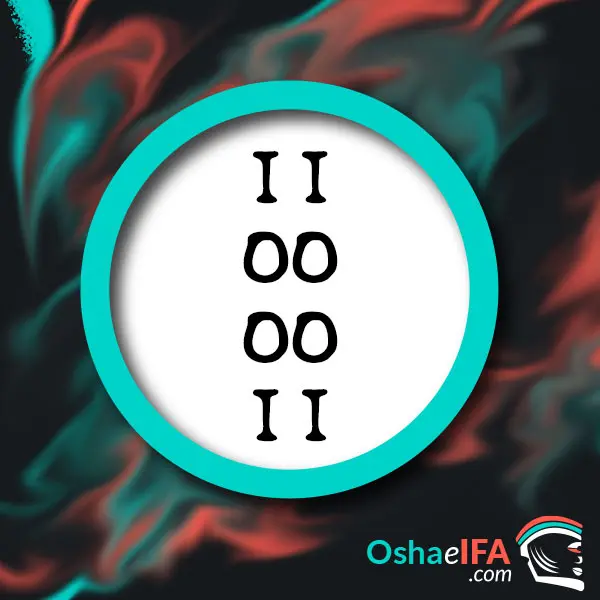
BABA ODI MEJI is an Odu of temptations and sexuality. It marks the betrayal of women towards men. Women with this Odu are fiery in temperament and full of wickedness, selfishness and morbidity, and are often unfaithful. This person must offer sacrifice. Life will please you.
What is born in the odu of Ifa Odi Meyi?
- The female organs of reproduction.
- The color black, red, yellow and variegated colors.
- The seas and the fish on the shore.
- Whales, chickens, rats.
- The goats, the almiquíes, the alligators.
- Snails, and cells.
- In Odi Meyi are born: The corn, the pumpkin, and the different grains.
- The vice of sucking the vulva and the penis during sexual intercourse.
- Malice, perversion and the law of karma.
- The human race.
- «ARAN», the gigantic Ifa Drum.
- Hemiplegia in the left cerebral hemisphere.
- The Scare (aruyé).
- The corner of the Igbodun.
- OSHUN IYUMU.
- Born: That the children of OSHUN always use their handles so that the sound of them cheers the Deity.
- ARIKU BAMBAYA and the dolls or the Ere.
What is the Odi Meyi sign talking about?
- OBA NANI, OLOKUN, ODUDUWA are welcomed.
- Luck comes through an old man.
- The NANGAREO was made known in the Yoruba land through SHANGO.
- Odi Meyi talks about the war of the garment with the Osha.
- It was where it was first stolen on Earth.
- Talk about relatives with insanity problems.
- AYE stayed to live with ORUNMILA.
- This oddun of Ifa speaks Asheye Aiyé, who is the son ABIKU of ORUNMILA.
- This is the mule herd.
- It indicates material detachment to achieve spirituality. The spirit of the sea speaks.
- INLE-OGUERE is fed together with OGUN.
- Death and Life are sisters and disease the woman of Death.
The sign Odi Meji points out:
- Odi Meji is the Father of the Masses.
- You cannot pull herbs without paying tribute.
- It indicates otitis, leukemia, diabetes, insanity, throat problems, menstrual problems, hormonal disorders, headache, blindness, lameness, digestive disorders, infertility in women.
- The plants of the Odi Meyi sign are: Pacific sea, watercress, palm, copal, aroma flower, leaves of the Ikines bush, jagüey, laurel, fig, gummy grape, buttercup, ceiba, licorice, vine grass, scorpion, amansa handsome, maiden blood, atiponla.
You may also like: Shango, history and characteristics of this Orisha.
Recommendations of the Odi Meji sign:
Here it is recommended that the sacrifices offered to OBATALA should be made at dusk.
You must receive AZOJUANO (San Lázaro), and OLOKUN.
Here the sea and the land are fed. Alcoholic beverages are not ingested.
Here sacrifices are offered to the deities with the left hand. It was established by SHANGO. This is an Odu of trials and sacrifices. Here what is lost is found.
This Odu speaks of stomachaches. The female reproductive organs are born.
Odi Meyi shows that in certain circumstances of life illness can turn into well-being (IRE ARUN).
Because of this ifa sign, no gaps are skipped or burials go to.
Sayings of the Odu of Ifa Odi Meyi:
- The exterior is not pleasant if there is no play, pleasure and dance.
- You may regret the past, but the present must bear the consequences.
- The Ifá warrior does not go to combat with a spear.
- Death inherits everything on Earth.
- The hole is open.
- What makes us most ashamed sometimes brings us satisfaction.
- A river cannot go out and make war on another river.
- No matter how strong the wind speaks to the palm leaves, the grass that grows at the foot of it is not afraid of it.
- A tiger does not catch a dog locked in an iron cage.
- Flies are interested in all corpses, but no one alive can pass for dead a fly.
- If you are not vicious, someone will be for you.
- He who perverts another brings evil out of his house.
- He who says slander of another lowers his own prestige.
- Don't go out of your way.
- The white ants tried, but could not eat the rock.
- What buttock does the cockroach sit on?
- No one has ever heard of someone who has been rejected in heaven.
- The difficulties of life are the crowd of life.
- The blind man saw and the lame man started walking.
- The man is the result of the joint effort of the penis and the vulva.
- Nobody sits on top of a smelting furnace.
- A son is the continuity of our tasks on Earth.
- An enchantment ensures a happy delivery.
- The peanut sacrificed and multiplied.
Says Ifa Odi Meyi:
When ODI MEJI appears in divination for someone whose fortune has declined, the Ifá priest will recommend that you have a feast with two goats, one for Ifá to celebrate his Elders of the Night and another to congratulate those around him and thus ensure May prosperity return.
Ifa says when ODI MEYI goes out in Igbodun, it means that the Alawo must be advised to make sacrifice so that he does not suffer for the children. Likewise, the consultant must be advised to remove himself from a woman, in addition to telling him to offer a goat to Eshu so that he can get out of an inevitable fight, he must also beg his head and serve OGUN. When you go out in a fortune-telling, Ókpele, you have to tell the person who is on the eve of a journey that he has to avoid. But if he cannot, he will have to honor OGUN before undertaking it, surely he will also have to undertake certain conversations or negotiations that he should not carry out without first serving OGUN.
That ORUNMILA and OBATALA asked you something that you have not fulfilled. He lost something that he voted years ago and he is going to find it. You dreamed that you were drowning and, jumping up, woke up as if you were drowning.
You have three male children or there are three in the family, be careful with one, do not have legal trouble.- Your eldest son has a friend who always hang out together, and that friend is going to do a bad thing, for which they blames his son. The thing is from a robbery. Your belly hurts. Give thanks to ORUNMILA.
You plan to go to a place where you will find a good thing. You love your family more than they love you and you will have to save them, because you came into the world to be head and that is the envy they have for you.-Tell your eldest son not to hang out with that friend of yours, they They are fighting.- Two of his children do not believe in the Saint, the other does. You came to see a woman's affair because she wants to leave you. Don't let her go, because she brings you luck. He has two enemies that are chasing him
Prayer of the Odu Baba Odi Meyi:
BABA ODI MEJI ASHAMA ARUMA ODIMA DIMA KODIMA
IKU KODIMA SUKU KIELO ABITI BITI KATOBALE NI ABITI
ADIFAFUN AYE OMO ONIYEGUN AIKORDIE LEBO.
Suyère Oddun Odi Meji:
ODIMA DIMA SAY MAMA YIKI MAMA YIKI
You may also like: All about the Iroso Meyi odu
Ebbo from Odu Odi Meji (7-7):
Odi Meyi's work when fortune has declined.
There should be a feast with two goats, one for ESHU and the other for the ELDERLY NIGHT. Invite everyone to eat the goat with crushed yam.
Ebbo to have children.
You will have to sacrifice a rooster, a hen, a hutía, a bag of money and a fish.
To take care of a woman.
A goat will be offered to Eshu, to get out of an inevitable fight.
He should beg his head and beg the Deity OGUN.
Baba Odi Meji's work to unite marriage.
OSHUN is eaten with ORUNMILA, a maniacal hen. Before, Ebo is made with it and it is given to both, begging them for the union of marriage. OSHUN is given yam sautéed with beans and vegetable soup, calling KOLADUN ÑARI.
Advice from the oddun of Ifa Odi Meji:
- For this Ifá unexpected benefits are received, which extend to the family.
- In the case of a woman: Her family dead watch over her, if one of her parents is deceased, a rooster or hen will be sacrificed in that case.
- Here OBATALA visited her children at dusk. The elderly person who comes to visit must be well cared for and fed.
- Here, if the person does EBO, wherever you go, ODUDUWA will give you luck so that everything that falls into your hands becomes prosperous and has glory and honors. If you don't do EBO, you will sink into vice.
- In this Odu, for a woman who cannot have children. You will have to sacrifice OSHUN along with ORUNMILA, a hen, whose legs are tied with a rope, you will have to put OSHUN yam mashed with beans and vegetable soup. In addition, you must take 5 baths with Buttercup grass and use 5 OSHUN handles.
- Through this Odu one must receive ODUDUWA, to increase power and prosperity.
Meaning of the Sign of Ifa Odi Meyi
ODI MEYI: It means buttocks and represents the vagina. Here the principle of the monarchy was established. The human race was born, spiritism is practiced.
In this Odu perversion is born. The person is lost as a slanderer.
Here the women learned to wash their buttocks with water. The woman of this Odu likes to do the sexual act through the anus and is vicious to suck the penis.
Man can be effeminate by vice or degradation.
This Odu states that you cannot pull herbs without paying the right to OSANYIN. Here luck comes through an older person (old), who arrives at dusk.
For this Odu (Odi Meyi) it is necessary to attend to the dead (Egunes) with meals, prayers, sacrifices etc.
The Odu herbs are: Marpacifico, atiponlá, palm, poplar, Ikin bush leaves, aroma flower, handsome amansa, turkey mucus, jagüey, laurel, fig, gummy grape, buttercup, ceiba, licorice, vine grass , scorpionfish, copal, watercress.
Here death inherits everything on earth, that is, everything that lives has to die. Here the one that solves is EGUN.
This is where «ARAN» was born. The giant Ifa Drum, which is made of male Jagüey wood. The owner of the Drum must be sworn with a rooster and a hen in front of OGUN to be able to touch it. The machete (Adá) symbolizes that his enemies do not take away his position.
It was in Odi Meyi that OLORUN (Sun) made a pact with OLOFIN to place his royal radiance on OLOFIN's chest, so that no one could overshadow the Alawo, nor could anyone stop him from doing something. Here OLORUN is fed.
The spirit of the sea speaks, which was given to OLOKUN and YEMAYA. The latter was given the secrets of all things. She fed the earth and OGUN and the evil ended. The person by this Odu is protected by OLOKUN, YEMAYA, LOS ASTROS and EL MAR.
This Odu speaks of war between brothers: The war between the Iworos for the land, which was ruled by a Babalawo, who was ORUNMILA, as he passed all the tests and became head of that land.
Treaty of the Oracle of Ifa oddun Odi Meyi
ODI MEJI talks about people who have secret enemies who try to cast a spell or witchcraft on him, or who have bad thoughts all the time, so he needs to appease Ifá in order to overcome these difficulties.
Here the person feels temporarily and emotionally excited.
This Odu is fundamental because it completes the four cardinal points of the Universe. EJIOGBE is the East. OYEKU MEJI is the West. IWORI MEJI is the North and ODI MEJI is the South.
ODI MEJI symbolizes motherhood.
The interaction of an Odi on the male right side with an Odi on the female left side results in reproduction, the birth of a child.
This Odu de Ifá is feminine. She is the daughter of ORUNMILA and OLOBORO. Its metal is lead. South cardinal point. Auspicious day: Saturday (Oyo abameta).
Ruling planet Saturn.
The Orishas who speak in this Odu are: YEMAYA, ORISHANLA, AYAGUNA, OBANLA, ESHU, IDEMA, ODUDUWA, OGUN, OLORDUMARE, SHANGO, AZOJUANO, OLOKUN, OSHOSI, EGUN, OSHUN, ORISHA ETEKO, OTORANUESON, LOS ABIKUESON, LOS ABIKUESON, , NANU, OJUERO.
In this sign of Ifa the female organs of reproduction were created, the color black, the variegated colors to be used by women, the color yellow and red, the seas, the shore fish, the whales, the chickens, the rats , the alligator, snails, corn, pumpkin, the vice of sucking the vulva and the penis in sexual intercourse, malice, the law of karma.
The children of this Ifá are dominant, strong-willed and men can become effeminate through vice or sexual aberrations.
This Ifá requires tranquility to live and to worship SHANGO, which is the one that gives tranquility in it.
The children of the Sign Odi Meyi, they like to know everything that is foreign, so they can be accused of gossiping, entanglement, because they like to meddle in everything that is foreign. They must be careful with the sea and the river and not cross through places of shaking ground, because they can lose their lives. They are haughty people and they grow up in the face of difficulties and in the end they will win. They cannot be trusted, when they are in a good fight, they throw the rest out of friendship and even give their own lives, but as enemies, they are dangerous, because until they see their enemies destroyed they do not calm down.
Odi Meyi on Ire:
For this Odu, you can not go to the square or food market. Do not eat
sweet potato because that is their I will (luck).
Here the person has to give himself merits, because they do not want to consider him for being a simple person in his way of expressing himself and living, but he is happier and more intelligent than those who despise him.
He also talks about big nerve problems in the family, (crazy). Here OGUN is put a machete. The son of this Odu, separates in front of OBATALA, with a mariwo crown and 16 parrot feathers and says: «ERU OSHA AYABO AYABO OYA MONO». He puts the crown on OBATALA, so that he will give him luck (Ire) in life.
In Ire: Sarayeye will be made with watercress, a fresh fish, a chicken egg. You will be called OBATALA and asked where it is taking.
Baba Odi Meyi in Osogbo:
Dreams cannot be counted here and must be guided by them. By Osobo: It is a dangerous Odu, because it encloses everything that is bad and is done on earth, because it represents the day.
You cannot jump holes.
Because of this Odu, no dirty skins or casseroles can be left in the house.
You do not eat food scraps, or salty or spicy foods, or drink coffee. In motorized transport they should not sit on the wheels or stand on the doors.
Here you have to give Tambor to ELEGBA or to the Osha who asks for it.
Sarayeye will be made with watercress, a fresh fish, a duck egg.
Ifa Code of Ethics of the odu Baba Odi Meji:
The luck of the Awó is in his house.
Pataki of the sign of Ifa Odi Meyi:
The SHISHIRIKU
There was a man who had a small capital, but he was very wasteful, both in gambling and in women. Due to this, the capital almost ran out and he decided to consult with ORUNMILA, leaving him
this Ifá ODI MEYI, marking him ebó.
When the man left ORUNMILA's house, he thought he was going to spend the little money he had left to make the ebo. Eshu, who guessed his thought, prepared three dolls for him, to which he put three spirits, empowering them to speak and move, and waited on the road with the three SHISHIRIKU.
When the man saw them, he was greatly amazed and asked Eshu how much each one was worth. Eshu replied: -I don't sell them separately and if you want to buy it they have to be all three.
The man thought that this would be a great deal and gave Eshu all the money he had left for the three dolls, he took them home and at night the spirits that animated the dolls, went out and began to walk around the house talking and screaming.
The man, scared by what he was seeing, almost went crazy and finally had to get rid of the three dolls and go back to ORUNMILA's house.
This time he had to do Ebó and the work of the three gourds to remove the three EGUN ARAYE that disturbed him and have more development and gave two black hens to Ifá.
You may also like: All about the Odi Iroso sign
Odi Meyi Ifa Traditional Nigerian
ÒDÍ MEJÌ
Kóróbótó kóróbótó ni wóón pilè àwon
Bó bá dokè a gbìbú
A moo gbomorí odó
A móo gbomori olo
A dífá fun Àkèsán
Àkèsán tíí se baálè ojà olówó
Àkèsán lojà àkódá ńlé ayé
Oba ló yes ni í
Obìnrin yes ni Oba òhún
Wón ní kó rbo
Ó bá rbo
Ó ru ohun gbogbo nígbà nígbà
Gbogbo ayé bá Àkèsán pé
Tea dòní ní wón ń nájà Àkèsán
Gbogbo ojà tú kù tí wón dá
Àkèsán ní bàbá gbogboo won
Ifá pé ayé or ye eni or dá Ifá yìí
Ó tobi tán ní ń yin Ifá
Ifá ń yin Olódúmarè Oba
Ó ní béè làwon Babaláwo tòún wí
Kóróbótó kóróbótó ni wóón pilè àwon
Bó bá dokè a gbìbú
A moo gbomorí odó
A móo gbomori olo
A dífá fun Àkèsán baálè Ojà Olówó
Wón ní ó rbo kó lè baàtóbi
Kó lè baà deni ńlá layé
Àkèsán gbébo ńbè
Ó rubo
Riru ebo
Èèrù àtùkèsù
E wáá bá ni ni jèbútú ire
Jèbútú ire làá bá ni lésè Oba Òrìsà
Àkèsán momó dé ò
Báàlè ojà
Báa bá rólórí rere
à dájà
Ifá says in Odi meyi that this person will obtain good things. He will have peace and quiet and his life will be pleasant. Ifá says that this person will be recognized. All the things that he is doing, no matter how small, will become great.
In little loops, they begin to weave the fishing net,
As soon as it is done, it will be wide
It can swallow a mortar
This may contain a mill
They were the ones who made divination for Àkèsán
The richest man who made the first market
Àkèsán was the first market created on Earth
A King took possession of the market
And the King was a woman
She was advised to offer sacrifice in order to have a good influx of people
She made the sacrifice
She offered the full sacrifice
And the whole world joined with Àkèsán
Till the date
Other markets have been built
Àkèsán was the first market
Ifá says that this person's life will be pleasant
She became great and began to invoke and praise Ifá
Ifá is praising Olódùmarè.
She did just as her Awo had told her
In little loops, they begin to weave the fishing net,
As soon as it is done, it will be wide
It can swallow a mortar
This may contain a mill
They were the ones who made divination for Àkèsán
The wealthy man's market
She was advised to offer a great sacrifice
To be famous, known and powerful
Àkèsán heard about the sacrifice
And he did
Offering sacrifices
And giving his portion to Èsù,
Come and find us with good news
Usually one finds the good news at the foot of the King of the Òrìsàs
Here is Àkèsán
The supreme and powerful market
If we have a good leader
We will build a memorial market.
Eshu from Oddun Baba Odi Meji:
Eshu IDEMA: This is the ESHU that accompanied ODI MEJI and Orisha ETEKO to Earth.
Cargo: Ivory, coral, jet, sixteen small black sea stones and sixteen white sea stones, ero, obi, kolá, osun naború, house door earth, obi motiwao, one pepper, gold, silver sixteen
ELEGBA herbs, sixteen strong sticks, jicotea head, woodpecker head, rooster head. It is lined with forty-eight snails.
Learn all about the 16 Meyis: