
Mediumship: Powers brought about from the spirit world

There is an invisible world around us, the world of spirits. They are in constant communication with the earthly world and to achieve this they use the faculty of Mediumship developed in more people than we can imagine.
What does Mediumship mean?
Mediumship is according to the point of view of the Spiritist doctrine presented by Allan Kardec, the decoding process of Spiritism. A sensitivity developed in human beings in different proportions, which allows them to capture information supplied by entities in the spiritual world.
What are mediums?
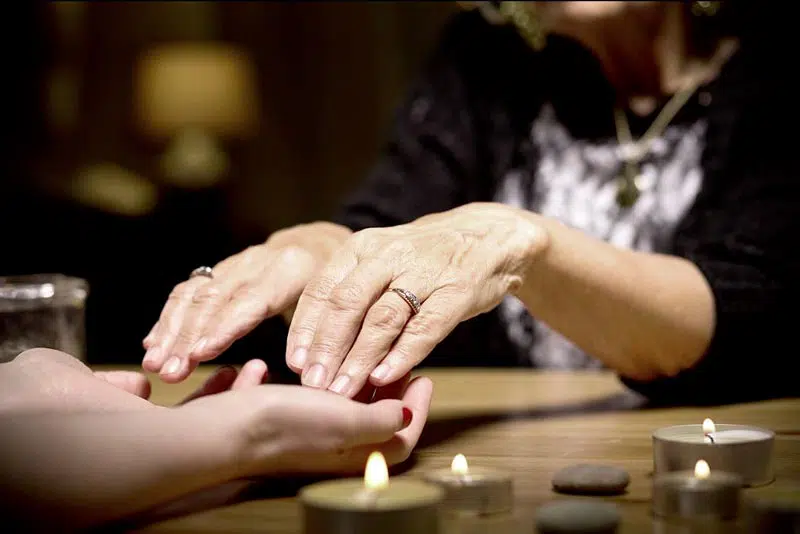
The term medium or mediums refers to those who are in the middle of the physical world and the spiritual world, that is, those who are intermediaries, who make a kind of connection that allows them to mediate between the deceased or other spiritualities and living beings. That spiritual virtue allows them to establish contact with entities of various frequencies, levels or lights, for some called angels or demons.
The main role of mediums it is to transmit certain information that through its connection are sent by the spiritualities. Also, depending on their level of development, they can hold conversations with the spirits, and in some cases offer their physical body as a channel for the spirits to take possession and speak through them.
Roughly speaking, mediums can be made up of two groups with different types of perception. On the one hand we have the mental mediums who enjoy clairvoyance, or perceive through the senses; and on the other hand, we have the mediums whose receptive activity is more physical, manifesting in complex phenomena such as: levitation, automatic writing, poltergeist phenomena and ectoplasmic activities (substance that causes an entity to materialize in this dimension).
Who can be mediums?
All human beings can become psychic channels, that is, we all have the capacity to be mediums. This is explained because at birth all individuals possess attributes that give them the capacity for spiritual perception. Depending on the development of our life, these virtues may diminish or, on the contrary, they may evolve, or they may simply emerge at any time due to some phenomenon that has caused their reactivation spontaneously or intentionally.
How does the process of mediumship take place?
The medium during the process of channeling or spiritual perception acts as a receiver or a psychic antenna. It should be noted that this process originates through the intervention of a brain gland known as "the pineal gland or epiphysis." This gland, in addition to intervening in other activities of the body such as sleep and rest, psychically is attributed the ability to intervene in the process of mediumship in the human body. Indeed, it is considered that the behavior of this gland may be different in some people and to date there is no scientific explanation for this phenomenon.
On the other hand, when we talk about the process of mediumship as such, it is understood that it is a process of communication. Like any communicational process, it requires: a receiver (the human body), a sender (the spirit), a channel (mediumship), and a message (the information provided).
The channel can have different characteristics or frequencies, that is why all perceptions are not the same, since that will depend on the reception level with which the medium can connect.
Learn: What is the Spiritual Vault?
Are there symptoms that reveal that you have shortness?
During the development and evolution of the human being, Mediumship can manifest itself in many ways, even unconsciously many times. The specific characteristics vary according to the level of sensitivity of each individual. However, there are certain indications that reveal that we are facing phenomena caused by Mediumship, for example:
- The feeling of presence or company in physical spaces.
- The vision of shadows or movement of people where apparently nobody is.
- A developed "sixth sense" that lets you know what is going to happen or what to expect from a certain person.
- Constant hits of premonitions about events to come.
- Clarity in the decisions to be made for conflict resolution upon awakening.
- Premonitory, recurrent or confusing dreams where the deceased present themselves.
- Inexplicable dreams in which you travel through unknown places with the precision of your own and real details of places that are not previously known.
- Confused sensations accompanied by inexplicable feelings when coming into contact or closeness with other people.
- Inexplicable and alien thoughts and ideas in various situations.
- Inexplicable thoughts loaded with recommendations or advice for yourself, or third parties.
- Visualization of eventualities that become reality later.
- Perception of characteristic odors of deceased persons or with specific characteristics alien to the environment in which it is found.
Different Types of Mediumship

In the realms of mediumship there are various ways of capturing the messages supplied by spiritualities. Psychic phenomena vary from the most common and simple, to the most complex and varied, among them we can highlight:
- Intuitive mediumship: It is one that naturally and unconsciously makes individuals perceive events to occur to themselves or to third parties.
- Mediumship psychophonic: they are those who capture through their mind the thoughts of the spirit. That is to say, the Spirit supplies the medium directly with his conversation and he externalizes it using his words.
- Incorporation mediumship: It is the virtue that reveals the bodily ability of a medium to lend his body during trance so that a spirituality speaks through his body, using his words.
- Mediumship of Seers or Clairvoyants: They have the virtue of observing the Spirits or the message they wish to convey. Some can do it perfectly conscious and awake without needing to be in a trance; others do so through an induced trance or during sleep. This ability is very particular, because despite involving the use of the eyes, a kind of perception also intervenes that allows the medium to see the spirits with their eyes closed, through the soul.
- Mediumship healer: They have a virtue that helps them heal others in various ways: by touching them, saying their prayers, or combining various elements.
- Mediumship with effects in the physical world: They can generate material effects, such as: sounds, movement of objects, or phenomena in the body or the physical world of other people. This mediumship is very particular and is normally divided into: facultative mediums, who are those who have full knowledge of their abilities; and involuntary or natural mediums, who provoke an influence on phenomena without their will.
- Mediumship Psychologist, or of psychography: They are those through which the spirits manifest themselves by using their body, more specifically thanks to their arms and hands that they use to write or draw in the absence of the medium's control.
- Sensitive mediumship: it refers to the ability of certain mediums to perceive spiritualities through sensations attributed to other senses such as: olfactory mediumship (reception of smells foreign to the place where it is found); or through taste.
How to develop mediumship?

A basic alternative for the development of mediumship is through Spiritist Societies. These are meetings held by people who know the spiritual world and the processes for the development of mediumship, thus obtaining a guide and a response to spiritual situations or sensations that in some cases are difficult to understand.
In addition to this, the medium or spiritist must be aware that he must promote a deep education and therefore, carry out a detailed investigation about the world to which he wishes to awaken. A medium without full awareness of the importance and at the same time delicate of this exercise, is ready to misuse his virtues or to be advised by low-frequency spirits that could lead him to the destruction of his faculties.
Another factor of vital importance for the evolution of mediums is discipline. It requires perseverance, work on self-control, constant purification and above all the spiritual search to be a better person and live based on helping others, through the gifts developed, in this way it is that it will be possible to reach their capacities to the maximum.
So, the first mediumship exercises or those that will help to develop and enhance one's own spiritual virtues, go hand in hand with self-knowledge, meditation, healthy living, promoting healthy feelings, proper rest and humility to receive the advice of the mediums with more experience, always from the mutual respect of the faculties of both.
Mediums with more experience usually tend to participate in Medium Exchange Groups who practice constant activities in which they exercise communication with the Spirits and promote their evolution.
How to practice mediumship?
According to the Spiritist doctrine, being a medium constitutes a great commitment, since mediums must make many changes in their lifestyle, which demonstrates their true conviction for the development of their spiritual faculties.
As mentioned above, it takes a lot of dedication, commitment, discipline, and above all self-denial. That is a sacrifice that most people are unwilling to make.
On the other hand, education, humility, patience and respect are of vital importance to avoid mistakes with incalculable consequences and serve to get rid of traps caused by low frequency or low light spirits.
It is necessary to understand that Spiritism is also a science, and as such, it requires time, study and dedication to be able to achieve the conditions and resources necessary for its optimal practice. That is, the ideal would be for each individual to seek the correct use of their mediumship.
Spiritist doctrine offers a truly invaluable perspective on this path. Through it it is possible to understand that nothing really dies, that energy simply transforms, that we have the opportunity again and again to be much better, and that God in his infinite love has blessed us with that capacity.
Mediumship in children
It is important to highlight when talking about the faculty of mediumship in children, that this virtue can appear naturally in many of them, however, it is best that their development is not stimulated, but rather that it is generated Spontaneously. This is because the practice of mediumship can generate a lot of physical and spiritual wear and tear, and children, due to their own conditions, usually have less resistance capacity. Even so, it is not at all strange that these abilities are evident in infants of different ages.
From mediumship to equizophrenia
It is logical that a practice like mediumship has some shadows or misinterpretations. The dangers of mediumship They can be varied, especially if the medium is not physically, morally, psychologically or mentally prepared.
On the other hand, the physical manifestations of mediumship for some may represent symptoms of some mental pathologies such as schizophrenia. It is there, where discipline and other recommendations made previously are necessary, which will encourage the proper use of this faculty and will prevent it from becoming or finally being simply a disorder.
Indeed, long ago, in the early days of psychology, most patients were actually mediums. That is, this does not mean that mediums are or are people with mental illnesses, rather, it means that in the face of ignorance of these phenomena, man throughout his history has been ready to make mistakes in the presence of the mediumship of many people.
Finally, what it is about is to make mediums understand that their development, evolution and transit through the path of mediumship requires a lot of commitment and responsibility to use those skills while maintaining control of them and of themselves.
Mediumship books
The study and education of mediumship is essential to achieve being a virtuous medium. The basic recommendation to start the path of education in this spiritual world by logic is reading the books written by Allan Kardec.
The fundamental manual on mediumship is "The Book of Mediums" dating from 1861. Originally presented in Paris, in this writing Allan Kardec offers us the Spiritist Doctrine, where many answers are glimpsed about the manifestations, the means, the development, and difficulties that the practice of Spiritism has, therefore, it is an indispensable reading.
Learn more about the Spiritual world
John Soldier

Meaning of the Rider Waite Tarot Cards
María Lionza: the Queen of Venezuelan spiritism
Venezuelan Spiritism: Practice, beliefs, the 3 powers and more

The Tarot: History, types and how to throw it

Who is Allan Kardec? And what is the Spiritist Doctrine?

What is Spiritism?

The evil eye

The spiritual Mass