Mother of Water or Mama Kalunga: Deity of the Sea within the Palo Mayombe
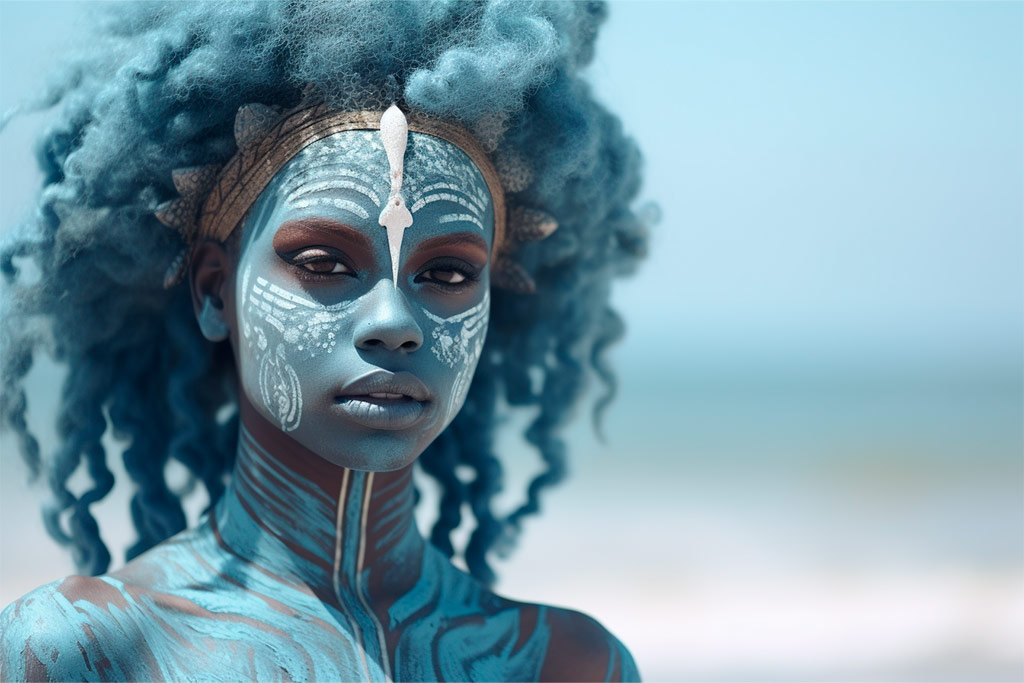
Madre de Agua, also known as Mama Kalunga, He is a very important deity within the Palo Mayombe, is considered the first daughter of Earth trembles, identified as the mother of all human beings, ruler of the waters that dominate the oceans, from which life originates within this world.
Who is Mother of Water?
In the Mayombe or Conga Stick Rule, the deities have characteristic features and are directly linked to the forces of nature, among them, the elements of the earth and vegetation stand out, which are considered animated by spirits, which they also , they offer him an inn in the depths of the earth. Another fundamental element is water, especially related to the ancestors and to Mama Kalunga.
She is the greatest representative of motherhood and fertility, which is why she is considered a symbol of love, marriage, home, family stability, and peace. Her energy rules over the powers of sorcery and divination. She actively influences the creative capacity of humanity, intellectual development, knowledge and elegance. She attracts fortune and economic development.
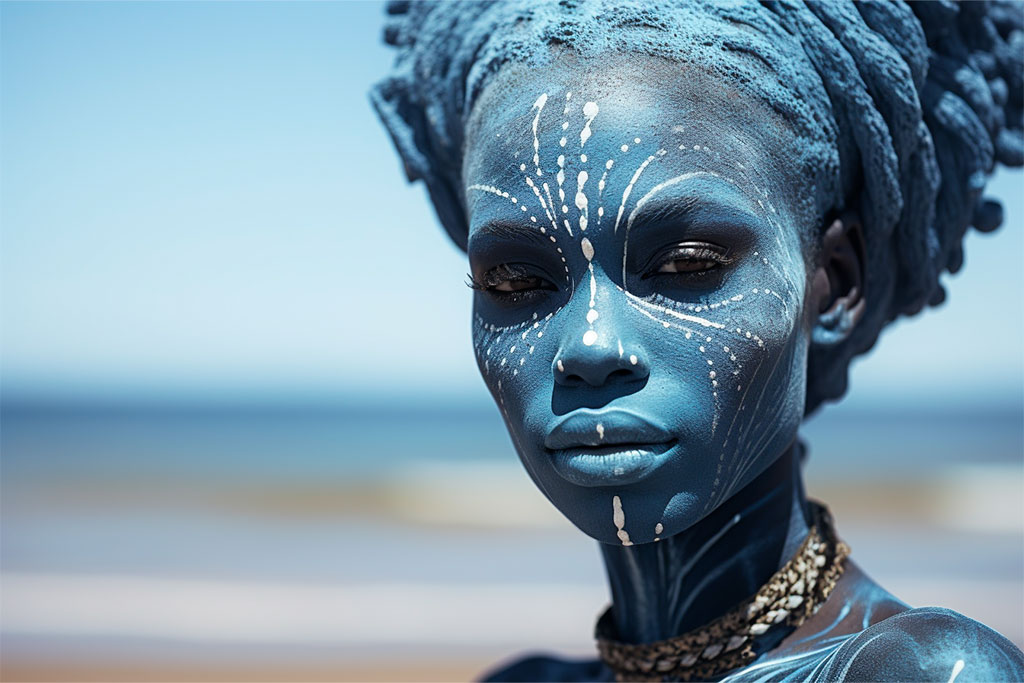
Mama Kalunga is the Mpungo that, indisputably, predominates over the 7 seas and governs the oceans. This power makes her the possessor of incalculable wisdom, and she is a fair, equitable, compassionate, loving and powerful protector, who supports her followers with great vehemence. She bestows her charges with abundant psychic powers, spiritual depth, and understanding.
As it is associated with the sea, its character is described as the movement of the waves, untimely, willful, changeable and inflexible with those who commit a fault against it. Her dances allude to the movements of the waters, charming and overwhelming.
Other names:
In addition to Mama Kalunga and Mother of Water, she can be recognized by her followers as: Má Lango, Kalunga, Pungo Kasimba, Mama Umba, Mbumba Mamba, Nkita Kiamasa, Nkita Kuna, Mamba and Baluande.
Color
Mama Kalunga rules over all shades of blue. This color has an energetic vibration capable of attracting feelings of calm, calm, security, wisdom and loyalty. Likewise, as its tonality changes, the intensity of the emotions that it is capable of attracting changes, just as this Mpungo does.
Number
The digit that represents it is 7. This number is closely related to the spiritual world. It is considered one of the most powerful and mysterious, just as Madre de Agua is described. It is associated with knowledge, awakening, consciousness, intuition, mediumship, and magic.
Mother of Water Herbs
Verbena, lechuguilla, indigo, prodigious, paragüita, water flower, lotus, hyacinth, fern, cress, mint, purple basil, guásima, buttercup, girl's herb, cockroach, cinnamon stick, nightshade, pigeon's heart .
History of Madre de Agua
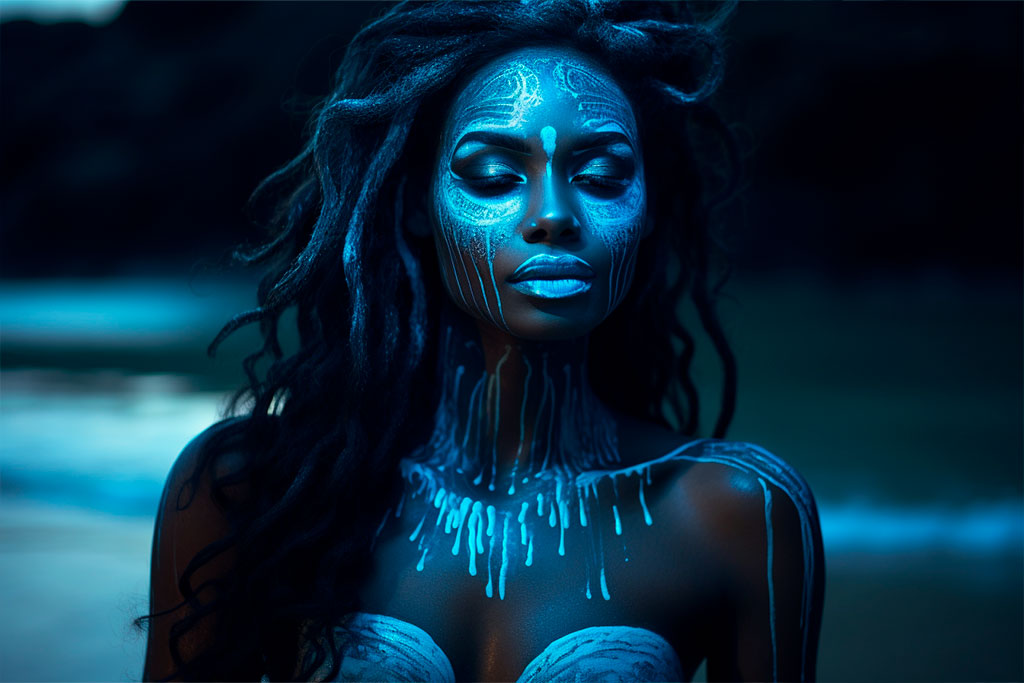
In Cuba, there are many legends that talk about the meaning of Madre de Agua. They all agree that it is a spirituality that manifests itself physically as a magical and powerful pestle, which has two polarities in its character. It can be voracious, identified as a carnivorous being that feeds on animals and even humans; but on the other hand, she is a beautiful and compassionate woman. The myth says that: where Mother of Water lives, the water will never dry up.
People who claim to have seen it appear claim that it is as big as a palm, and an urban legend tells that once, a farmer fell asleep on what he believed was a log on the bank of a river. Upon awakening, he found himself miles away near the sea. It turns out that he had traveled on the back of a Mother of water.
It is also believed that Madre de Agua is responsible for a whirlpool that forms in the sea, also called "cloud tail." Those who have witnessed this phenomenon claim that when the tip of a cloud mixes with the Mother of Water, a liquid waterspout is formed that looks like a water volcano.
It may interest you: Zarabanda: The warrior spirit of Palo Mayombe
Syncretism

Mother of Water is recognized within the Osha or Ifa rule as the Orisha Yemaya, their powers and attributes are exactly the same. Within Egyptian mythology she is related to Neit, also known as the "mother goddess", an ancient deity responsible for the creation of gods and humans who procreated the universe using seven arrows, or seven words, through which made the primeval hill emerge. Her bond with the number 7 and her motherhood makes her syncretism very powerful. In addition, Neit is also known as the spirit of wisdom and invention.
In Greek culture she is syncretized with the goddess Athena, first-born daughter of the god Zeus, and one of the main divinities of the Olympian gods or Greek pantheon. The character of this deity is quite aggressive, but it is balanced by her intelligence and organization when going to war. Like Mother of Water, she is the deity responsible for civilization, wisdom, reasoning, intelligence, navigation, protection, and education, which is why they are considered the same deity.
Regarding the Catholic religion, Mama Kalunga It is syncretized with the Virgin of Regla, however, it can also be related to Saint Brigid, because this syncretism is related to Celtic culture and the worship of the deity Danu, which was transformed into the veneration of Saint Brigid by Christianity. , to eradicate that pagan culture.
Danu is a deity that symbolizes conception, love, youth, life, fertility, abundance, mystery, death and transcendence; Like Mother of Water she is a pregnant woman whose lunar phase is the full moon.
What is asked of Mama Kalunga?
The followers of this deity usually make works and requests at the foot of its foundation, asking for its intervention and help in situations related to:
- Love and sentimental problems, reconciliations and stabilizing marriages.
- To attract prosperity, good fortune, successful businesses.
- Achieve your blessing, purification, development of mediumship and awakening of consciousness.
- Have good trips, reach safe ports.
- Remove witchcraft, sorcery, evil eye and curses.
How is it taken care of?
He is offered brandy, rum, tobacco, candles, and molasses; fruits such as: watermelons and mangoes. Usually, his offerings are taken to the seashore, jetties, or large lakes. Roosters and ducks are immolated.
What are the children of Madre de Agua like?
Their children are characterized by being temperamental people who have great mental agility, are authoritarian, and also good friends. They are very helpful, demanding and orderly. They are lovers of the sea and nature. Careful and meticulous when choosing their friends. They admire people with a strong character. They tend to help their peers, they like to be flattered, they can be shy and somewhat withdrawn. At the family level, they love and adore their relatives, but sometimes they need to be away from them. They are simple and discreet people, they are not very fond of jewelry. They fight tirelessly until they achieve their goals.
Signatures of Madre de Agua
There are a large number of signatures within the Regla de Palo Mayombe, whose use and meaning vary. One of the most popular signatures attributed to Mama Kalunga is the following:

Meaning
- The circle within this signature symbolizes the full moon, whose influence is related to the vital source, the sea and the river.
- The vertical arrow symbolizes the sea in all its expression and its deep mystery.
- The horizontal arrow is a reference to the mighty rivers, streams, lagoons, and all the currents of water that end up in the sea, that is, the veins of the Earth.
- The snake or majá that coils throughout the signature is the protection of all the mystical forces working together.
- The crosses symbolize the presence of the Nganga spiritualities.
Works with Mama Kalunga
protection guard
A protection that is made at the foot of this deity can be prepared using a chain, ring, anklet or any object that the interested person can always wear on the body. If it cannot be hung directly, it is also possible to place it inside a cloth cover that will always be carried in your pocket. It will be washed with the herbs indicated by Mama Kalunga and after being prepared, it will be left to rest for 7 days at the foot of the foundation before it can be used by its owner.
When the slip is prepared in a cloth cover, it can also be assembled with the following ingredients: a silver coin, sea slug, a snail, sand from the river and the sea, 7 roots of herbs from that saint, ciguaraya, arazú, a red mate, quicksilver, a crucifix, dried duck heart, a white rooster, is sworn in front of the nganga with its mpaca, signed and delivered after having spent the corresponding time.
To tie a person
At the foot of the foundation, the name of the person to be tied up will be written in the form of a cross on a piece of cloth from a garment that the person to be tied up has sweated. Mama Kalunga is informed of the work, when she indicates she is taken to the trunk of a majagua and is left tied there. Another option is to tie it with another piece of cloth to a piece of majagua bark.